Friday, February 8, 2008

The Altman / Williams connection

Director-composer collaborations gave always been a great interest of mine. Rich in the old Hollywood filmmaking tradition, some of the best creative partnerships have been between directors and composers. Some of these relationships are so strong and long-lasting that it would be nearly impossible to imagine a director's images without his collaborating composer's music: case in point Tim Burton / Danny Elfman, and Steven Spielberg / John Williams. But in reality, many of these collaborations don't ensure, and the ones that do last tend to fade before too long. Perhaps the most famous director-composer relationship fitting this description is that of Alfred Hitchcock and Bernard Herrmann, who worked together to create some of the most beautiful and exhilirating marriages of image and sound the movies as ever known: The Man Who Knew Too Much (1954), Vertigo (1958), North By Northwest (1959), Psycho (1960), Marnie (1964), etc. And even though there is little consensus to this day regarding why they split -- the most reliable story to date being a feud over Torn Curtain (1966) -- it was no secret that they had a severe falling out. Still, I can't help but wonder what it would have been like had they settled their creative differences and continued their collaboration. Maybe the twilight in Hitchcock's career, from 1966 to 1976 would have been better remembered. But we will never know.

Although long-lasting collaborations between filmmakers and musicians are interesting, more intriguing are the relationships that never realized themselves after a spark of fire between two minds, one thinking in images, the other in notes. One of these mini-collaborations that is rarely spoken of is that of Robert Altman and John Williams, who worked together on two films early in both of their careers: Images (1972) and The Long Goodbye (1973). I'm sure there are numerous instances in the history of Hollywood in which a composer and director have worked together that many wouldn't consider to be a mini-collaboration; it's kind of like calling two consecutive wins a "winning streak." But I am more interested here in the kind of filmmaking minds these two individuals possessed, and how they uniquely came together resulting in two wonderful films and scores. After all, I would venture to guess that Robert Altman and John Williams aren't typically mentioned in the same sentence together, not just in terms of director-composer collaborations, but also when it comes to artistic sensibilities.

Images is one of Robert Altman's strangest films, especially considering how early in his career it was. Echoing Bergman and other abstract European filmmaking, it told a story through a series of disparate images and even more dissonant music. After listening to Williams' melodic work on Star Wars, Indiana Jones, and Harry Potter, it's hard to imagine that his name was attached to the film. But as devoted followers of his know, Williams is more than capable of writing strong abstract music. The score contrasts a haunting central theme with unconventional percussion which may first sound like noise but slowly reveals itself to be very complex.

For Altman, Images came one year after his critical success (and masterpiece, in this writer's perspective) McCabe & Mrs. Miller (1971), a film that stands today as the quintessential Altman film, whose only score was the gentle voice and guitar of Leonard Cohen. But Altman finds such beautiful music in the silence of his images, and in the neorealist-inspired narrative and compositional style. It would come as a surprise, then, that Altman would choose (or maybe he didn't choose) John Williams to compose the other-worldy score for Images. At the time, Williams was mostly known for throwaway comedy scores, for which he was being typecast as a composer. However, he had also been dabbling in action scoring for the disaster flicks of the pre-Star Wars era of action filmmaking. Either way, he wasn't known for writing the kind of music that Images called for. Whether the studio arbitrarily selected Williams or whether Altman picked up on Williams keen sensiblity for evoking beauties in "simple" cinematic images (e.g,, his beautiful take on Americana in The Reivers), it proved to be a wise decision, since the music injects the movement and non-movement of Altman's film.

Images was something of a departure for both Altman and Williams, but its effect is dizzying and at particular moments mesmerizing. Not a major hit at the time, Images still does not stand out as a significant entry in either Altman or Williams' filmography. After watching it though, it may provide new perspective on their work to follow.

Their second, and final collaborative effort came the following year, with a film that was about as far away from Images as one could imagine. The film, The Long Goodbye, was both a homage to and parody of the film noir genre, which, at the time, was thought to have run it's course. Although Chinatown, released the following year in 1974, was deemed the revisionist film noir of the 1970's (and rightly so), some credit should also be given to Altman's film, which is arguably just as impressive, if not as subtle. But then again, film noir was never known for its absence of identifiable style, but rather its extreme incorporation of shadow, smoke, and cold emotion. For Altman, The Long Goodbye was his third impressive showing in a row. Despite the film fitting a different tone than the previous two, with a somewhat comedic and outwardly self-aware detective story played in a dead-straight manner, Altman managed to create an evocative atmosphere through long takes and wide-angle lenses that permeates a mood both light and dark.
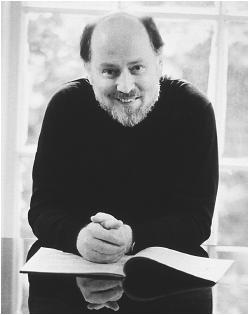
For Williams, the film presented a unique scenario wherein he could play off the pre-established norms of music for film noirs as well as ample opportunity for building comedy around musical ideas. Employing a leitmotif approach, Williams built the whole score around a single theme, a theme that is played and repeated several times over and in various orchestrations. It's so overtly repetitive that takes on farcical dimensions, which at times contrasts with the level of serious detail in the images -- far more than your typical parody. The combination of the images and the music make for an oddly intoxicating, yet comedic film that is one of Altman's more unique efforts behind the camera. One can almost see traces of style that would come to full light in later films like Short Cuits or The Player. Williams never again composed a score for Robert Altman, who in many ways moved away from traditional musical scores towards the late 70's and all through the 80's. Yet their brief collaboration, now a third of a century ago, can be viewed as a precursor to various movements and themes they would draw on and evoke in each of their respective careers, even though neither of them would return to this specific style of filmmaking/composing.

John Williams' and Robert Altman's short-lived time working together came at just the right crossroads in their respective careers, when they were each relatively new but had some credit to their respectives names. After The Long Goodbye their careers took off in directions, with Altman gaining more artistic freedom to pursue various personal projects before settling down and embracing his indie maverick status, and Williams hitting the double-jackpot with Jaws (1975)and Star Wars (1977) shortly therafter. Despite each showing tendencies and subtle returns to that style (Altman to the epic auteur image and Williams to the quieter simplicity that defines much of his best work), their paths would cross no more leaving movie and score lovers only to wonder what could have come of the seemingly endless plane of possibility evident in these two lesser known films in the early 1970's. And although their directions after The Long Goodbye and Images took very different shapes, there are traces of that crossing throughout each of their respective work.

This is one of my favorite Never-Fully-Realized director/composer relationships. Are there any other memorable (however short or long) filmmaker/musician collaborations worth discussing? If so, please share.

Thursday, January 31, 2008

Gems of a genre: Sunshine and Paprika

Much has been made about the supposed revitalization of the western in 2007, with revisionist films like The Assinationation of Jesses James and 3:10 to Yuma garnering a fair amount of critical attention. But the notion that the genre is can be revived is somewhat belittling. It reflects a very particular attitude that certain cinematic styles or genres can "die" when they fall out of current popular trends. This perspective isn't too embracing of innovation of qualitative or quantitative varieties. According to this ideology, cinema is a field of neat, quantifiable categories into which movies may be placed. The viewer/critic watched a movie with the knowledge of these pre-existing categories and the criteria for meeting those categories and then interprets movies accordingly in order to place them neatly into the boxes labeled "Western," "Film Noir," "Classical Hollywood," etc. This is an unfortunate and restricting way to see this a means of artistic expression, if only because cinema is always growing, along with our knowledge of it. The aforementioned categories are very real and necessary, but to perceive films through the lense of this strict perspective is to miss what movies are really about: moving images, sounds, and narrative, specifically the unique interplay between them. Cinema was not meant to be labeled with symptoms or terms, but should instead be seen (and examined) head-on. In other words, the how is more important than the why.

While last year was certainly an integral time for westerns, particularly for revisioning the genre itself for the digital age (not just the age of digital cinema), there have also been a number of other films that expand and/or subvert the genres and cinematic styles from which they took inspiration, despite not embodying the predetermined standard of a particular genre. Much of the "genre talk" in recent months has been about the Western, but other forms and styles have seen additions/expansions as well, such as animation (Persepolis, Ratatouille), film noir (Brick, although this is as 2006 feature), documentary (Helvetica, Manufactured Landscapes), horror (The Orphanage), etc.

The science fiction genre is an ever-elusive one in cinematic terms, because it takes cues from and morphs with so many other narrative and cinematic styles. Like other establishes narrative and stylistic molds, science fiction also grew last year due to several wonderful entries, some of which may not classify as classic science fiction, but in their subversions and differences contribute quite a bit to the development of it. Two films really stand out as great additions to the genre, neither of which has been mentioned much in the whirlwinds of masturbatory dialoguing (lists and awards) about the same films now being ushered into critical canon. But these two films are among the more interesting, even transcendent movies of last year: Paprika and Sunshine.

Satoshi Kon's Paprika is a film of many things, but above all, it is about dreams. It shatters all distinctions between actual and virtual, analog and digital, in its exploration of cyberlife, avatars, and digital space via the realm of the unconscious, of elusive lucidity. Kon masterfully constructs two distinct worlds: one involving cops, scientists, and cityscapes, i.e. reality, and the other about circusses, carnivals, and the gateways between genres. In each respective world, he constructs a story that so effortlessly blends conventional narrative motifs of chases, mysteries, technologies gone haywire, and various other distantly recognizable elements, and somehow he streamlines it in a way that makes sense in the way that a dream makes sense: not linearly, but abstractly. And as the plot develops and the conflict intensifies, the two worlds collide, which results in a frenetic but sublime cinematic experience.

Paprika is the kind of movie that's thoroughly conventional in its narrative cues and dramatic beats, even in its thematic trappings of the subservsion of the actual/virtual binary. But the manner in which it weaves these threads around one another, through each other, and together is incredibly inventive, and its marriage of movement and sounds is like being in a dream through the swirling colors and motions of its animation. It's an intoxicating experience that will linger in the conscious and unconscious mind. On several levels it could be seen as an allegory for cinema; not just cinematic technology (as the plot deals with scientific advances which enables individuals to explore dreams), but about the state of movement and time that cinema can construct, a way of seeing and hearing that manifests in all of us.

Danny Boyle's Sunshine, despite being a different kind of film experience and concerned with different ideas, can be thought of as a kind of companion piece to Paprika because it is a pure visual and auditory experience. It's been called a "great half of a film" by many critics and sci-fi lovers, mainly because after a quietly compelling and cerebral first act, the films veers into more visceral territory. It's perfectly understandable why some would be jarred by the film seemingly changing gears, but the film's change of direction should not be credited to laziness, but rather an attempt at transcendence, one that it nearly achieves.

The driving narrative force behind the film is that the sun is dying, which is why a group of scientists are sent to detonate some kind of advanced bomb on the sun's surface that would re-ignite it. It's a far-fetched notion, but one that's dealth with convincing sincerity by Boyle and his writers. The first half of movie builds a strong sense of the crew and atmosphere, and is refresing on the grounds that it embodies that distant notion of sci-fi being both intelligent and entertaining. It definitely owes a lot to greats like Alien and 2001, but the film seems to be after something different than those movies. It captures a strong sense of an existential void in its quiet tones and long-enduring images of the sun's surface. The characters aren't developed throughout the narrative in the classical sense, but they are very real in terms of how they interact with each other. Besides, good drama is not about building character but revealing it. As the films moves towards its conclusion and the stakes are increasingly raised, it achieves a sublimity in its sights and sounds that few films would dare to attempt. Somehow, it melds its the cold, disslocation of humanity's insignificance with a deeply humanistic spirit that is all the more moving because of the existential backdrop of the film's moods, themes, and images.

As an experience, Sunshine is so many things at once. Like Paprika it assembles various elements of familiar narrative techniques and science fiction staples in a way that serves to honor the genre. But it also forms incongruities by contrasting different ideas and images, and it seeks to disrupt common manifestations of the "man vs. technology" and "the triumph of man" themes. But in doing so, it reveals more nuances to already-established narrative flows and concepts and even broaches new ones, as it reaches a purely visceral climax that can really, truly be called a trumph of the human spirit. It makes the sight of that burning star utterly sublime, whether one is close enough to touch it or millions of miles away on this rock called Earth. It's visual poetry.

Films like Sunshine and Paprika are reminders that branding something with a genre "label" at all is utter nonsense. These movies are more than just great science fiction movies. At the same time, they are also each great works of science fiction, and they should wear that badge with honor. Because science fiction, like any genre, is not a label or a list of symptomological criteria. Not something tangible or concrete, genre is instead a shifting, growing plane of visual and auditory experience, with some of its elements recurring out of necessity of familiarity, and others emerging totally fresh from envisioning those familiar components in new ways. Genres are born out of our individual and cultural experiences and manifest in our memories and images, where they are embedded forever.

Tuesday, January 29, 2008

Imageless, quoteless blogging

Someone recently asked me why I tend to quote other bloggers, critics, or writers rather than using this medium to put forth my own thoughts. Although I fumbled around a lot of potential reasons in my attempt to defend the high amount of citing I do in my posts, I couldn't articulate a sound argument that satisfactorily surmised my extensive use of quotations as a sort of springboard for my own thoughts. This question has been stayed with me for several weeks now and affected my perspective of my writing, as well as how I read other blogs.

Part of the intrigue of blogging is that the writer is not restricted to a particular mode or style of writing. One can approach writing about cinema in a variety of ways. Some choose to follow a direct format of either formal journalistic review writing, others offer news or links on different areas of the filmmaking industry. Still others prefer to offer commentaries on immediate issues in film criticism and trends in contemporary cinema, while others frame their writing through a certain general time or style in film history. Of course these are only a few examples. There are many more kinds of blogs that defy this sort of label. In fact, many of the best blogs converge pre-established forms of writing about cinema, often resulting in fresh perspectives.

Aside from the "all styles, but no styles" approach to writing on many of these blogs, the multiplicity of these varied perspectives is staggering. When I look at my sidebar of links for blogs that recommend and read regularly, I will usually find links on those blogs to other sites I may not of heard of. When I read these sites, I encounter more perspectives, and then have access to even more unknown venues of film and culture writing via their sidebars. That's what I mean by multiplicity. There is so much out there that I wouldn't even know where to begin to recognize it all. Every sidebar of links on a blog is just a gateway to a corridor of so many other windows and entry ways into other blogs.

When thinking about my own writing, I recognize my position as a small cog in a greater machine of online film discourse. Which may account for why I make it a point to reference so many other sites and writers. My thoughts and perspectives are greatly influenced not just by what films I see, but what books, articles, and blog entries I read. I am constantly exposed to so many kinds of writing that it has a sort of decentering affect on me. My efforts to converge the stream-of-conscious diary-esque forms of writing that blogs with a professional mode of publishing, which itself represents an effort to bridge scholarly and journalistic argumentative and stylistic writing forms, results in posts that are the result of both my own thoughts and words as well as thoughts and words that are not mine. It important not only to acknowledge who or what is influencing my perspectives, but also to draw on different perspectives to assist in structuring my own writing and concepts. No ideas exist in a vacuum. Everything about this blog represents something I'm using that's already in existence, calling for me to use it; whether it's the aesthetic layout, which I can select from a controlled number of options, or the way in which I present links, lists, or other visual features, including images themselves. It all has to appear in a certain way. Therefore it would only seem appropriate that the words, i.e. signifying units, I use come from others sources; sources that lack an author.

My thoughts are sometimes free-flowing, providing me with endless topics and movies to write about. Other times (like now) my ideas are more intangible, messy, unorganized, to the extent that my writing reflects this level of thought rather than structuring it. Lately I've found it difficult to commit my thoughts to one post and follow through with it in spite of my desire to imbue this site with a consistent output of material. Only seldomly have I bothered to provide a structure to my thoughts because in doing so I lose what made those concepts unique: their totally unprocessed nature. It's so difficult to construct pieces of writing that are caught halfway between raw, actual moments and the structured precision of crisp journalistic or scholarly reflections.

Blogging seems to me like a free flowing consciousness serving as a conduit to the disjointed thoughts and ideas of those who write on them. This has its advantages and disadvantages, but often times those pros and cons are the same thing. As a result, the writer can be driven into frustration by a strong desire to honor a sense of order while at the same time shattering it and engaging in a new form of writing and critical exercise. David Edelstein once called blogging (and I'm paraphrasing here) a writing of the id, which he described as both flawed and necessary. I'm no fan of Freudian symbology, but his allusion is relevant inasmuch that it acknowledges the need for a new form, or new system of writing wherein new modulations of comprehension and analysis can be constructed, and those enact them can conceive of information or knowledge(s) in a new way.

Wednesday, January 23, 2008

"For a stronger Oscar, vote Coen": The politics of Best Picture

With yesterday's unveiling of the Oscar nominations, film culture (both print and online) has been abuzz. As with any other year, many moviegoers and critics have raised questions about the nominees' validity: Who earned nominations, who didn't, why certain actors/filmmakers were snubbed, and how others were undeserving. Examples of this may include questions like: "Why wasn't Sean Penn recognized for his directorial work on Into the Wild?" Or: "How could Tim Burton have been snubbed yet again for a Best Director nomination?" One question I have after browsing the list is: "How in the hell did Norbit earn as many nominations as Eastern Promises?" The outrage and the joy are being expressed on movie message boards, fan sites, blogs, as well at more popular print venues for film criticism.

And with election coverage also finding its way into daily headlines in a variety of news sources lately, it's hard not to think of the Oscars as much more than a game of politics. The last few months have seen huge sweeps of print and online ads dominating entertainment press, during which time pundits have projected and documented highs and lows for the major studio prestige releases vying for Oscar gold. In that sense, the Academy Awards are exciting to follow. And why not? For anyone who reads film journalism or criticism regularly, the race is fun to watch if for no other reason than the thrill of seeing which movie comes out on top, and to argue the results.

In the spirit of the buzz of Oscar month, I will throw my hat into the increasingly discussion of Best Picture politics...

As expected, Joel and Ethan Coen's No Country For Old Men and Paul Thomas Anderson's There Will Be Blood sit atop the list as the favorites; the former title having been prominently featured in critical dialogues for months now and has slowly risen above other contenders, while Blood steamrolled into the awards hunt in December, almost as if its makers/promoters absolutely knew it would be a favorite for Best Picture. As many have already observed, the race to the Oscar seems to be about these two movies alone. They are the focus of heavy critical attention, at least. But there is more to the Oscar race than critical art evaluations. On the other end of the spectrum is the audience. In the past, these two dialogues were not too far off, but a schism seems to have occurred in recent years. A very clear divide has emerged between those who appreciate formal beauty and supremely crafted classical filmmaking, rich in Hollywood narrative and stylistic tradition, and those who admire films that subvert those traditions. Filmmakers have of course been playing with the conventions and deviating from classical cinema traditions for quite some time, but only recently has Oscar really recognized them. Movies that would not have "made it" into the Best Picture category in the past are now being lauded from strong intellectural movements in criticism. Audience response to these films has not been good, as box office numbers on recent Best Picture-nominated films have shown. Every year now, my casual moviegoer friends and acquaintances approach me after the nominees are released and tell me they haven't seen any of the five nominated films, or even heard of two or three of them.

Obviously, the changes of which I speak represent more than shifts in critical discourse, but in American filmmaking as well. The film landscape is changing on a number of levels: economic, social, thematic, and while it would be easy to split Oscar-contending films into two distinct categories, i.e. experimental art films and classical Hollywood tradition films, that's not the case. Those two sensibilities are converging to form a multiplicity of films, some of which may lean more toward one sensibility, but many of which employ elements of both trends. This hasn't gone over well for audiences because audiences crave familiarity. But the social and economic changes in the American filmmaking industry, as well as in the country as a whole, have made it impossible for there to be two main kinds of films, of which only one (classical Hollywood cinema) is recognized by the Academy Awards.

Within the last three or four months, several movies have been released each week to quiet box office returns, despite high critical success. Critics knew these would be the movies talked about at year's end, but the numbers never reflected any great audience interest. Of course there are more factors at play, such as distribution/availability. But distribution is often determined based on how studio promoters deem a film's recogniziability. That is to say that films that don't fit within the comfortable molds of "hits" are typically given platform releases so that the studio can control a film's distribution depending on whether it performs well. While the trailer for There Will Be Blood played before major releases for months, the film was given a small release (in New York and Los Angeles) near the end of December, at which point all the reviews emerged. But only recently has it become marginally available to average consumers. The film is now a major player in all awards and lists and very few people have seen it. Whether this method of critical success turning to box office and critical success remains to be seen.

Nevertheless, this pattern has been developing in recent years and will continue to develop as the socioeconomic landscape of American cinema continues to change. The market is increasingly crowded now, and moviegoers ultimately fail to form a consensus on many films because there are so many of them in release that many of these pictures fall into box office oblivion.

Looking at the box office receipts of this year's assemblage of movies, only one (Juno) will cross the $100 million mark, and barely. It's been deemed the audience favorite, as it has continued to perform very well and will likely do so for several months. Michael Clayton can also be considered a hit, albeit a marginal one given its subject matter and target audience. Interestingly, Atonement, converges new and old narrative styles and aesthetic trends to the best effect, out of all five filsm, but it has somewhat underwhelmed at the box office.

While certain critical groups lauded these films in different ways -- all three have done fairly well from the pop film critic-journalists -- none of them have garnered much discussion in the serious critical discussion. These three films instead represent different demographics of the audience enjoyment factor of the Oscars, which is important. They collectively hit all bases when it comes to audience satisfaction and an overall enjoyment on the part of critics, but they lack that intangible level of abstraction contained in There Will Be Blood and No Country For Old Men that's driving so many discussions and debates about the artistic merit of the respective films. In previous years, this wasn't much of a factor so long that a movie generally did well with critics and audiences. But, as mentioned earlier, a schism has developed between the critical and audience ends of the spectrum that Oscar desperately wants to bring together. As the movies themselves begin blending more lines and embodying elusive ambiguity, there have been strong movements in criticism to recognize more artful and demanding movies. And since this movement has picked up so much speed in recent years (with regards to American cinema), Oscar has no choice but to recognize it.

Which is perhaps why films like Good Night, and Good Luck, Capote, Munich, Lost In Translation, and various other smaller movies have picked up nominations for Best Picture, when at any other time they'd be respectfully acknowledged outside awards shows. So, while we still have a system based on critical and audience reaction, that binary has become incredibly clouded in the last eight or nine years. And it's becoming harder for Oscar to recognize this. There is now a new mold emerging in the five-film assemblage of Best Picture nominees. It's not concrete as of yet, but it still honors the audience-critical binary to an extent.

While Atonement, Juno, and Michael Clayton all seemed somewhat destined to be there, as general success with critics and nominees, they are little more than pet nominees. Let's boil these movies down to what they mean for the Oscars; let's translate them into political terms and see what kinds of patterns emerge. Atonement represents that old-fashioned romance that Hollywood is known for, Juno is the "quirky" indie dramedy, a la Little Miss Sunshine and Sideways, representing the Academy's efforts to recognize Sundance-inspired "indies," which are not indies at all. And finally, Michael Clayton is that serious legal thriller that Oscar remains enamored by. It's also helped by the fact that it stars the socially responsible and Academy fave, George Clooney. While Atonement picked up a huge victory by nabbing a Golden Globe for Best Drama, it still trails along with Michael Clayton, which is that one movie that's "glad to be there," but has absolutely no shot of winning. While some are placing Juno in this category, that would be a mistake.

Although No Country For Old Men and There Will Be Blood are the outright favorites at this point, that could change very quickly. Though they own the major critical attention, Juno could make some serious noise. It's suffering some major backlash after it was annointed this year's indie Oscar nominee, but it seems to have a better shot of winning then the previous two simply because of its status as an audience favorite. While that wouldn't give it enough to win alone, Dennis Cozzalio and David Edelstein provide sound reasoning for its strong chance by pointing out that its status as "a winner" may give it an edge when the heavywights, Blood and Country split. It's very possible.

I would certainly agree that those two are heavily favored over the others to win, only There Will Be Blood fits some semblance of and Academy mold inasmuch that it is sprawling epic with a powerhouse lead performance. But the subject matter is so demanding and the thematic core so dense that it has left audiences for the most part cold. Nonetheless, the Academy loves that stuff; you know the films that scream "ART!" Oh, and the dissonant music helps solidfy it as a contender, despite not qualifying for best original score.

No Country For Old Men, on the other hand, is something else entirely. It's that perfect movie that neither critics nor audiences really understand, but both sides are utterly intrigued by. It defies all labels, molds, and claims made about it, yet it also recognizes them and maybe to extent relishes in them. Many critics have provided useful insights about the film and have tackled it on a number of levels, but each new perspective further points out that the mystery of this movie will never quite be understood despite all the engaging discussion. It is both deep and shallow, and everything in between. It is and it is not exactly what cinema can be. (I will discuss this in more detail when I recap my favorite films of 2007 in coming weeks.)

No matter what happens on Oscar night, critics, fans, and moviegoers will likely complain over the results. Ultimately no one will be happy with the selections, despite being pleased with some. In the end, everyone has their own opinions about what deserves to win and what doesn't, and there is rarely middle ground. Discussions about this are about as inconsequential as political pundits ranting and raving on political programs. It's enough to drive one crazy, or worse, to question the reason we argue about this stuff at all. Is cinema nothing more than a matter of who thinks what is artful or important? Is politics nothing more then a matter of who thinks what is unlawful, fair, or just? It might seem like nothing more than a rhetorical concern, but these practices of awards, races, and lists have strong implications for the larger pratice of cinema itself, because those that engage in them - critics, actors, filmmakers, movie lovers - may actually be cheapening the medium by doing so, conditioning it to embody the same simplistic value claims that we use to discuss it and recognize it.

I would love to deride the Oscars for not recognizing brilliant films like Zodiac, Paprika, Manufactured Landscapes, etc., but I've realized that this would contribute to the problem. This problem doesn't appear to be within the concepts of competition or rank-based evaluation. Rather, the concepts themselves are the problem. We are collectively obsessed with "Bests," competitive dueling, and grade-based evaluation, which is why perhaps so much political discourse and popular film criticism seems to undermine the subtleties, flows, and relations that actually define cinema and sociocultural affairs. I reserve hope that those who really love cinema ought to recognize how foolish it is to think of movies so categorically and competitively. Yet just like the election race, many of us get caught up in the hype and glamour in spite of the fact that these practices, i.e. races and awards, may actually encourage a kind of discourse that reduces all complexity and innovation in cinematic or political analysis/discussion to a matter of "good" and "bad." After all, nobody watches the Oscars to learn anything about cinema. Just like nobody watches The O'Reilly Factor to learn anything about politics or sociocultural affairs. We watch them so that we can agree or disagree; to combat empty value claims with equally empty value claims.

Which begs the question: Are we so entrenched within these modes of thought that we cannot recognize the necessity to break free of the reductive paths of theory and discourse they purport? And if we cannot recognize that necessity, is it even a necessity at all? But perhaps the biggest concern in these considersations is what seems to be an ever-hazy line between value claims and knowledge claims. It's a scary thing to think about, but there is one thing I am sure of right now: When No Country For Old Men wins the prize, I'm not sure whether I'll be overjoyed or saddened that one of the most astounding and beautiful films I've ever seen won an Oscar. I'll want to be overjoyed, but perhaps that's the problem. If it doesn't win, though, I'll be furious.

Friday, January 11, 2008

Critics Not There: Atkinson on Kael

So many articles and blog posts now (mine included) tend to focus on films and filmmakers that/who influence cinema, but seldom is the work of the critic examined. While critic profiles shouldn't be nearly as prominent as those for films and filmmakers, they might serve a good purpose if only because critical evaluation can indeed be influential with regards to a particular movement in cinema or film culture; sometimes even pop cultures. Renowed films critics like Sergei Eistenstein, Andre Bazin, and Andrew Sarris come to mind as influential figures who helped to change how movies were looked at.

Today, film critics are more of a collective symbol than anything else, at least in the pop-sense. Other than Roger Ebert, there are no "celebrity critics." The figureheads of academic and journalistic film criticism engage each other on more intimate terms, inasmuch that the dialogue seems to be happening within a critical circle, which includes critics around the country and is followed by a small clan of faithful film lovers; the kind of people you'll find at an arthouse cinema. In this critical culture, there great work is being done by a variety of critics in a number of styles and media: blogs, zines, journals, weeklies, etc. To access much of this material online (and for much of it to be online) is exciting as a hopeful contributor to the dialogue (some day) and as a pure lover of cinema. That's why I like to highlight the work that's done by critics of now and critics of then, even though the landscape for criticism --much like for cinema-- is changing drastically. Because that culture has shifted so much, as there are now numerous levels of critical inquiry in various media, the much simpler time of print film journalism/criticism is now being mythologized. This makes for some fascinating though for contemporary students of cinema and criticism.

Therefore, in an effort to highlight contemporary film criticism in a similar mode of admiration for criticism of yesteryear, I would like to point to at least one film critic represents everything that modern film criticism can be: Michael Atkinson. Though I've yet to read any of his books, Michael Atkinson's work has appeared in print publications of all kinds, from scholarly film journals to daily newspapers. His writing is informed by a strong background in film history suffused with a pop-saavy, but incredibly structured prose that lends itself to all forms of criticism. The simple task of film reviewing, often considered inescapably bland, can be elevated to a formidable art, as evidenced by Atkinson's informed, fast-reading style. His blog, Zero For Conduct, offers everything from quick-thoughts on his recent viewings to longer, more analyitc musings on books or critical and/or cinematic trends.

But the reason I point to Atkinson, and the reason I began thinking about these larger matters of the culture and history of film criticism is because of his most recent post, which is actually something he wrote a long time ago: an obituary for the utterly unique and now legendary film critic, Pauline Kael, whose work I have gradually familiarized myself with over the years. Atkinson writes:

Indeed, Kael’s relentless eminence seemed to have everything to do with her attitude and gender. Face it, a miniature tigress with gray hair and barbed tongue dressing down a male-dominated culture was and still is a richer source for personality cultism than the entire frumpy lot of American film reviewers combined. What if she’d been a man? She might have been less newsworthy, but if Kael remains important, it’s only insofar as her books keep the golden age of filmgoing alive, and insofar as her influence and power-brandishing has either hindered or helped cinema as it stands today. Film criticism is such a mundane project, plopped down upon an endlessly complex entity: movies. That Kael was the first and last true celebrity moviehead may be, in fact, a sign of hope for the future."

Great stuff. I can see why this piece would have stood out a few years ago, and why Atkinson may have been the subject of great scrutiny. But I can also see it's utter importance to film criticism, both in its being and its content.

Kael represents that critic everyone disagrees with, who all critics take issue with on some level. But, somehow, she is a modern goddess of film criticism, embodying everything modern criticss wish they could be. One could say she's the Bob Dylan of film criticism, not to put to fine a point on it. She incited debate, controversy, and thought in her writing, and her relevance to a new generation of film critics seems to be even stronger, especially as contemporary film criticism reaches now reaches the understanding that it can never offer up somebody as resonant or discussion-inducing.

That doesn't mean that criticism has lost something, or that it's slipped from relevance. I would actually argue that good criticism is crucial now more than ever. As cinema moves into a positively digital realm, so too will criticism. Right now, we have more reproductions of reproductions of criticism that a way of making sense of it all via old models is more increasingly difficult. It's becoming very hard to separate bloggers from professionals, the good from the bad, the relevant from the irrelevant. Critical conventions and styles of an older criticism both inform new criticism and continually remind how the criticism of new will never be the criticism of old. Atkinson evokes this hopeful tragedy (if that makes sense) in his analysis of Kael, by highlighting the endurance of Pauline Kael as an image, a symbol, at a time when criticism is neither here nor there. Which, as Atkinson points out, may be the best thing about it.

Thursday, January 10, 2008

Looking back on 2007: Analogic reflections on the digital

I have recently argued that year-end listmaking and reminiscing is quite useful so long that it's employed with a bit of freshness -- an argument that is as vague as it is vulnerable. But I remain hopeful that good criticism can come about from these annual traditions of journalistic film criticism. At a time when avid readers of film criticism are drowned in the numbing sameness and plurality of "Year in film" articles, the most productive annual retrospectives on a year in cinema are a) defined by a more inquistive, humble standpoint; b) free of conventional criticism jargon; and c) wholly uninterested in naming "the best" of anything.

The intelligent critic understands that right now is the only time of year when s/he can step out of the mode of immediacy that defines most mainstream film reviewing, and offer keen insights about the state of the art. Therefore, I would argue that useful annual cinematic reflections offer critical observations that examine a number of trends and practices in film viewing, production, distribution, and criticism. Emerging from these notes and observations is the critic's equally informed and personal insights on the films s/he has deemed important and interesting, not necessarily "The Best." (Who would really pompously believes that number one means that one film is empircally better than all other in a year, or that four stars translates to formal and thematic perfection?) In short, good year-end articles locates relevant ideas and themes in the cultural dialogue about cinema, critical canon, and the movies themselves.

There are a lot of good critics out there who are doing this, but one critic particular has struck me as particularly essential in light of these considerations. The always-relevant Dave Kehr recently posted his thoughts on the year that was. And while he readily admits that he hasn't seen a great number of the sea of films that were released this year, he nonetheless identifies 20 films that stood out to him, and offers sound reasoning for his choices, if not individually but collectively. Looking over his selections, they together represent (for him) the pulse of cinema, and may also offer some foresight regarding the future of cinema and cinema technologies. He writes:

"2007 was a year in which the greatest uncovered story on the movie beat — the transition from analog to digital filmmaking — continued to be uncovered and continued to shape the kind and quality of films being produced.

I think the digital revolution is most obvious in the sudden resurgence of animated films, the genre best positioned to take advantage of the new technology. For Robert Zemeckis, the digital environment of 'Beowulf' provided a way to create some of the most breathtaking and expressive camera movements since the passing of Otto Preminger; for Brad Bird, 'Ratatouille' was the occasion for some marvelously precise, classical decoupage, quite different from the frenzied cutting that has characterized so many of the new live-action digital films.

The now common use of the digital internegative to manipulate color, lighting and composition reached new creative heights in David Fincher’s 'Zodiac,' a film so thoroughly manipulated that it seems more at home in the animated category, a characteristic it shares with Wes Anderson’s 'The Darjeeling Limited' and Tim Burton’s 'Sweeney Todd.'

But the old-fashioned, Bazinian realist aesthetic also saw some triumphs this year, not just in the hardcore form of Straub and Huillet’s 'These Encounters of Theirs' but also in the inconspicuously classical mise-en-scene of Quentin Tarantino’s 'Death Proof' and Tony Gilroy’s 'Michael Clayton.'"


Not all the movies he mentioned made it into his Top 20 list, which is fine. But he made a point to highlight not just a particular movement that is now picking up steam, but also the films standing as counterexamples. He does this so simply, yet it's almost profound when you consider how many arguments are driven by some core thematic ideas, which the critic identifies in a few films around which s/he can then construct an argument. But Kehr observes that for every film ushering in "the digital," or the postmodern, or absense of linearity, many other films (from various levels of cultural and critical relevance) embody the more analogic aspects of cinema, prizing a painterly approach to composition, longer shots.

But the analog/digital dialogue extends far beyond the the physical and technological properties of a given film. Questions of how a film was shot -- on film or digital video -- are absolutely crucial to this discussion, as are questions of a film's narrative content and presentation of information. But equally essential is a larger sense of the cultural affective state of critics and moviegoers, and the sort of dialogue we as viewers are engaged in with the medium itself. You see these kinds of debates happening in academia, with post-structuralists and neoformalists battling each other, as well as other social sciences and disciplines for an edge in the greater debate about cultural agency. And I think it's interesting to point out that the analog/digital discussion often times comes down to the ways in which it's discussed and the ideological and theoretical foundations of the participants in that discussion.

This is relevant now because right now we're seeing cinema change right before our eyes. Of course, some will say that it's not the artifact that's changing, but the viewer of that artifact. Nevertheless, cinema has evolved and progressed as its own medium for more than a hundred years, and has always reflected the underlying ideological tensions of a culture's relationship to technology and narrative. And right now, digital media play an increasingly karge role in all of our lives, with regards to our own memories/experiences with that and those which are outside of us (e.g., digital photography, social networking, etc.), and also in terms of how we perceive and interpret information, as well as harness it to form a knowledge and construct a reality to which we must responst and on which we must always act. It's clear that with the prevalence of digital technology, any notion of the self and of the linear identity (be it individual or cultural) is becoming harder to maintain.

Yet, although digital media, narratives, meaning-making practices, and information are certainly more constitutive of our social existence now than ever before, the digital does not displace the analog. In fact, the analog will continue to thrive, but always in juxtaposition with digital information, meanings, and narratives. Analog and digital have come together in challenging ways, and this convergence manifests in media, particularly in cinema, a "medium of many media," in both its form and content. (The same relationship is probably true for form and content, in that they simply do not exist outside one another and are continually defined by each other.) Therefore, when we apply this notion to the intrepretation of cinema, particularly in the amazing varieties, shapes, and sizes of cinema that now exist, we see this very convergence culminate through various media, technologies, and narrative styles.

Films like Zodiac, one of last year's astounding achievements, explicitly wrestle with these notions. David Fincher's film does this on a number of reflexive levels, from a deconstruction of a popular cinematic sub-genre (the serial killer, police procedural), to an examination of spatial and temporal orientation; specifcally exploring the notion that the way in which we communicate to a large extent determine how and what we communicate. On many levels, Zodiac deals with these issues -- so much so, that it's impossible to unpack and arrange these concepts in a linear, or analogic fashion; which is precisely its project as a digital piece of information. It's a constant negotiation and tension, and one that cinema is directly confronting, not just with films like Zodiac, but also in animated movies, such as Ratatouille, which is so proudly analogic, yet also wholly digital at the same time. It ultimately becomes something that is neither analogic nor digital, but something new entirely. One could also look at linearly structured narratives in films such as Eastern Promises, and upon further examination uncover a deeply reflexive mediation on narrative, perception, and violence. Some documentary filmmaking also exhibits a strong sense of the digital, as is evident in Manufactured Landscapes, a film that actively reflects on visual language, globalization, and matters of authorship in a media economy. Mainstream fare such as 2006's Miami Vice are also redefining a new digital space, in many ways, specifically in how they invert and upend pre-existing, analogic norms of genre and cinematic vision and representation to serve a whole new kind of visual experience.

Films of all kinds are directly questioning knowledge as we know it, knowledge regarding cinema technologies, mediated information, the notion of a singular consciousness, and universalizing systems of knowledge and language. And it's happening right now, which is why right now is an exciting time for cinematic media, particularly criticism. Some may say that 2007 represents a great leap forward toward the digital. This may be true, but if the digital has taught us anything, it's that we are not moving forward to anywhere. We're not moving past or beyond the analog, but engaging it in new ways and new dialogues, creating new systems of interpretation and understanding as we move along. All of cinema is a kind of reflection on the analogic and now-emerging digital properties of aesthetic and narrative information. And as the digital becomes more prominent, so too will be possibility of cinema and aesthetics in general.

And that's why the very analogic process of looking back on a year in film is inevitable and a statement to these perpetual tensions from which great art and criticism will continue to be redefined. As a critical practice, reminiscing on a year in cinema reminds of our cultural entrenchment in analogic means of communicating. We can look back and identify a number of trends that may clue us into where we're going, but this process in itself is a linear mode of thought that cannot encompass the extent to which this new dialogue is changing how we see cinema. The shear variety of filmmaking, both good and bad, makes the future of cinema anyone's guess. Cynics will look at this year's crop of movies and come up with reasons aplenty for why cinema is dying, while others see the diversity of perspectives and a deepening and more abstraction embrace of aesthetic meanings and styles to signify a future in which cinema in its very being will come to represent the all-inclusive artform for the decentralized collective. It all comes down to how you see the movies and how you see the world. I guess I'm a member of the latter camp, because part of why I love cinema is precisely because it eludes essentialism and universalized meaning structures. I strongly believe that great cinema is not a measurement or pre-determined meaning, but an intangible state of mind and aesthetic potential. In other words, every great movie, in some way, reminds the viewer (or critic) that cinema's potential as an art form, technological medium, and cultural artifact is limitless, and can even define new planes of vision and agency.

Monday, January 7, 2008

Post-thoughts on Into the Wild

Ah, January... that special time in the cinematic year. It's the thick of awards and listmaking, and it's also the season for unimaginably awful movies to be released. (Anyone see One Missed Call this weekend? Anyone?) That's why now is a great time to reflect on the movies from the past year that continue to stand out. While I will have my own reflections on the year in cinema sometime in early March -- when I finally catch up with the many major releases I missed this Fall which will be landing on DVD -- I would like to note one tidbit in a recent article by A.O. Scott regarding the vastly misunderstood Into the Wild, one of the year's most oddly cold, yet inspirational movies. And definitely one of the most memorable. For a film that plays by a lot of rules (i.e. voiceover narration, slow-motion nature shots, etc.), it has moments that infuse those conventions with real power. One such moment, in my mind, is when Hal Holbrook's character gazes searchingly at the youthfully naive Chris McCandless, wishing, hoping for the boy to see what's in front of him. Those scenes, in particular Holbrook's moving performance, and others such as Chris trying to hunt and cook in the wild haunt me to this day.

Anyway, I'm mentioning this because I've had a few conversations about the movie recently in which I've defended the movie and its maker from the claim that he romanticized Chris McCandless all out of proportion (as Woody Allen might say). Shortly after my most recent conversation, I visited the New York Times website and came across A.O. Scott's article, in which he pointedly observes Chris' strong attachment to the social, even though he consciously denounces society and is suspicious of human connection. Scott's final words may be the best I've read about the movie since I saw it in September. He says:

And much as Mr. Penn’s film invites us to identify with Chris, to share vicariously in the exhilaration and the terror of his roaming and rambling, it also frequently places us in the sensible shoes of the people he leaves behind. And that is why we feel his death so acutely. The lesson of the film may be that, while the bonds of affection that hold people together may be frail, imperfect and frustrating, especially when compared with the majesty and integrity of nature, those attachments are more durable and more necessary than Chris McCandless may have wanted to admit. Only other people, after all, can welcome you home, or miss you when you’re gone."

As I have noted before, Sean Penn definitely seems to be inspired and perplexed by McCandless, to the point of seeing him as an essential, relevant figure, even a hero, in some ways. But the film never shies away from the truth that Chris was also arrogant, naive, and neglectful of those around him. Into the Wild is such a strong film because it captures a real sense of the person; his flaws, his strong points, and his ambiguities. His story was fascinating, and his insistence on connecting to the natural world is more than admirable; it's incendiary. As we face greater environmental threats. and as we integrate mechanical and digital technologies into our cultural and individual existence and relationships, Chris McCandless' story is inspiring. And the tragedy comes out of Chris inability to find that medium we should all be searching for; a connection with people, and a connection with the world.

Thursday, January 3, 2008

One year

With the knowledge that this blog (or any blog) may be little more than an indulgent proclamation of my own deluded importance, I typically try to avoid writing posts about my own plans, aspirations, and goals. But I think this occasion -- the one year anniversary of The Cinematic Art -- may be appropriate for some outward reflection on the year that was. But before I reminisce on this blog, particularly the act of spontaneity it took for me to actually I create this blog, it's perhaps necessary to provide a bit of history regarding my place in the world of film blogs.

From the time that I had been exposed to Jim Emerson's scanners blog through Roger Ebert's website (sometime in late 2005), the digital film world with which I was largely unfamiliar progressively grew. I started to read other blogs such as That Little Round Headed Boy (which has long since disappeared and has been replaced with Welcome to LA), Dennis Cozzalio's Sergio Leone and the Infield Fly Rule, Matt Zoller Seitz's The House Next Door, Kim Morgan's Sunset Gun, and Steven Shaviro's The Pinnochio Theory, to name a few. These blogs each unique possessed a unique flavor to their writing and perspectives. They offered what I believed to be totally fresh views (both academic and journalistic) on film culture, news, and criticism -- the kind of varied analyses, critiques, and off-the-cuff ramblings on film that was so crucial to film writing and criticism as a whole. As I familiarized myself with this ever-growing world, I came to understand that it was much bigger than I could possibly imagine; too big to wrap my mind around, or to follow to the extent I wanted to. It was a whirlwind of discovery, Encountering new blogs all the time, some which were brilliant, others not, I was entranced by the amount of real, personal, and analytical commentary available online that I didn't even knew existed, not just on blogs but on website, zines, and journals in all shapes and sizes all over the web. All the while I was reading, I became curious about the people who took the time to write them. Some were professional film critics or editors with entertainment publications, while others seemed to be enthusiastic film lovers with the gift of writing craftmanship who wanted to share their insights.

The variety of writing made me curious about my own place in cinephilia or criticism. Quite simply, I was jealous I wasn't becoming more involved with it. My professional path, which saw me take my first job in medical publishing, was moving away toward my aspirations of being in film criticism. Yet, I was still engaging that obsession in my graduate courses in communication, which more mostly geared towards media and culture. Though many of these courses introduced me to schools of inquiry that largely contrasted with film scholarship, I found ways of exploring the relationhip between media, culture, and cinema in my readings of Marshall McLuhan, Gilles Deleuze, Walter Ong, Roland Barthes, Christian Metz, Laura Mulvey, Henri Bergson, Louis Althusser, as well as more contemporary scholars like Paul Messaris, David Bordwell, and Donna Haraway. Of course only a few of these individuals cared to offer analysis of cinema, but all of their work connected to the central concerns of media, culture, and communication that constitute empirical and social inquiry into their intersections and manifestations.

So on this day last year, I had the idea of converging my interests in communication and media and my love of film, writing, and criticism. Arbitrarily named The Cinematic Art (because I was more interested in writing that first entry than with naming this site), this blog would represent a kind of experiment within which I would combine my involvement in various pockets of criticism, education, and film culture. It would be my personal diary of occupying a place that lacks definition. By that, I mean that I felt like I was being torn in so many directions in my pursuits in film. My professional career was headed elsewhere, I was settling down in marriage and home ownership, surrounded by loving family members and friends who had no interest in this world I'd always been a part of. As I was driving away from film in my personal, day-to-day life, which has always been a struggle, my readings (online and in print) and encounters with students and teachers on campus on long nights after work ensured a balance, if maybe a tension, that would enable me to keep that passion alive and to explore it in ways I wasn't even sure of.

Due to all of these disparate elements in my personal and film life, I felt a blog was a way to make sense of my own thoughts on criticism and cinema. It seemed like I had so much to say, but no place to start. Finally on a down week at work, I started writing, and writing, and writing some more. I didn't realize at the time that this was the start of a year in which I would write more than a hundred lengthy, time-consuming, and demanding posts. Over the course of the last year, I've learned a lot of about criticism, cinema, and myself, in trying to keep up with this blog, constantly battling my own thoughts over whether it was worth it to devote so much of my time and energy to something as insignificant as a blog. I never thought it would amount to much, and I am more than gratified that others -- including my blogger heroes -- have linked to my site and cited it on their own blogs. It's still kind of surreal that my name is even recognized in the blogging world, but I am more than flattered because of it. One thing I've learned about writing in this medium is that you never know where it will take you.

But what does it meant to "blog", anyway? I have asked this questions many times in several long-winded posted representing my attempt to reflexively inquire into practices of media and culture. But I'm not sure anyone can really answer that. Digital communication has enabled a variety of possibilities in terms of communicating that to say that "blogging" means one thing would be too simple. I readily admit that a great majority of bloggers aren't using this medium productively. But the possibility of productively using blogs, which no one can actually state right now, is the advantage of it. For me, the best blogging is decentralized, scattered, and lacking a certain definition. It's engaging larger critical discourses and commentaries in ways unexpected and expected. It's a larger discourse, not bunch of isolated, self-enclosed commentaries. The fascination with this medium is the level of connection that exists, among people and among ideas. I've come to learn that my place here in the "film blogosphere" is tiny, practically insignificant. But it is exhilirating to be a part of something larger, something that is quickly becoming the embodiment of criticism, commentary, and discourse: setting ideas in motion, contrasting thoughts and perspectives, and in the process yielding new possibilities without quite being in a position to recognize or define those possibilities yet.

As I look ahead to another year of writing for The Cinematic Art, it is my hope that this site continues to develop along with its author. Writing these rambling, sometimes non-sensical posts has already opened doors for me that I could not have even imagined a year ago. In two months, I will present as part of a workshop for the Society of Cinema and Media Studies. The presentation will be about -- surprise! surprise! -- blogging, film criticism, and cinephilia. I would not have been asked to participate in this if I never started The Cinematic Art. And I would not have launched The Cinematic Art were it not for my educational pursuits. It's all weirdly cyclical, but this is just one example of how blogging can be benefical and produce real positive effects for those who try to productively partake in it.

In terms of my own wishes and desires for this blog, I am unfulfilled (as many writers are), but also hopeful for the future. As I look back now on my postings in the last year, I see great change. I cringe when I read a lot of my own writing, a lot of which I'm in such a hurry to our pout onto the screen that it often comes across as muddled and lacking focus. I seem to be developing my ideas better now and focusing much more, but I have a long way to go.

I'm not sure if I have any future in criticism or scholarship, but I am certain that this blog will continue to morph and develop as I trudge along in whatever I'm doing. And as long that others keep providing me the inspiration in their writings to explore my own ideas in writing. Through this constant process of reading and writing can we begin to grasp our own ideas and the plurality of others that exist in the world. That's one of the many things that all this online reading and writing had taught me in the last year. In the next year, I hope to continue that process, and offer some semblance of insight to readers as many others have provided me.

I acknowledge that there are a number of writers in the published fields who try to convince you that blogging is insignificant or inconsequential, but these positions only speak to the utter importance of online writing, or blogging. As individuals entrenched within the institutional practices of established camps and disciplines assert their importance by making such vast and unsupported value claims, blogging will continue to be relevant to folks seeking new ways of engaging existing dialogues and discourses, about cinema or anything else. The point is not to overthrow previous systems of knowledge and understand, but to harness them differently, to juxtapose them in new ways, and to form new relationships. The best bloggers provide hope and incentive for budding writers, critics, and scholars to achieve their voices and perspectives through this new form of one of the most essential human practices: writing.

With that short reflection, I'd like to thank all of you who contribute to the growing body of great film writing on the web. Most especially, I'd like to thank those who have taken the time to read this blog. Have a great new year, everyone, and happy reading and writing!

Thursday, December 27, 2007

A semiotics of hair

The two characters pictured on the right, Anton Chigurh (from No Country For Old Men, played by Javier Bardem) and Briony Tallis (from Atonement, played by Saoirse Ronan) each represent the destructive forces of their respective movies. The nature of their destructiveness may initially appear quite different -- one is based in violent amoriality, the other in classist jealousy. Helping this division along is their contrasting physicial presence. Where Chigurh is a physically imposing figure whose eyes, nose, and mouth are blunt and hard-edged, Briony is petite, almost weak-looking, and amazingly pale. Chigurh primarily wears dark clothes that fit him like a glove and are an extension of him, while Briony wears clothes that don't appear to be on her body at all. The differences are amazing, or at least they seem to be. But I think these performances --these characters-- are of the same material and bodily presence.

No two sets of eyes are more piercing and forceful than theirs; and each of their distinctly similar haircuts seem to drape over their stone faces - still, and as motionless as their eyes. While their inexpressive eyes and hair complement both characters' calm, non-chalant demeanor, the contrast of their bodily presence may seem to separate them, because Chigurh is physically intimidating (and destructive), and Briony is not. But don't be fooled by this apparent contrast of physical presence. They appear in different kinds of films and impose their will on others around them in wildly different ways, but what they are communicating with their faces, eyes, mouths, and hair is deadly similar.

Also, consider how each of these characters are framed within specific shots in such a way that highlights their lack of gesturing and overall control of the shot. Notice how each of these characters are framed within the visual scheme of each movie. They occupy the space of the shots in which they appear in intimidating, imposing, and sometimes disturbing ways. Although each is quiet and methodical in their methods, they occupy the space of their respective films' images incongruously to other characters. In some shots, they both appear to look directly into the camera, at the audience, with those lifeless stares. Other images envision them as enveloped by the larger, equally still world around them. Even when they move, the rest of the image remains strangely still.

I began thinking about this because I was thinking about how similarly evocative are their hair styles, particularly how their hair is both separate and apart of their existence. The more I considered this idea, and thought about the similarity of those styles, i.e. how their hair hugs their heads, embodies their stillness, and defines their existence in the world and their relation to the people whose lives are violently altered due to encounters with them.

As a pure aesthetic device, hair can define a performance and give it a life it would not otherwise have. And in this case, it has led me to re-evaluate screen presence and performance. It is a microcosm for the core of a truly great screen performance. It suggests the intangible, the untouchable, but also most importantly, the aesthetic aspects of the perception in a visual narrative.

There's something intangible about good film performances. It's not just about the level of one's acting craft. Actors can sometimes turn in very good performances that is right in all aspects of how we define good screen performances, but still lack that special something that makes it transcendant. Unlike the theater, acting for the screen involves more than just an actor, and moves well beyond body movement, facial expression, and voices. A strong performance is defined by how an actor builds a relationship between the "inner" character and her/his material and/or bodily surroundings, i.e. mise-en-scene, props, costumes, other actors; in other words how that actor jointly shares space with other elements of the image. Since the composition is often controlled by the director, a performance is never a single effort on the part of an actor. An inuitive director understands that great performances emerge in strange ways, and can come from average acting talent. It's all a matter of how that particular screen presence exists in relation to the totality of the image.

Beyond a literalist level of interpreting cinematic images, fine screen performances are a perpetual mystery and a constant discovery. Juxtaposing characters from movies as apparently different as Atonement and No Country For Old Men, two of the finest films of 2007, might seem ridiculous to a literalist, but actually reveals the level to which screen performances are deeply abstract works of motion, movement, and framing.

Wednesday, December 26, 2007

The dreaded Top Ten lists we've been anticipating all year

Critics often write about year-end top ten lists as if they are journalistic necessities demanded by the institution of journalism. Nevertheless, top ten lists are staple of journalistic film criticism. Moreover, some critics who denounce them seem to demonstrate a strong passion for them.

Though I have railed against year-end listmaking in the past, I have also expressed my insatiable desire to construct my own and read others. There's something undeniably enticing about ranking movies, as if the critic espouses some kind of power or control over the image. S/he is the judge, and only one movie can stand above all others in a year.

Of course, measuring cinematic greatness is arbitrary, as well as problematic on a number of levels. There are no criteria for "Great Filmmaking," and the idea of naming one movie above another just is absurd. Nonetheless, this practice is a stamp of journalistic film criticism that seems to undermine criticism. Yet we love to do it. Our enjoyment of constructing and/or reading these Top Ten lists is thus a kind of masochism; or perhaps the sort of pleasure that invokes guilty pleasure.

Although some of us more outwardly complain about simplifying film criticism to a childish ranking system, these rankings/ratings/lists/awards actually hold some kind of meaning when you consider the shear amount of movies released in a year. Trying to make sense of film history, or a particular area of film history or style, even a calendar year, becomes a great burden without the canonical practices that enable us to sort them out. For example, I keep an annual log of every film I see and how I rated each film on a four-star scale. This helps me look back on a given year in film and to organize what I consider the best movies of that year accordingly. This is but a small example of how critics enact these larger ideological practices of evaulating cinema. The process of organizing and thereby assessing films whittles down the complexity, nuance, and ambiguity of the film world. Of course, this is inevitable and necessary, but it's potentially dangerous too. It's like using grades to signify one's level of intelligence, as our education system demonstrates. It can work, but its fundamental purpose as a universalizing system by which anything can be measures is also its central conceit.

That said, these practices structure a history of film and criticism as we know it, which is why some critics (myself included) look unfavorably on what appears to be a necessary evil. However, since listmaking is here to stay, perhaps the best way to participate in it is to think about why we attach ourselves to such reductive models of evaluating films and their "quality." This may be as simple as keeping a broad perspective of the films we see and not measure them on a scale of useless terms like "direction," "style," or "acting." Cinema is about the unique combination of all these things and more, specifically how they work together to create the moving sound-image.

An inquiry into these matters is really an inquiry into criticism itself, and how our vision of film may often determine what we see in them. A theoretical perspective on how film works is crucial to film criticism, but so is an inquiry into the pleasure associated with seeing and hearing moving images on a screen. That means that we must not just be good theorists of cinema, but also spectators of it. Performing film criticism is like walking a tight rope between engagement in and detachment from the emotions provoked by the sensory perceptions of seeing an image. We must be part of that image, actively feeling the film, but also removed from it. One or the other simply will not do, as each breeds a particular mentality that requires temperament from the other. We cannot "destory the pleasure", as Laura Mulvey asserts, but must be actively involved in the production and consumption of that pleasure in order to understand it.

How does all of this relate to how we read Top Ten lists, as well as form our own? It's more a philosophy to how we see and evaluate films at all. Although star systems and lists provide a structure that we wouldn't otherwise have, it's important to be reflexive of the them while using then. We need to form -- as the great communication scholar Kenneth Burke might say -- perspectives by incongruity. In other words, using star systems and top tens for the broad sense of structure they provide can be useful, so long that the critic/reader maintains a wider perspective of them. It's more productive to have some fun with them than to painstakingly determine which ten films in a given calendar year are the ten best films of the year.

In my experience reading countless Best Of lists a year, I find the most stimulating and educational of these lists to be the ones that loosely adhere to the rules of the Top Ten. Some critics will stringently adhere to the top ten and attempt to name one film as the film of the year. Roger Ebert is a foremost figure among these critics. He is quite aware of the limits of the top ten, which is why he names a bunch of other films that stood out to him. Nevertheless, he plays by the rules, and offers up ten films, ranked by quality, that he believes were the best of the year. But the interesting aspect of his lists are that he tends to choose films that have a very personal significance to him. Of course, his personal and intimate style of writing and approach to movies is what makes him unique, but it stands out in his often bold selections, particularly his number one film. In recent years, he has selected films like Monster, Minority Report, and Monster's Ball; all films that have their followers, but few of which were selected as The Best Film of the Year, or even appeared in many top tens, for that matter. This year, he named Juno as the film that struck him most deeply on an emotional level, if not a formal one.

Other critics whose selections tend to a reflect a particular ideology of cinema, e.g., cinema as Serious Art, may turn the structure of the top ten against itself while offering choices that generally represent that school of thought. (Keep in mind: That's not to say that a little predictability is a bad thing.) For example, A.O. Scott and Manohla Dargis of The New York Times provide lists that don't adhere to the rules of the top ten, even though many of the films they selected generally represents more internationally- and "smaller film"- based critical lens. They both feature one or two mainstream selections (Scott selected Ratatouille, while Dargis opted for The Bourne Ultimatum), but their lists tends to fit within that overall sphere of film criticism and appreciation. But because they package that differently, i.e., not in an ordered or ranked list of ten films, their selections are more fresh than many lists containing similar films.

Scott's list is comprised more of combinations and juxtapostions of films than ranked order. This, I feel, is a fresh way of thinking about films. It shatters the notion that films are better or worse than other films, that they can all be ranked on the same scale, and that they exist in a vacuum. Scott instead wants you to think about these films in relation to each other; not just how they tie together thematically, or stylistically, but how they don't connect. He says:

"...Apart from the top two entries, the list below consists of pairs (and in one case a trio) of films that complete, complement, contradict or otherwise engage each other. Taken alone each film on the list is in some way exemplary, but each is also enriched and complicated by its companion. The twinned selections might work as double features, or as possible alternatives (if not x, then maybe y); above all they demonstrate the vitality and mutability of this impossibly fertile art form. It’s a big world, and we can never have too many movies."

Dargis, also, bucks the system and refuses to list, number, or rank her favorite films of the year. Her commentary regarding why she does this is nothing short of incendiary. The opening paragraph of her article containing her picks for the best of '07 captures the absurdity and necessity of top ten lists quite well:

"The whole point of a Top 10 list, a friend recently scolded me, is to number them. (I was declining to do so.) My friend was wrong, but only because Top 10 lists are artificial exercises, assertions of critical ego, capricious and necessarily imperfect. (I have a suspicion that the sacred 10 is meant to suggest biblical certainty, as if critics are merely worldly vessels for some divine wisdom.) More than anything they are a public ritual, which is their most valuable function. I tell you what I liked, and you either agree with my list (which flatters us both) or denounce it (which flatters you). It’s a perfect circle."

Although she cannot elaborate on these concepts (after all, she must get to her top ten!), her words cut deeply into a number of questions and concerns looming over criticism. (One last note on Dargis: the more I read her work, the more I am reminded how important she is to film critiism.) According to some, criticism is becoming less relevant as commercial cinema continues to take over the box office and dictate film journalism and, some fear, film criticism. These concerns are very real, and some even wonder what kind of legitimate future film criticism really holds. Let's be honest, many critics' top ten lists do not include films that would be included in Joe Moviegoer's top ten.

Questions of the critical schism are always raised, and critics themselves don't seem to know how to deal with it. While some have argued that critics' relevance may be waning (Richard Corliss most recently banged that drum), contemporary criticism commands strong influence over critical canon. More films are made and released each year; so many that it would be nearly impossible for any film critic or lover to recall the movies s/he has seen three, four, or five years ago, and beyond. Therefore, as film culture (i.e., critics, scholars, film lovers) looks beyond the films of the moment, and back to films of the past, it increasingly depends on these year-end lists and awards -- not so much the AFI Lists or the Oscars, but the various features by prominent film critics all over the country. No matter how similar or unique these lists may be, they provide a larger sense of critical trends at the time. (This past year, 2007, for example, will be reflected on as "the year of the Coens," among other things.) There are always loose trends and patterns emerging from these critical discourses at the end of the year. These trends are what survive when critics and readers move onto the next year, or the following year. They are what defines a year long after it's gone.

That's why these lists are important. They constitute a sense of film history for those select few who actively enact film criticism and cinephilia as we know it. Year-end lists collectively represent a frustrating inevitability, but they trademarks of criticism for those both within and outside its practices. And since Top Tens are a reality, perhaps it's not best to scorn them and think of oneself "above" them. The beauty of them, after all, is that they are personal reflections on a year a film. The best of these reflections are informed by a deep knowledge of the medium and its history, as well as one's own unique experiences, perspectives, and opinions. We all have different impressions of a given year in film. In the end, we're not just evaluating the year's offerings of movies and identifying films that advance the medium in some way; we're looking back on a year that further shaped and progressed ourselves, as critics and individuals. We can get a real sense of the critic by reading her/his selections for the best films of the year; especially critics who select films that struck them and interested them as film lovers as well as critics.

The examples of productive top ten lists which I've cited above represent but a snapshot of the variety of lists and critics out there. For evert bland top ten, there are countless other examples of interesting lists and year-end reflections; in print, on blogs, even in images (see Jim Emerson's list). The point of these lists is to highlight a diversity in cinematic art out there today, some of which are in the cineplex, others which don't receive a commercial release. The usefulness of these lists, then, is to identify films from all ends of the spectrum, arrange them in some kind of sequence, and argue why this particular band of films is indicative of the diversity of cinema in a year Will we get through to all readers and film goers? Of course not. But we will be actively incorporating familiar critical models to advance cinema and criticism. This hopefully will be what keeps keeps both alive, and will enhance our collective sense of film history and appreciation.

The best film criticism celebrates the diversity of cinema. This criticism envisions cinema as a cultural artifact, a commercial institution, and, most importantly, an art form. It eludes essentialist claims, easy labels, and universalizing frameworks for analysis. It is instead a blend of historical, theoretical, and personal reflections on art, narrative, and aesthetics. That is why we should situate these ranking systems and lists within a the greater empirical and social inquiry that defines the best film criticism.

Top ten lists do not represent the ideal model for reminiscing on a cinematic year. But their flaws and their strengths enable them to endure; keeping us in eager anticipation of writing and reading them, and influencing the perspectives of others interested in this medium we - critics - so passionately value.

Tuesday, December 11, 2007

Some quick thoughts

For the first ten months of writing this blog, I've attempted to maintain some amount of consistency regarding the frequency of posts. The content and length tends to vary, but post count is something I've always considered important, especially if I wish for this blog to amount to anything. For the last month and a half, however, this has been hard to do. As alluded to in my previous post, much of my time has been spent on holiday preparation, taking care of my partner (who has been sick for the better part of two months), and the project I've been researching/writing/working on for class. These have all contributed to my lack of posts of late. Under typical circumstances, I would have posted some thoughts here or there, but I've lately lacked the inspiration to write. I've seen very few movies, and I haven't been able to structure my film-related thoughts at all. But things are looking brighter...

Looking ahead, I hope to bring that consistency and (hopefully) improved quality to future blog posts as we move towards the new year. I say this with confidence because many of the things I mentioned above that have taken up so much of my time are beginning to wrap up, and I'm starting to feel that tingle in my fingers again. This is not an official return to regular writing/posting/movie watching just yet, but more of a precursor to what will certainly be an overflow of those things starting next week. As of Monday, my class will be over, and then a few days later I will have a nice, long holiday break to enjoy. I will have plenty of time to catch up on writing, movie watching, and reading as well, now that all the end-of-the-year top ten lists are pouring in.

At that point, I'll begin shifting my writing slightly away from the journal-like entries (which have dominated the past couple months) to more structured and developed articles. In the meantime, here are a few quick updates on cinema-related topics:

.......

Last weekend, I saw Blade Runner: Final Cut on the big screen -- it was playing at the Ritz East in Philadelphia. I always love the opportunity to see classics projected on the big screen. Although I've seen Blade Runner - The Director's Cut a number of times over the years, I don't recall being so intimate with it, in the sense of seeing it in the dark, completely uninterrupted, and on a massive screen. I've since understood that no matter how familiar with a film you are, it takes on a new form when projected in a theater. The moment the Ladd logo appeared on screen and Vangelis' foreboding electronic music introduced the opening titles, I entered into a euphoric state of disbelief. Eventually, that feeling wore off a little bit, but the film's majestic opening sequence was something special: pure intoxication. And seeing it on a massive cinema screen assisted in completely enveloping me in the image. That blaring sythnesizer score coupled with images of endless metropolis cityscapes makes for an experience at the cinema house I'll not soon forget.

I've watched different chunks of the movie at different times and places over the years, but just to see it in that environment helped me to see the movie more purely as a movie. In that sense, it was completely new. But because I was so entranced by the visual/auditory experience of the film in the theater, I think I missed a lot of the details I probably should have picked up on, especially for a film I've seen so many times. When the DVD is released next week, I will be purchasing it and watching it again to experience the detail of the new, cleaned-up cut, which I didn't fully appreciate. (I'm also looking forward to the original 1982 cut, which I have read about, but never seen.)

There were some things I noticed seeing it over the weekend, though. First, the digital enhancements are first-rate. Were it not for the very dated computer technology, the film doesn't look like it was made in 1982. It's unique melding of science fiction and film noir contributes to that timeless feel, but the digital clean-up really elevates the movie into its own temporal realm. Another thing I noticed, more on the level of the narrative, is that Harrison Ford's Deckhard is really quite clumsy. He's reckless with his weapon, and he spends most of his pursuit of the replicants being tossed around and beaten. I think I've implicitly recognized this before, but I was finally able to piece together how the film is disorienting and how that contributes to its purpose. These kind of details require further examination, but I was fascinated by the final action sequences in which Deckhard and Batty battle each other. Because of that long, intense encounter, Batty's searing speech before his death is so powerful. To this day, it remains one of my all time favorite moments in all of cinema. Every time I see it, I realize how banal and inconsequential all the conjecture over whether Deckhard is definitively a replicant or not actually is.

.......

Over Thanksgiving, I saw The Coen Brothers' No Country For Old Men and have been thinking about it a great deal over the past few weeks. Although I am convinced of its greatness and would consider it among the Coens' best, I haven't located a direction for my thoughts to actually commit to writing. That's probably because I've read so many intriguing perspectives on the film, that my own seems more like a hodgepodge of all of these. Nevertheless, here's some initial thoughts. I will have more later when I recount my favorite films of 2007 in January or February...

No Country For Old Men represents a formally sound piece of moviemaking, with stunning compositions and stunning performances. But its storytelling is so seemingly and disturbingly straightforward that the contrast between its arresting images and the stark nature of the story makes for a reflexive experience of cinema, one that cues the viewer to both enjoy and revile the experience of the chase, the shootout, and the violent confrontation. Of course, the movie is so much more than its plot execution partly because it refuses to overtly delve into the more metaphorical aspects of its story, whatever they may be. Instead, this film is quiet (with almost no musical score), simple in design, and rich in formal detail. But "simple" is the most deceptive word when talking about cinema, for it is often in simplicity that movies achieve aesthetic heights. To say that a film like No Country For Old Men is "simple" is accurate, and it is misleading. In that apparent simplicity, the Coens manage to tap into human psyche to examine our perceptions of evil, the agency of disparate bodies, and the morality of choice. They do this by inviting viewers to take pleasure in the spatial complexity of their images, the idiosyncrasies of the characters, and the lack of "big" movie drama. We are instead taken into the quietest pockets of life, where a man drinking milk is as compelling as seeing him chased through the desert.

In the film's first act, Llewalyn Moss (Josh Brolin) is twinged with curiosity when he accidentally discovers the site in the middle of the desert of a drug deal gone wrong, where he finds brief case containing two million dollars. When Moss comes home and tells his wife that he found two million dollars, he responds to her questions with annoyance that she asked, but he does so casually and without realizing that his simple choice to take the money has changed and likely shortened his life.

We are never allowed into the minds of Moss, nor his pursuer, Anton Chigruh (Javier Bardem), but the great majority of the movie consists of their continued encounters with one another; Chigruh the predator, Moss the prey. But even though these men speak so little, both to each other and their associates, they are endlessly fascinating in how they act on each other and their surroundings. Even though we may consciously fear Chigurh, he is one of the most compelling figures in contemporary cinema. No matter how grisly things get, it's impossible to take your eyes off of him. He operates without the entanglements of ethics or morals that so often clout one's efficiency for killing. Whether we are repulsed or intrigued, we want him to be on screen and to continue after Moss. Knowing so little about his motivation, thought-process, or feelings, we are drawn to him, even as he commits the most terrible acts of unfettered violence. His character is just one aspect amongst many that the Coens orchestrate to perfection. Their film is an incredibly deep inquiry into human behavior and agency.

.......

Finally, a note on the paper I've been working on...

I am writing it for a feminist theories class, and it represents an effort of mine to bridge feminist theorizing with cinema studies. As it is, this is not a simple task. Film studies are steeped in a long-standing tradition of psychoanalysis, which essentially hold that there are meanings within, or underneath images that the viewer/critic must unlock. This notion was made popular by Laura Mulvey in her 1975 essay "Visual Pleasure and Narrative Cinema."

Naturally, I'm very critical of this idea. Nevertheless it's pervasive in film studies. Therefore, from a feminist standpoint, I am examining the level to which oppositional binaries have shaped what we knows as gender, class, and race, which have influenced and structured systems of commerce and economy, and how these manifest in cinema. Since psychoanalytic film theory readily employs these binaries (as the model is built upon them) I question its validity as a feminist model of criticism, even though it is the primary model for feminist approaches to cinema. From there, I analyze the social components of vision, specifically relationships of power forged within visuality, which results in representations supporting dominant ideological assumptions about race, gender, class, and economic relations. These representations are no doubt the result of oppositional binaries, and have very real implications. However, psychoanalytic film theory, I argue, does little more than reproduce these binaries and therefore the same social and institutional norms.

Although cinema is prone to many of these representations and now exists as a dreamscape for a patriarchal society, it does not inherently exist as such. Vision and visuality are more complicated, and a feminist approach entails one examine the image itself, not so much from the approach of how it reflects patriarchal norms of culture, but how it enacts and reproduces them within larger social networks and relations of race, gender, class, and relations global and media economy.