Well here we are again. With the Telluride Film Festival winding down and the Toronto International Film Festival now in full swing, a four month period of moviegoing relished by cinephiles has officially kicked off. During the course of these two festivals, attendees will be / have been offered a glimpse to the future of independent and international cinemas. Some of these viewers will write about these movies on blogs and web sites. For impatient movie lovers (like myself), reading about so many interesting films is both a great pleasure and a pain, as most of us know full well that we will never see half the movies we read about. Moreover, the ones we manage to see are often many months later.
 Having said that, there is something special about knowing there is so much out there. These desires and pleasures are rolled into a certain nostalgia I find myself experiencing this time of year when I indulge my cinephiliac impulses, if only for a taste of that perpetually out-of-reach horizon of affect that movies produce in us. For me, it's actually comforting to know that there is too much for one person to handle. It's the feeling that cinema cannot be contained, that there is so many different kinds of it and such a plurality of aesthetic and narrative forms.
In the introduction to my previous post on my favorite movies of 2007, I argued that a different approach to retrospective commentaries is likely needed to better grasp what these flickering images mean to us. But when it comes to our relationship with movies themselves, it's also important to keep in mind that we are mired in out own constructions of the world around us, and that we approach all movies from within those fields of perception and comprehension. This, I think, is what makes the discussion of movies so unique and potentially enriching. I don't believe in such a thing as all-encompassing Knowledge, the type that underlies all of experience and can be universally accessed. That doesn't mean that all knowledge is useless. Quite the opposite, actually. There are many knowledges, and our relations to them are dependent on the values and assumptions we hold not just about cinema but about our relationships with people and the world around us. These ideological factors are based on both personal and collective meaning structures, giving each of us a unique perspective.
As I alluded to above, we are all coming at movies from such different places and spaces. And when it comes to movies, film festivals are reminders that we occupy a small, but unique position in the scope of cinema, whether we're watching, discussing, writing about, or making films. As the late Manny Farber intoned, termite art exists in all places, most especially in the spaces between spaces typically designated specifically for art. The multiplicity of cinema -- both in terms of the number of individual films, and the infinite spectrum of cinematic moments within individual films -- is all around us, and we each carve out our own place in that spectrum; stretching, expanding, and re-defining it.
Following is the second part of the list of films from last year that meant something to me, personally as well as critically. Together with the films I mentioned in the previous entry, this collection of cinema represents the year 2007 to me. There are some odd picks on here, for sure, some expected critical hits that moved me, and other movies that stood out at to me as revelatory. As Toronto and Telluride prepare to unleash a new crop of cinematic treasure upon us and the cinema of 2007 becomes an afterthought of the moment, allow me to take this moment, however fleeting, to reflect on films that in my estimation deserve recognition.
The Savages (Tamara Jenkins): With startling simplicity, The Savages subverts two massively cliched sub-genres: elderly people / nursing home movies, and dysfunctional family dramas. The film focuses on a brother (Philip Seymour Hoffman) and sister (Laura Linney) who deal with having to put their abusive father (now with vascular dementia) into a nursing home. While this adequately sums up the plot, the movie is so much more than its narrative design. It's full of subtleties and inexplicable joys, mostly stemming from Tamara Jenkins allowing Hoffman and Linney to create real moments of drama on screen. Her style is all but invisible, and it rests in knowing when to let silence fill the screen. The Savages is in many ways a cookie-cutter pseudo-independent film, combining a less showy aesthetic approach with the strong performances of strong, successful actors. Even though it mostly plays by the rules of its stylistic and generic influences, the film has so many moments of real humanity, simply and beautifully committed on-screen.
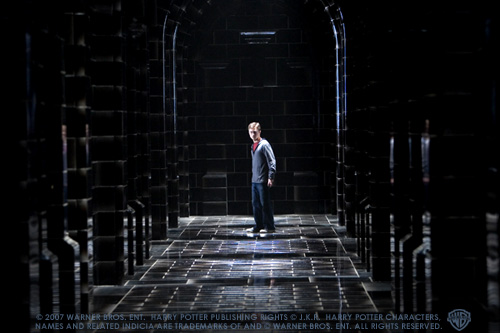 Harry Potter and the Order of the Phoenix (David Yates): Following the now-famous opening of the Warner Bros. logo slowly coming into focus, Harry Potter and the Order of the Phoenix does something very unexpected considering its status as the fifth film in a series. Instead of trudging through more redundant encounters with Harry's cartoon-ish aunt and uncle, this film places its central character (and the audience) in a very different world. On a creaking swing set in a lonely park Harry sits alone in the dreary summer heat, caught between a desire for isolation and a yearning for a connection he will never have. In these opening moments, you know this movie is not just another harmless sequel, or a bland regurgitation of source material like the previous film (enjoyable as it was), Harry Potter and the Goblet of Fire. Instead, this Harry Potter pulses with its own dramatic energy; it crawls underneath your skin like a good horror movie. Equally exciting is how the film balances the wonderment of the magic world and the bureaucratic underbelly of its institutions. The opening sequence establish these conflicts right away and create a stirring atmosphere that's eventually expanded by the rest of the film. Director David Yates makes it known immediately that he wishes to re-explore something that began with Alfonso Cuaron's third film in the series (Harry Potter and the Prisoner of Azkaban), and that is an affective state almost completely independent of the books.
 Paprika (Satoshi Kon): From my original review:
 "Satoshi Kon's Paprika is a film of many things, but above all, it is about dreams. It shatters all distinctions between actual and virtual, analog and digital, in its exploration of cyberlife, avatars, and digital space via the realm of the unconscious... Paprika is thoroughly conventional in its narrative cues and dramatic beats, even its thematic trappings about the actual/virtual binary. But the manner in which it weaves these threads around, through, and within each other is incredibly inventive. Moreover, its marriage of movement and sounds is like being in a dream through the swirling colors and motions of its animation. Kon's film is an intoxicating experience that will linger in the conscious and unconscious mind. On several levels it could be seen as an allegory for cinema; not just cinematic technology (as the plot deals with scientific advances which enables individuals to explore dreams), but about the state of movement and time that cinema can construct, a way of seeing and hearing that manifests in all of us."
 Atonement (Joe Wright): Each year, there is at least one film around awards season that the more "sophisticated" critics make their punching bag. In 2007, Atonement took that title, if only because its World War II setting and apparently generic forbidden lovers plotline, all somewhat typical and expected for awards season. But I'm having none of it. Despite the amazing period detail and formal filmmaking prowess, this movie has tones of thematic and visual subtlety that far transcend its traditional surface details. Constructed with such precision, its aesthetic unity is constantly undermined by a narrative that cannot be trusted. Some have said that Atonement is all about perception. I would argue instead that it's about what shapes perception as well as the implications for manipulating the perceptions of others. It is both a wonderful throwback to old-fashioned epic romances as well as a contemporary critique / update, and it is much more sophisticated than many critics believe.
Syndromes and a Century (Apichatpong Weerasethakul): There are likely hundreds, if not thousands of feature films and shorts each year stretching the aesthetic capacity and narratological structure of images that are unseen by me and millions of others. Syndromes and a Century is a reminder of this. It is a reminder that the quiet simplicity of images often results in the most immediate, even illuminating viewing experiences. The film tells two stories, each with the same characters and dialogue, but in different settings. Rathern than becoming an exercise in shameless narrative manipulation (a la Run Lola Run), Apichatpong Weerasethakul's film is striking rumination on love, memory, and identity. It is neither positive or negative in its portrayal of its ideas and characters, but is instead a reflection on the images, memories, and words that form the basis of our being in relation to each other.
 Away From Her (Sarah Polley) Thinking about this movie, I'm tempted to quote Luis Bunuel's statements about memory and self -- featured prominently at Dennis Cozzalio's blog. It goes like this: "You have to begin to lose your memory, if only in bits and pieces, to realize that memory is what makes our lives." Away From Her is a spiritual companion to Syndromes and a Century, but with an entirely different narrative design. The film is deliberate in its insistence on silence. That silence fills the space between an elderly couple, one of whom whose memory slowly fades away. "I fear I'm beginning to disappear," the woman says. How many times these two people have likely failed to understand one anther, to listen and see each other through the course of their lives. But the silent bonds that often keep people together is a mutual experience in each others' memory; the ability to not just experience life together to make meaning out of that experience together through stories and recollections of experience. Sarah Polley's film is a poignant, yet painful meditation on these things, as well as the more intangible qualities of love.
 One final note: while Julie Christie was nominated for an Oscar for performance, the real anchor of the film is Gordon Pinsett, who beautifully portrays a man who comes to grips with losing his wife.
 3:10 to Yuma (James Mangold): The first time I saw 3:10 to Yuma, I enjoyed certain aspects of it, such as the performances (by Russell Crowe and Christian Bale) and the writing. I was surprised at how moved I was by the end, because I hadn't thought of it as much more than a slightly above-average movie experience. But it was on second and third viewings that the film really came into focus. Simple scenes such as the classic Western night camp seem effortless and simple but are actually quite amazing in their ability to capture the nostalgia of a genre as well as build its own narrative energy, the threads of which are more than relevant in contemporary times. In the age of the great American westerns, John Ford, Howard Hawks, Fred Zinneman, and others used the genre to spin morality tales of good and evil, right and wrong. The genre has undoubtedly evolved into something different, and James Mangold was able to bridge the past and the current with his film, and he does so with eloquence and nuance.
  Persepolis (Vincent Parannaud and Marjane Satrapi): Showing off the limitless creative potential of which animation --and the medium of cinema, as a whole-- is capable, Persepolis is also a deeply personal account of one woman growing up in several countries. It's the kind of story that is only enhanced by the whimsy of its style. With unflinching surrealism, Vincent Parannaud and Marjane Satrapi (whose story this is) invite viewers into young Marjane's mind as she witnesses war and family loss and experiences the physical and psychological aches and pains of growing up without an identity. They take full advantage of the autonomy that animation grants filmmakers and viewers, and they offset their brilliant images with a very real portrait of a woman, a family, and a country at a time of crisis. And yet, the directors never let the movie be defined by its settings and circumstances, but instead locate something much more personal in a girl's growth into womanhood.
No Country For Old Men (Joel and Ethan Coen): How does one begin to talk about this film? Discussed constantly on blogs and in print, The Coen brothers' film can be described as nothing short of a masterpiece. I'd like to single out one aspect of its greatness here: sound. A number of critics have discussed the noteworthy absence score in the film, which is surprising considering how comfortable Joel and Ethan Coen are with music in their films. Some of their most memorable images --the Ax Man in Fargo, the hat in Miller's Crossing, etc.-- were so memorable because of Carter Burwell's musical accompaniment. No Country For Old Men is equally memorable for its music, which is almost impossible to notice due to how it is so part of the image. For example, watch closely Anton Chigurh's conversation with the gas station clerk early in the film. Burwell augments the mood of the scene and its perfect compositions with just the right chord, so deep it's almost unrecognizable. But it's right. As for the sparing use of music, one could argue that the decision not to put music to images in this film does not take away from the musicality of those images at all. After all, as I have argued before, we don't just see images, but smell, taste, and hear them too.
 Once (John Carney): Speaking of music, there have been many filmmakers and critics that have referred to cinema as something of a sibling to music. From a purely technical standpoint, the two art forms don't appear to have much in common. But both as an expression and as an experience, cinema mirrors the transient affective experience that come from listening to music. John Carney's Once is the perfect expression of this union. The whole film is like a song, and the songs contained in the film tell stories that are movies unto themselves. Simply told, Once is a film that follows the relationship of two individuals. They never kiss, or even embrace (to my knowledge), and yet their connection is sensual and impossible, resulting in one of the more bittersweet, deeply felt films in recent years. Small and seemingly mundane as they are, every look between these two, every smile, is a rich expression of feeling.
 Zodiac (David Fincher): Jim Emerson said it best: Zodiac is about information -- its production, distribution, and consumption. David Fincher dares to introduce an irresistible plotline about the unsolved mystery of a serial killer in San Francisco and then turns completely away from it, as if uninterested. What starts as a visceral, brutally physical movie ends up following a cartoonist (Jake Gyllenhal) driving 100 miles to a small-town police station to dig up old records. The murder scenes trail off about midway through the film, and we're left with one person's obsession with uncovering his identity, losing his wife and family in the process. But Zodiac is not so much about the serial murders of the real-life zodiac killer as it is about media and technology, and the massive implications for their use in the digital age. The film paints an idea of its killer with a painstakingly constructed vision of something so unimaginable: a pre-digital world, where information is spread over real physical geography, inked onto pages, and traveling through wires. Information was something to be handled and used for specific means. Fincher's film depicts the unique collision of the analog and the digital that now constitutes our current media culture and manifestations of violence, celebrities, and the ongoing necessity of purpose.