Showing posts with label Critics. Show all posts

Monday, July 9, 2012

A brief (belated) reflection on Andrew Sarris

Film has lost too many legends of late. In the last several weeks, we have seen the deaths of Nora Ephron, Andy Griffith, and Ernest Borgnine, all of whose work had a lasting effect on the Movies (or TV, in Griffith's case). But for film writers and critics, a more personal loss was felt with the death of Andrew Sarris, champion of auteur theory and all-around titan of American film criticism for the last 50 years. At the time the news broke, I was so moved by the bevy of remembrances and beautifully-written tributes that I could hardly find the words myself. Having digested it all, I still feel at a loss for words, suffice to say that although he will best be remembered for his involvement in Cahiers du Cinema and his brief riff with Pauline Kael (which was barely that, as Jim Emerson documents), Sarris's work will remain important to me for a very different reason.
Sarris eschewed the journalistic/academic binary that began to emerge in the 1960's and 1970's, when film studies became more accepted at colleges and universities and journalistic criticism more resembled a buyer's guide. Overly simplistic, perhaps, but this schism was and continues to affect how criticism is approached and practiced. Sarris, though, was never quite comfortable in either mold. That is to say, he was very comfortable in both venues but rejected the ideological simplicity of their respective purposes. This was a staple of his compact writing about films and directors. He recognized the different ways to see movies—as art, as commercial property, etc.—and came at them with insights that blended various sensibilities. Many writers have also noted that Sarris also famously changed his mind about movies and was willing to re-evaluate them. That he fluidly and cogently addressed this in his writing gave it an evenly personal and knowledgeable aura. He made me want to know about movies, but he also made me want to experience them and feel them.
No matter the circuit, the best criticism should be penetrating, informed, and personal. To engage in a bit of playful wordplay, criticism should rest somewhere be analysis and poetry. It's not an easy balance to strike, but Sarris straddled this line so convincingly and, consequently, inspired so much great criticism. His death is a matter of great sadness for those who love and practice criticism. And it is a reminder that in an age of ubiquitous digital exchange—in which opinion seems to trump knowledge, and in which serious media reporters interrogate film critics as if the occupation is without meaning or merit—perceptive criticism is needed now more than ever. And all those who (thankfully) practice it have Sarris to thank.

Wednesday, May 2, 2012

Gaining some 'Critical Distance'


At the start of the year, I announced I would be reviving The Cinematic Art and re-appropriating its content to suit my current interests and capacities. Four months in, I am generally pleased with the results. What started as the posting of simple, short capsules has evolved into the regular (and still brief) reviewing of movies and shows. While the format has limitations, it has also helped me understand and address my own limitations as a writer. If you've read this blog before, you know that I take to criticism with a high degree of reflexivity. Although I don't inject this into my writing these days, I am always wrestling with it and trying to improve my writing and approach with each review.

Another benefit of the recent writing I've been doing has been my rediscovery of long-form criticism. It started when I saw The Artist in February. I drafted a short review, but found myself reading more and reflecting on it. I returned to my capsule review and started adding to it. Eventually I molded it into a grander piece that was posted over at Slant Magazine's blog, The House Next Door. I had a similar recent experience with Mission: Impossible—Ghost Protocol, which I began writing as short review but gradually developed it into a longer polemic. Both essays don the "Critical Distance" tag, a name that suits my long-form critical approach and also reflect my own film-viewing limitations. (I often do not see new movies until DVD release). "Critical Distance" covers both of these angles and more broadly represents my approach to come at a film from the perspective of having absorbed the hype and attacking it with a new set set of eyes. I already have a few ideas for movies to explore future Critical Distance pieces (e.g., Prometheus, The Dark Knight Rises), but it's equally important to allow these essays to naturally develop from my reaction to something. (That I often am seeing films and shows well after their initial run adds to this approach). I realize that there isn't much need for a series like "Critical Distance." As David Hudson recently noted over at his new spot, KeyFrame Daily, "never has the mediasphere been noisier, nor have attention spans been shorter." Movies, even mega-commercial releases, have a brief moment in the sun on release, but are quickly chewed up and digested to make room for the next discussion of the moment. That goes for criticism, too. And that's why I like the idea of an essay series that runs against this trend. For the very same reason, I don't expect these article to resound much within the bigger conversation about a given movie. But it is my hope that they contribute a fresher perspective to works that have had their moment and are worth considering in a new light.

As I move forward with the Critical Distance pieces, I hope to put as much effort into the regular reviewing I've undertaken in recent months. Given that I am not a critic by profession, I am usually about six months behind the rest of the circuit with viewing/reviewing. This is an occasionally frustrating reality, but it also reminds me (as the Critical Distance series evidences) that there are other ways of spotlighting critical discussion than what constitutes the current moment. Nevertheless, I plan to have one foot firmly implanted in the new-to-DVD/streaming front and will also review select films in theaters. (On queue: A review of The Avengers, and perhaps also a Critical Distance piece on the same subjects at the end of May.) But as I am now winding down my engagement of 2011 movie fare, my review base will broaden in coming weeks and months, as I return to watching older films and television shows more regularly. This represents a relatively new direction in my reviewing habits, one that I am looking forward to carving out.

Tuesday, August 19, 2008

Manny Farber: In Memory

"The liveliest, smartest, most original film critic this country ever produced."
-- Susan Sontag, on Manny Farber

Considering who those words are coming from, this is the highest compliment one could receive. And Manny Farber deserved it. Having provided us so many indispensable ideas about visuality and criticism, Farber now leaves us --termite critics, as Andy Horbal once wrote in the spirit of Farber-- to realize his vision of engaging the multitude of images in the world. He will always be one of the most unique voices in film criticism and aesthetics.

Some tributes:

-- Jim Emerson at scanners
-- Brendon Bouzard at My Five Year Plan
-- Glenn Kenny at Some Came Running
-- David Schwartz at the Moving Image Resource
-- Ryland Walker Knight at Vinyl is Heavy
-- Zach Campbell at Elusive Lucidity

Monday, June 16, 2008

David Hudson sounds off

"Movies make you want to see more movies - but, because of the collaborative nature of their making, often in very interesting ways. If I read a book and I like it, or I'm moved or intrigued by it, I'll probably go looking for another book by the same author. Same with a painting and its artist. With movies, it might be more movies by the same director I'll want to seek out, but it might just as well be an actor's work I'll want to see more of, or a cinematographer's. Or maybe it's more the look and feel of that movie's genre or origin - noir, Iran, what have you - I'll want to seek out and sample again.

'The other thing's related: Just as movies arouse a hunger for more movies, they also arouse a hunger for more real living. They make you want to get out and do things - stay out late, eat, drink, fall in love, see new places, meet new people - even the downers. In a way, these last two impulses - see more movies; live more fully - are contradictory. Again, the old anxiety: not enough hours in a day, days in a week, years in a life."


These are the words of GreenCine Daily editor David Hudson, who was recently the focus of Adam Ross's indispensable Friday Screen Test series. Hudson is oft-referred to as the hardest working blogger on the internet. In this piece, Hudson waxes about film, philosophy, and the daily struggles of his work. The interview is a joy to read, especially for those who keep up with his daily work. The quote above does more than highlight the collaborative nature of the cinema. His description of the endless doorways and passages that film can open works as both a concrete metaphor -- i.e. exploring the work of another filmmaker, actor, etc. -- and a more abstract one, which he teases out in the last paragraph. In my view, his final remarks articulate the tensions dormant within cinema and of life so perfectly, evoking the transience of both more effectively than any essay or book that I've read on the subject.

This interview represents a glimpse into the mind of a man whose passion and enthusiasm for movies come through more in his coverage of films rather than his opinions about them. His tireless coverage of the hundreds of films released each year is enough to inspire any cinephile to embrace the larger worlds of international and independent cinema, while still keeping up with the cultural dialogue spurned from discussing studio films. As the subject of discussion here rather than the facilitator of it, Hudson paints a portrait of himself and the art form about which he writes that is reflected in his daily postings on GreenCine.

In some ways, Hudson is film criticism equivalent of that eclectic teacher you had in high school who inspired you to ask new questions, make bold observations, and embrace new forms of thinking; all without ever revealing his own "take" on the material about which s/he teaches.

Do check out the interview if you haven't already.

Tuesday, April 29, 2008

Closing the door on a career in professional film criticism

I'm not a strong believer in meanings arising from cycles or circles in life, but it would be impossible to ignore the symmetry of recent activity on the film blogging circuit. About a week after a one of the great professional critics has entered the film blogging cycle (Roger Ebert), another will be departing. Today I heard the news of Matt Zoller Seitz's retirement from the print criticism; a shock to us all. It's not initially a comforting thought knowing that film criticism is losing one of its best practitioners, but after reading the conversation between him and Keith Uhlich, now the lone editor of The House Next Door, I feel only happiness for Matt as he enters a new stage in his life. His criticism won't be in print anymore, but it will be alive in his filmmaking.

Below is the comment I left for Matt over at The House Next Door:

"I guess there isn't too much I can say in the way of gratitude and best wishes that hasn't been said here already. But I would like to wish you the best of luck anyway! As many here have said, you will certainly be missed, and it's to our good fortunate that you'll still be around as a commenter and sometimes poster.

Unfortunately, I haven't participated as much in these forums/discussions as I would have liked. But if there's one thing I've learned from reading your work here and elsewhere, it's that this form of writing requires participation and devotion to accompany the written thoughts of one person. I have learned that this right here -- the community, the discussion, and the real-life critical dialogue -- is criticism. Like filmmaking, criticism is really a collaborative effort in some capacity, and I've learned that in my own writing, and especially in my initial visits to this site several years ago before I even knew what film blogging was.

I am saddened that you will be leaving this "great experiment"
[of blogging] that you've had such a strong hand in building. Although, much to my regret, we haven't interacted much over my time in the blogosphere, your comments on my blog and links here at The House mean a great deal to me. Knowing that you drop in over at my place from time to time, I consider it a privilage to keep pushing myself to be a responsible participant in this format of criticism. Who knows where we'll end up taking this thing, but whether you're actively part of it or not, you'll be a great presence in it."

Best of luck to you in your filmmaking endeavors, Matt! I look forward to your future criticism, whether that's in words or images. And don't forget, your comments are always welcome here.

Links and linkages: Michael Mann, George A. Romero, and Ben Stein

Although my own writing has been admittedly lacking of late, due to the unexpectedly steep rise of of academic, social, and personal engagements, there has been no shortage of great writing on the web. (I don't mean to suggest that film writing in the blogosphere is generally rising in quality; this is both impossible to support, and plainly a boring idea.) While browsing some of my blogroll links this morning, I found myself caught in a seemingly perpetual whirl of thought and response, link after link. Of course, I admire the consistent quality of all of those whose sites/blogs are linked on my blog, but rarely do I encounter an streaking crest of great writing about such different topics. Today, though, I had the benefit of wtinessing an influx of potent ideas and sensations. Aside from the lucidity of these writings/postings, many of the subjects discussed represent critical debates and filmmakers that personal significance to me, i.e. mediation and re-mediation, digital cinema, Michael Mann, George A. Romero, and, oh yeah... Ben Stein.

Below are some highlights and reflections:


First, I visited Reverse Shot (via the indispensible "Links for the Day" at The House Next Door), where this month's issue focuses exlusively on digital cinema. In particular, each article in the current issue focused on a filmmaker who has worked with film and digital video (or effects). Filmmakers covered include Robert Altman, David Lynch, Robert Zemeckis, Terrence Malick, and so on. I haven't gotten to all or even most of these yet, but I did read Ryland Walker Knight's essay on Michael Mann. I was drawn to it immediately for two reasons: First, Michael Mann's Miami Vice is one of the most significant movies in digital filmmaking, and contemporary cinema on the whole, so naturally I anticipate reading something about it. Second, Ryland Walker Knight is a unique voice in film blogger-demia. So forgive me for expecting to like this piece. Although it's short, Ryland's description of Mann's ability to shrink and expand cinematic space evokes similar sensations as the images themselves. His description of Mann's films is direct, yet elusive, capturing the director's binary fixation as well as his aesthetic fluidity. He writes:

"Mann does not move his (often handheld) camera for the same aesthetic reasons as always on-the-go Paul Greengrass, who means to splinter space; despite all that shattered glass in Collateral and those brutal shoot outs in Miami Vice, Mann’s cinema is after a boundlessness, not a fragmentation. Video affords Mann an endless skyline, where things collapse and collide, day or night."

Mann is a pioneer of DV in commercial cinema. His films are commercial in numbers only. He is essentially making hugely budgeted experimental films. Proving the cinema has very little to do with plot, Mann is making cinema "collapse and collide." It's not about digital or analog technologizing or storytelling, but a massive shift in the construction and consumption of images. For Mann, cinema is about sensation. Thought, memory, and experience are images drifting away in front, behind, within, and around you.

Ryland goes on to discuss Miami Vice, effectively evoking the sensuous nature of the film's images and sounds, and how it compresses and expands time:

"The whole opening sting sequence is characterized by this urgent dynamic, this insistent movement of bodies in space. One might see the entire film in miniature in this club: each body pushing its neighbor, everything tactile and in flux, compacted in Mann’s digital camera, speed not a byproduct of the mise-en-scène but a fact of life in this world of collapsed boundaries/spaces/timelines. Miami Vice is, by nature, a fast film. Mann rarely pauses and when he does it’s not for exposition—it’s to look outside the story (as if there is one) and its relentless movement (if not forward then sideways; never backwards). The most obvious moment of reflection comes early when Sonny looks out a window at the ocean and the sound drowns out for only one line of dialogue. Even rest ends quickly here. Where Collateral draws a single night out, stretching time forward, Miami Vice says “Time is luck” and stretches time in every direction, forcing viewers to play catch-up from the get go. (The “director’s cut” compromises the film’s argument by slowing things down.) The frame is collapsed not strictly in the climax but immediately, from the first shot—the field of the dancer and the splay of light behind her made one image—because of digital video’s omnivorous capabilities to devour light."

Digital images don't just devour light, but redefine its properties and effect. Miami Vice shatters the binary of form and content. It epitomizes digital culture and demands the viewer become an active participant in its processes of sensation. These processes seem to be elemental, and yet they are always mediated and situated by the fluxes of the greater culture of which one is apart. My own reflections on Miami Vice have been long in waiting, but whenever I do get around to offering my own opus on the film, I will likely be returning to this one.

------------------------------

The next article is from Steven Shaviro, whose academic prowess continues to inspire me. Although his ideas are often challenging and complex, he streamlines them in such a way that makes it seem easy. Typically, the intricacy of one's argument correlates with its presentation (in terms of complexity), but Shaviro has mastered the art of the argument and the art of writing so well, and his blog is evidence that academic writing isn't necessarily "for its own people," but can be both relevant and accessible. The cinema-related topics he discusses also helps in that regards, as he reviews films of all kinds and usually advocates a positively fresh perspective about them. (His gushing review of Southland Tales is particularly memorable.) His most recent posting is an in-depth analysis of George A. Romero's latest film, which, despite the best efforts of some critics, slipped into critical oblivion.

Sometimes, the selection of films that make it into the film criticism contemporary canon seems completely arbitrary, unfortunately, and Diary of the Dead is among the many interesting films that caught the short end of the stick, so to speak. That doesn't stop Shaviro, though. He rips through the film's themes, dynamics, and moments in one of the best pieces of criticism of an invidual films I've read in a while. He argues that the movie, despite its apparent broad thematic strokes, offers a nuanced perspective of media saturation in the digital age. Here is an excerpt:

"We have moved from being a “society of the spectacle” to being a society of participatory and interactive media. And Diary of the Dead is thinking about this change — not to say that the new media regime is either better or worse than what came before, but to try to delineate just how it is different. The great unitary spectacle of which Guy Debord wrote has been shattered, and replaced by new forms of distraction and activity in what Deleuze called the “society of control.” We are no longer passive, voyeuristic spectators; instead, we actively both give ourselves over to surveillance, and eagerly surveil (is that a word?) both others and ourselves. We fragment, multiply, and network both ourselves and whatever we encounter. This no longer falls under the dipolar schema of subject and object; but rather has the form of a network in which everyone and everything is a node. This also means that we have moved on from representation to simulation: instead of trying to capture the Real via mimesis, we actively produce bits and pieces of a reality that is directly composed of images, rather than merely being captured or reflected in images. The regime of simulacra is not an “extermination of the real” as Baudrillard claimed; it is rather a state in which the real is effectively being micro-produced and virally disseminated. In consequence, the real and the imaginary have become, as Deleuze puts it, “indiscernible”: reality pushes toward a “point of indiscernibility,” as a result of “the coalescence of the actual image and the virtual image, the image with two sides, actual and virtual at the same time” (Deleuze, Cinema 2, p. 69). Every imaginary simulation becomes altogether real, even as every reality is dissolved in simulacral multiplication."

The most intriguing notion in this paragraph is that representation may have morphed into simulation, in the sense that the relationship of the signifier (representation) and that which it signifies (object of representation) is completely obliterated. We have endured innumerable waves of representation that it is now impossible to distinguish between the two. Subject / object relations, therefore, hold little significance in the debate of agency, identity, and culture.

Although the above quote is denesely theoretical and philosophical, you'd have to read the whole piece to understand that Shaviro seamlessly interweaves these concepts with his descriptions of the film itself. A true Deleuzian, he takes on the image in its most pure state and with complete disregard for easy distinctions.

-------------------------------

Finally, the last piece I'll mention here is by Chuck Tyron (whom I had the pleasure of meeting at SCMS several weeks ago). His blog is a great source of a variety links on media and cultural affairs. From time to time, he will provide his own lengthy commentaries, sometims on individual films. His latest is a review of the new, pro-Intelligent Design documentary, Expelled: No Intelligence Allowed, starring everyone's favorite pop intellectuallist, Ben Stein. Part of the reason I enjoyed reading this is that it was refreshing to read the perspective of a film and media scholar/critic rather than a so-called pundit. As many are aware journalistic critics were shut out of the movie, which picked up the bulk of its momentum from promotions on Fox News and others members of the so-called liberal news media. In the following excerpt, Tyron cites the film's biggest atrocity:

"The critique of the theory of evolution would be bad enough on its own, but Expelled is also one of the most transparently manipulative films I’ve ever seen, with Frankowski comparing an utterly homogeneous scientific community to the Communists and the Nazis at various points and referring to scientists who study evolution as “Darwinists,” as if Darwin is just another ideology on par with these political philosophies. One of the film’s structuring elements involves black-and-white footage of the building of the Berlin Wall alongside color stock footage of the major Washington, DC, landmarks in order to position intelligent designers on par with the founding fathers, Lincoln, and conservative hero Ronald Reagan, virtual freedom fighters on the front in the battle against tyranny and totalitarianism. Darwinism becomes or at least logically leads to eugenics, the film seems to argue, and Stein drops a couple of ominous passages from Darwin’s research to reinforce this point, as if all scientists accept Darwin’s theories to the letter. In fact, Expelled crosses a line that few films do in establishing its analogy between evolutionary theory and Hitler’s theories of eugenics by actually entering the concentration camps and showing the ovens where hundreds, if not thousands, of victims were cremated. Such a manipulative use of the Holocaust dead to score relatively cheap political points should not be tolerated."

In light of all of the anti-war, anti-corporation, and anti-Bush documentaries, I suppose it's natural that conservative fire back with their own ammunition. And pretty soon our film artists may embody the same rhetoric of politicians, meaning that film lover will be treated to hours and hours of slanted, essentialist views. This notion is fascinating, as is the booming popularity of these political documentaries. Opponents of this kind of filmmaking are arguing that filmmakers are abusing the term, "documentary," but, in my mind, that's the wrong argument to make. Of course, these are documentaries. Who ever said anything about documentaries representing objectivity? The images and information presented in them are situated and partial, but are often handled more recklessly than the situated, partial information within scientific literature.

More interesting is the notion that media are continually employed for exploitive ends, despite the capability of achieving so much more. New media provide us new ways of thinking. And yet, even in the most progressive atmosphere for the development of knowledge and media, a large majority of people seem to view media and knowledge as little more than a means to a political end. It's tragic, really. Documentary filmmaking is a rare art that demands empathy, vision, and immense courage from its makers, evident in films such as Helvetica, Manufactured Landscapes, and even the politically-charged (in terms of subject matter) Lake of Fire. Hopefully someday these are the types of movies stirring so much debate and interest. But if the current presidential campaign and media coverage is any indication, that day is a long way off.

---------------------------------

Interestingly, the content of the above pieces --despite covering a diverse span of films and concepts-- oddly reflects the awkward phase we as film critics and cinephiles find ourselves in. Media are converging, morphing, and expanding in manners that challenge the structured, linear means by which we could previously separate and categorize knowledge, memory, and experience. As a medium constituted by countless other media, cinema is not just affected by these changes, but is the locus of that change. However, the subtle reminder with all of this talk of change that runs through all three of these articles is that although the landscape is changing, many of the same sociocultural conventions and assumptions are preserved in spite these morphings and alterations and sometime they are reified by these apparent changes.

Who would have thought a discussion Michael Mann, George Romero, and Ben Stein could ever result in such a twisted synthesis?

Tuesday, April 22, 2008

Roger the blogger

I was disheartened once again to hear the news that another setback has besieged Roger Ebert recently. The man doesn't seem to catch a break. In light of these events, I hope I am not alone in wishing him a safe a speedy recovery! But that's not the only story about Ebert that should catch our attention. Many of his readers and film bloggers alike will likely be pleased to see that Roger has officially joined the blogging circle of film critics -- making him one of several professional (and respected) film critics to begin writing in this medium.

As a blogger, I see this as great news, because it signals a peak in the movement to digitize film criticism; to re-calibrate and re-position it in the changing environment of cinema and journalism. I don't know what he plans to write about, or in what capacity he will be able to write for his new blog (entitled Roger Ebert's Journal), but I will look forward to his forthcoming contribution to the film blogging circle. Given the circumstances of his recent medical ailments, the blog may enable him to write more freely and openly than in the more structured and constricting format of writing several film reviews a week. But no matter how he decides to play in this world, his voice will almost certainly deepen the ever-growing dialogue amongst cinephiles and bloggers, professional and non-professional alike. As Matt Zoller Seitz remarked several weeks ago, blogging may not represent "the future" of criticism, but it is a necessary and tangible next step in the continued evolution of criticism. No one knows what lies on the horizon for film criticism, and although the ranks of professional criticism are currently shaken up, the increasing relevance and prominence of film blogging reminds that there is reason to hope.

Welcome, Roger, and I do hope you make it to your essential "Ebertfest" film festival.

Tuesday, April 1, 2008

Laura Mulvey and other film events in Philly

As those who follow the academic side of film criticism know, Laura Mulvey is a distinguished figure in film theory. Her development of psychoanalytic film theory greatly influenced a whole body of thought and research in the areas of gender, representation, and cinema, starting with the seminal essay, Visual Pleasure and Narrative Cinema (1975). Although my most recent project critiques her theories as functioning among the very modes of representation and analytical frameworks that she seeks to bring down, Mulvey's importance as a feminist and a film scholar has left an indelible mark on cinema studies and enabled the development of a variety of feminist film theories over the past three decades.

She is currently in Philadelphia, participating in a lecture series at the University of Pennsylvania.

Here is the information from Penn's Cinema Series web page:

Tuesday, April 1, 3:00 pm

Penn Cinema Distinguished international Scholar Series Presents

LAURA MULVEY

Lecture on Kiarostami's transition to the digital

401 Fisher Bennett-Hall
3440 Walnut Street
University of Pennsylvania
Tuesday, April 1, 7:00 pm

Penn Cinema Distinguished international Scholar Series Presents

LAURA MULVEY

Public screening of Riddles of the Sphinx,
Frida Kahlo & Tina Modotti, and Amy!

International House
3701 Chestnut Street
Philadelphia, PA 19104
Tuesday, April 1, 8:00 pm

PENN CINEMA PRESENTS

You Talking To Me? America Remakes Movies... a film series

Wings of Desire
Wim Wenders, Germany, 1987

Sky Lounge Harrison College House
3910 Irving Street
University of Pennsylvania
Wednesday, April 2, 5:00 pm

Fourth Annual Film and Pedagogy Colloquium

Laura Mulvey on Teaching Formal Film Analysis
William Boddy on Teaching Television Studies

401 Fisher Bennett-Hall
3440 Walnut Street
University of Pennsylvania Thursday, April 3, 5:00 pm

Penn Cinema Distinguished international Scholar Series Presents

LAURA MULVEY

Lecture on Under the Skin of the City

111 Annenberg School for Communication
3620 Walnut Street
University of Pennsylvania


This marks the second impressive catch for this quickly up-and-coming program, which also featured a series on Werner Herzog for several nights last Fall. (Although I regrettably missed out on seeing Herzog talk, I did catch a screening of his latest movie, Encounters at the End of the World.)

Unfortunately, I won't make it to this lecture series. But for those in the Philadelphia area with an interest in film studies, I strongly encourage attending. Besides, it's free! Distinguished Scholar Lectures just don't get much better than that. It's sort of like a pre-Festival treat for film lovers in Philly.

Which reminds me: I will be attending the Philadelphia Film Festival this coming Saturday. Anyone interested in meeting downtown, let me know.

Friday, February 22, 2008

The films (and reviewing) that got away

Year-end dialogues regarding the finest films of the year have gradually whittled down the number of films discussed from about 15/20 films to about five or 10 over the past few months. Then the Oscar nominations were released last month, and it was down to five films. Bloggers, pundits, and critics have since argued about the five movies -- whether one of them didn't deserve to be there, which should win the prize, etc. After Sunday, it will only be one. And then we will all move on.

Seeing the plurality of great cinema released last year be reduced to bland discussion of "bests" is no doubt a tragedy. To see only five films, which is really only three -- Juno, There Will Be Blood, No Country For Old Men -- being discussed in spite of the many great films that didn't "peak at the right time" in the politics of awards season can be depressing. That's not to say that the Oscars are the be-all, end-all of critical discussion, but they represent the public's small investment in good, quality cinema. So the fact that only a few films, some of which are considered questionable by many, are being examined by the public eye is somewhat discouraging, especially when thinking back on the many great movies last year that slipped under the radar. Although I at least liked all of the Best Picture contenders this year (including Juno, minus the first 15 minutes), even the one I loved, i.e. No Country For Old Men, which has been written about and discussed in such great detail, is perhaps receiving an excess of attention, especially considering that so many other movies that are equally good, interesting, and worthy of discussion in the public domain.*

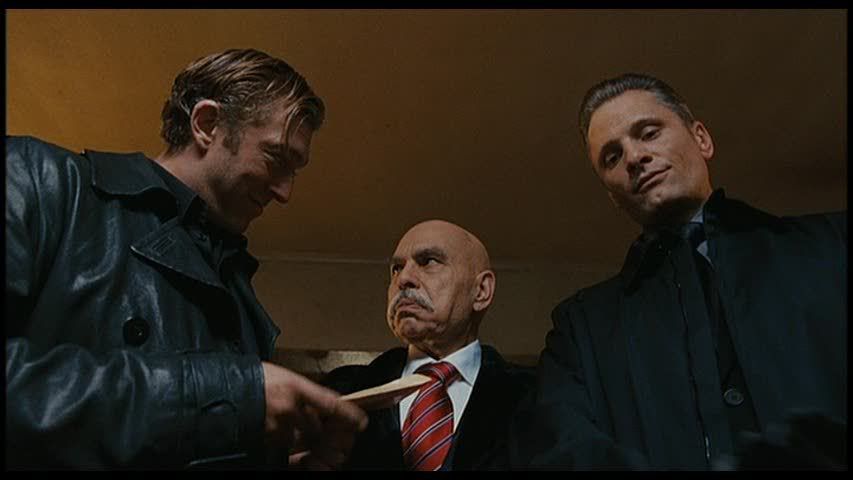
That's why it's refreshing to see other movies being talked about this time of year, and not because they were released in theaters or DVD. One of my very favorite movies from last year, David Cronenberg's Eastern Promises, had initial surge of discussion back in September during its theatrical run. (Here's my review of the film, written in September.) But this dialogue was quickly suppressed when the Toronto Film Festival started, and a variety of other films shared the attention. Nevertheless, Eastern Promises is a great achievement; that it's not currently held in the same high esteem as No Country For Old Men is a cinematic/critical crime.

It's easy to forget about wonderful films like Eastern Promises when Oscar talk has smothered all discussion about any other movie. Although Viggo Mortensen was nominated for Best Actor, his presence in the race is an afterthought; further validating the notion that the Oscars are nothing more than a political race. Eastern Promises, for whatever reason, lacks the financial backing and social presence and has lost a lot of steam since its release. It was fortunate enough that Mortensen was even nominated. That said, he doesn't stand a chance against a film that's gaining more momentum, i.e. There Will Be Blood, especially in the Best Actor category. Again, it's all a matter of politics. People are talking about There Will Be Blood and not Eastern Promises; whether the former is more worthy is more than questionable, stripped of the politics. Looking at the films and performances though, Mortensen's performance still stands out to me as the finest by any actor this year.

Which brings me to why it's so refreshing to read insightful articles about another movie, such as Ed Howard's intelligent review of Eastern Promises. Ed's writing demonstrates that this film (or any film) can be discussed, analyzed, and enjoyed from several perspectives; not just can be, but it should be. And he does this with so few words. His writing on Eastern Promises --like much of his work-- serves as an introduction to the film's key themes, and suggests a variety of levels on which Cronenberg's film resonates. Here's an excerpt:

"The story of Cronenberg's film — the real, underlying story lightly disguised by its genre trappings — can be read from the abundant symbols he employs. It's a story of the traditional family undermined by both homosexual desire and explosive violence — a brief that sounds surprisingly conservative on paper, except that Cronenberg clearly takes such gleeful pleasure in disrupting the placid surfaces of Hollywood conventionality that it's hard to take the film as anything but a radical critique of the normative structures it sometimes apes. Unlike A History of Violence, where Cronenberg seemed to disappear too readily into the conventional surfaces of the genre narrative, Eastern Promises is a prickly, genuinely disturbing and potent film that may indicate a fresh new development in Cronenberg's oeuvre. Certainly, it's his most perverse and exciting film since the delirious high point of 1997's Crash, and that alone is reason enough to celebrate this return to form."

I recommend heading over to his site and reading the whole review over at his place, Only the Cinema; a site that, by the way, features some of the most consistently thoughtful and provocative film reviews on the film blogging circuit. This review, in particular, is a model example of strong journalistic criticism, which is so sorely needed in the published and blogging venues. And in the midst of pervasive Oscar previewing and discussion, it reads even better.

I have always strongly felt that journalistic film reviewing can serve a good purpose in film journalism. The best of it can even bridge the gap between analytic examination and reflecting on the immediacy of cinematic sensation in tantalizingly few words. When that happens, it's a special thing.

Your thoughts?

-------------------------------------------

* Note: I'm not proposing that critics stop or greatly reduce discussion of films like No Country For Old Men. Engaging articles like this remind that too much can't be said about films like the Coens' eventual Best Picture winner. I'm instead suggesting that critics and bloggers --the latter of whom can mostly control the content of their output-- broaden their critical horizons and dare to discuss movies that aren't being discussed currently.

Friday, January 11, 2008

Critics Not There: Atkinson on Kael

So many articles and blog posts now (mine included) tend to focus on films and filmmakers that/who influence cinema, but seldom is the work of the critic examined. While critic profiles shouldn't be nearly as prominent as those for films and filmmakers, they might serve a good purpose if only because critical evaluation can indeed be influential with regards to a particular movement in cinema or film culture; sometimes even pop cultures. Renowed films critics like Sergei Eistenstein, Andre Bazin, and Andrew Sarris come to mind as influential figures who helped to change how movies were looked at.

Today, film critics are more of a collective symbol than anything else, at least in the pop-sense. Other than Roger Ebert, there are no "celebrity critics." The figureheads of academic and journalistic film criticism engage each other on more intimate terms, inasmuch that the dialogue seems to be happening within a critical circle, which includes critics around the country and is followed by a small clan of faithful film lovers; the kind of people you'll find at an arthouse cinema. In this critical culture, there great work is being done by a variety of critics in a number of styles and media: blogs, zines, journals, weeklies, etc. To access much of this material online (and for much of it to be online) is exciting as a hopeful contributor to the dialogue (some day) and as a pure lover of cinema. That's why I like to highlight the work that's done by critics of now and critics of then, even though the landscape for criticism --much like for cinema-- is changing drastically. Because that culture has shifted so much, as there are now numerous levels of critical inquiry in various media, the much simpler time of print film journalism/criticism is now being mythologized. This makes for some fascinating though for contemporary students of cinema and criticism.

Therefore, in an effort to highlight contemporary film criticism in a similar mode of admiration for criticism of yesteryear, I would like to point to at least one film critic represents everything that modern film criticism can be: Michael Atkinson. Though I've yet to read any of his books, Michael Atkinson's work has appeared in print publications of all kinds, from scholarly film journals to daily newspapers. His writing is informed by a strong background in film history suffused with a pop-saavy, but incredibly structured prose that lends itself to all forms of criticism. The simple task of film reviewing, often considered inescapably bland, can be elevated to a formidable art, as evidenced by Atkinson's informed, fast-reading style. His blog, Zero For Conduct, offers everything from quick-thoughts on his recent viewings to longer, more analyitc musings on books or critical and/or cinematic trends.

But the reason I point to Atkinson, and the reason I began thinking about these larger matters of the culture and history of film criticism is because of his most recent post, which is actually something he wrote a long time ago: an obituary for the utterly unique and now legendary film critic, Pauline Kael, whose work I have gradually familiarized myself with over the years. Atkinson writes:

Indeed, Kael’s relentless eminence seemed to have everything to do with her attitude and gender. Face it, a miniature tigress with gray hair and barbed tongue dressing down a male-dominated culture was and still is a richer source for personality cultism than the entire frumpy lot of American film reviewers combined. What if she’d been a man? She might have been less newsworthy, but if Kael remains important, it’s only insofar as her books keep the golden age of filmgoing alive, and insofar as her influence and power-brandishing has either hindered or helped cinema as it stands today. Film criticism is such a mundane project, plopped down upon an endlessly complex entity: movies. That Kael was the first and last true celebrity moviehead may be, in fact, a sign of hope for the future."

Great stuff. I can see why this piece would have stood out a few years ago, and why Atkinson may have been the subject of great scrutiny. But I can also see it's utter importance to film criticism, both in its being and its content.

Kael represents that critic everyone disagrees with, who all critics take issue with on some level. But, somehow, she is a modern goddess of film criticism, embodying everything modern criticss wish they could be. One could say she's the Bob Dylan of film criticism, not to put to fine a point on it. She incited debate, controversy, and thought in her writing, and her relevance to a new generation of film critics seems to be even stronger, especially as contemporary film criticism reaches now reaches the understanding that it can never offer up somebody as resonant or discussion-inducing.

That doesn't mean that criticism has lost something, or that it's slipped from relevance. I would actually argue that good criticism is crucial now more than ever. As cinema moves into a positively digital realm, so too will criticism. Right now, we have more reproductions of reproductions of criticism that a way of making sense of it all via old models is more increasingly difficult. It's becoming very hard to separate bloggers from professionals, the good from the bad, the relevant from the irrelevant. Critical conventions and styles of an older criticism both inform new criticism and continually remind how the criticism of new will never be the criticism of old. Atkinson evokes this hopeful tragedy (if that makes sense) in his analysis of Kael, by highlighting the endurance of Pauline Kael as an image, a symbol, at a time when criticism is neither here nor there. Which, as Atkinson points out, may be the best thing about it.

Monday, January 7, 2008

Post-thoughts on Into the Wild

Ah, January... that special time in the cinematic year. It's the thick of awards and listmaking, and it's also the season for unimaginably awful movies to be released. (Anyone see One Missed Call this weekend? Anyone?) That's why now is a great time to reflect on the movies from the past year that continue to stand out. While I will have my own reflections on the year in cinema sometime in early March -- when I finally catch up with the many major releases I missed this Fall which will be landing on DVD -- I would like to note one tidbit in a recent article by A.O. Scott regarding the vastly misunderstood Into the Wild, one of the year's most oddly cold, yet inspirational movies. And definitely one of the most memorable. For a film that plays by a lot of rules (i.e. voiceover narration, slow-motion nature shots, etc.), it has moments that infuse those conventions with real power. One such moment, in my mind, is when Hal Holbrook's character gazes searchingly at the youthfully naive Chris McCandless, wishing, hoping for the boy to see what's in front of him. Those scenes, in particular Holbrook's moving performance, and others such as Chris trying to hunt and cook in the wild haunt me to this day.

Anyway, I'm mentioning this because I've had a few conversations about the movie recently in which I've defended the movie and its maker from the claim that he romanticized Chris McCandless all out of proportion (as Woody Allen might say). Shortly after my most recent conversation, I visited the New York Times website and came across A.O. Scott's article, in which he pointedly observes Chris' strong attachment to the social, even though he consciously denounces society and is suspicious of human connection. Scott's final words may be the best I've read about the movie since I saw it in September. He says:

And much as Mr. Penn’s film invites us to identify with Chris, to share vicariously in the exhilaration and the terror of his roaming and rambling, it also frequently places us in the sensible shoes of the people he leaves behind. And that is why we feel his death so acutely. The lesson of the film may be that, while the bonds of affection that hold people together may be frail, imperfect and frustrating, especially when compared with the majesty and integrity of nature, those attachments are more durable and more necessary than Chris McCandless may have wanted to admit. Only other people, after all, can welcome you home, or miss you when you’re gone."

As I have noted before, Sean Penn definitely seems to be inspired and perplexed by McCandless, to the point of seeing him as an essential, relevant figure, even a hero, in some ways. But the film never shies away from the truth that Chris was also arrogant, naive, and neglectful of those around him. Into the Wild is such a strong film because it captures a real sense of the person; his flaws, his strong points, and his ambiguities. His story was fascinating, and his insistence on connecting to the natural world is more than admirable; it's incendiary. As we face greater environmental threats. and as we integrate mechanical and digital technologies into our cultural and individual existence and relationships, Chris McCandless' story is inspiring. And the tragedy comes out of Chris inability to find that medium we should all be searching for; a connection with people, and a connection with the world.

Monday, August 27, 2007

Roger Ebert and his Great Movies

As I do most Sundays, I was perusing Roger Ebert's website yesterday morning and saw that the Great Movies section appears to be up and running again. Of course, this is great news. The column has been a staple in my online film reading for as long as I can remember. Running once every two weeks (with the Answer Man column appearing on alternate Sundays), the column features some of Ebert's best writing and film criticism as he reflects on cinematic treasures. His insights on individual films are unique, even subtle and are sufused with an extensive knowledge of film history and cinematic style. Unlike the lengthy analyses appearing in film journals or books, these columns can usually be read in less than 15 minutes and are smoothly written. This coupled with the aforementioned insights make the column an essential read, 26 Sundays a year. Another great aspect of the column is the unexpected nature of the selections. At first glance, it would seem that he adheres to your typical movie critic canon, with expected choices like Casablanca, Citizen Kane, The Godfather, It's a Wonderful Life, and others. But a closer look reveals that Ebert's tastes and sensibilities are very ecclectic, even brashly contrarian. On what other list will you find Saturday Night Fever just below Santa Sangre or Yojimbo right after Yellow Submarine?

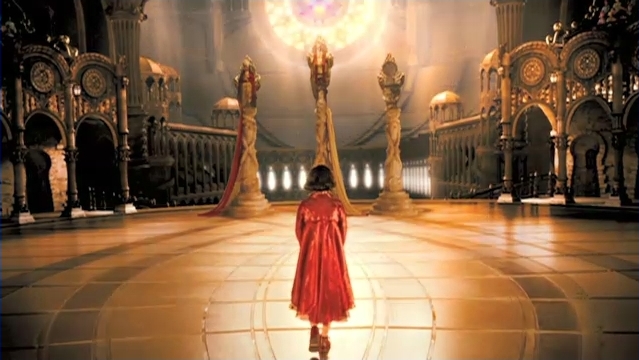
This week's selection, Pan's Labyrinth is in some ways expected, due to his absence from reviewing when the film was releases last Winter. It might seem that the Great Movies column is appropriate for it because it would give him a chance to review the film (as he clearly loved it). But as with most of Ebert's criticism, there is more to this selection than might initially appear. Over the last month or two, Ebert has revisited some of bigger releases over the last year that he was not able to review during their release. These reviews, which include four-star reviews of The Departed, Zodiac, and Casino Royale, were not published in the great movies column, but instead ran alongside reviews for current films in release. While I have no inside information on this, I would guess that the choice to run the aforementioned reviews on the main page of rogerebert.com was to call readers' attention to the fact that Ebert has now officially reviewed several prominent movies of the last several months. Why not then go back and review dozens of late 2006 and early 2007 releases? Because it appears that Ebert is selectively choosing a couple of films that seem as though they will be "around for a while"; by this I mean that films like Casino Royale and The Departed are going to be analyzed and discussed for a long time to come and represent memorable artificats in mainstream American cinema while Ebert was gone. Of course, he can't go back and review them all, or even get to all of the similar memorable staples during his absense. But his reviews of these respective films represents an effort to record his own contribution to the dialogues about them.

So what does it mean to survery the collective interests in determining what will be discussed or deemed cinematically important, if not for quality but perhaps for influence? Difficult to say. It's more a guessing game that it seems. His initial three choices are rather safe (among them one best picture winner and an origin story for one of cinema's most influential characters), and I would expect that his reviewing such films does not continue for a whole lot longer, since he must commit the majority of his time on reviewing new films. Notably, Roger thought highly of all of the older films that he has reviewed, which I believe only includes The Departed, Casino Royale, and Zodiac (but I could be wrong), which is why it would seem appropriate that he would include his review of Pan's Labyrinth among this effort to survey "important" movies of the last year. Instead, his review of Guillermo Del Toro's film appears in the Great Movies column, which is typically grounds for established classics that have cemented themselves in his mind and that he has seen a number of times over the years. A curious choice, for sure, but one that I may understand.

Time plays a big role in cinema; both within it and outside it. I should note that I don't take the word "great" lightly. Like "classic" or "masterpiece", it's a term that suggests another level for a movie, one that can't really be determined based on a single (or even mutiple) viewing/s of a film, however much it may grab you or announce itself as great. Yes, these terms are broad and flimsy, and are rather empty without sufficient analysis and examination, but they wield great influence for both critics and readers, as the continued popularity of Top 100 movies lists suggests. As Edward Copeland notes in the regulations for his Non English-Language Films List, assessing cinema essentially requires the critic to really wrestle with the text before placing it among the pantheon of films that s/he has seen in many contexts and places in one's own life; these films show new colors each time, while unveiling new dimensions to old perspectives each time they are viewed. In that sense, time is required for any movie to be considered great or classic.

But in our experiences as critics, scholars, or film lovers, some movies ingrain themselves in our minds and souls, where they continue to live. Although once is never enough for any great movie, there are rare instances (which I find often depend upon the individual and her/his experiences with life and cinema) when we latch onto a movie when we first experience it. During these experiences, we can both be invovled in the immediate moment of the film's sensibilities, compositions, sights and sounds, while simultaneously recognizing that this movie's treasures --a few of which may be breached in that first viewing-- lay in store to be discovered in more detail on further viewings. It's a strange intuition, to know that a movie will stay with you and affect you so deeply in so many different ways, but it's one that I would guess every movie lover experiences every so often. For me, and I would guess Roger Ebert, Pan's Labyrinth is such a movie. In recognizing this, perhaps Ebert felt it necessary to place the film immediately among the many great films over the past 100-plus years.

I'm sure others would disagree, but my two viewings of the films suggest to me that Pan's Labyrinth deserves to stand among the best. Although I hope to someday examine the film from a variety of perspectives (I shared my initial thoughts here), I can now only observe those those intangible intuitions and feelings of how the experience of seeing that film (or any great film) can affect me so profoundly. Most great movies are in some form (albeit in very different ways) ruminations on the elusive human condition as manifest in visual narrative. In that sense, all great movies are reflexivse of some element of narrative or cinema, as narrative is one of the very few defining elements of humanity throughout all civilizations, right down to every individual. Narrative is apart of all of our lives, and, in the case of Pan's Labyrinth, we have narrative that is equally ethereal and brutally realistic. Some how, some way, Del Toro captures the fleeting feeling of that enraptured state that any person may find her/himself in while experiencing a narrative. The film juxtaposes two different worlds, the endless spectrum of imagination and the harsh reality of organized warfare and governmental control. The beauty of the film is not in how it separates these two worlds, but in how it brings them together, demonstrating their indelible influence upon one another.

Here is a short excerpt from Ebert's review of the film (the first and last paragraph -- it's up to you to read the rest!):

"Pan's Labyrinth" is one of the greatest of all fantasy films, even though it is anchored so firmly in the reality of war. On first viewing, it is challenging to comprehend a movie that on the one hand provides fauns and fairies, and on the other hand creates an inhuman sadist in the uniform of Franco's fascists. The fauns and fantasies are seen only by the 11-year-old heroine, but that does not mean she's "only dreaming;" they are as real as the fascist captain who murders on the flimsiest excuse. The coexistence of these two worlds is one of the scariest elements of the film; they both impose sets of rules that can get an 11-year-old killed.

...

What makes Del Toro's "Pan's Labyrinth" so powerful, I think, is that it brings together two kinds of material, obviously not compatible, and insists on playing true to both, right to the end. Because there is no compromise there is no escape route, and the dangers in each world are always present in the other. Del Toro talks of the "rule of three" in fables (three doors, three rules, three fairies, three thrones). I am not sure three viewings of this film would be enough, however."


I'll just make a few more notes about Roger Ebert and the Great Movies column to wrap my thoughts on this...

I generally consider Roger Ebert the Steven Spielberg of film criticism inasmuch that he is often dismissed by his peers for being to "mainstream" but routinely offers subtle insights into filmmaking and film watching throughout his varied work. Yes, he plays by many of the rules (as one must do to thrive in the mainstream), but within those broadly familiar frameworks of informal, seemingly simple weekly reviews, he slides in subtleties that go unnoticed by those who only allows themselves to see the more conventional elements. Not all of his work is brilliant or cutting edge (but whose is?), which is tough considering that he reviews hundreds of films a year. Like the films themselves, his critical insights are not all poetic, incendiary, or great, but he maintains a level of consistent interest and quality in his work that is unparalleled by many, and very often offers sound, subtle, even sublime movie criticism.

Perhaps the most important lesson I've learned from Roger Ebert through his criticism is that any movie can be great, whether its about dueling spaceships or existential voids. Ebert's passionate writing about a diverse field of movies not only expresses his broad taste for storytelling, but also communicates his philosophy that cinema is a medium for all stories and that critics should never be above certain kinds of movies. Blockbusters or indies, new or old, greatness can be found in all corners of the medium, in all types of stories. No piece says this more than what is perhaps my favorite article by Ebert, which is a retrospective of the First 100. This article spoke to me 10 years ago, and (much like a great movie) continues to speak to me today, only in new ways. Here is an excerpt:

"I like to sit in the dark and enjoy movies. I think of old films as a resource of treasures. Movies have been made for 100 years, in color and black and white, in sound and silence, in wide-screen and the classic frame, in English and every other language. To limit yourself to popular hits and recent years is like being Ferris Bueller but staying home all day.

I believe we are born with our minds open to wonderful experiences, and only slowly learn to limit ourselves to narrow tastes. We are taught to lose our curiosity by the bludgeon-blows of mass marketing, which brainwash us to see "hits," and discourage exploration.

I know that many people dislike subtitled films, and that few people reading this article will have ever seen a film from Iran, for example. And yet a few weeks ago at my Overlooked Film Festival at the University of Illinois, the free kiddie matinee was "Children of Heaven," from Iran. It was a story about a boy who loses his sister's sneakers through no fault of his own, and is afraid to tell his parents. So he and his sister secretly share the same pair of shoes. Then he learns of a footrace where third prize is . . . a pair of sneakers.

"Anyone who can read at the third-grade level can read these subtitles," I told the audience of 1,000 kids and some parents. "If you can't, it's OK for your parents or older kids to read them aloud--just not too loudly."

The lights went down and the movie began. I expected a lot of reading aloud. There was none. Not all of the kids were old enough to read, but apparently they were picking up the story just by watching and using their intelligence. The audience was spellbound. No noise, restlessness, punching, kicking, running down the aisles. Just eyes lifted up to a fascinating story. Afterward, we asked kids up on the stage to ask questions or talk about the film. What they said indicated how involved they had become.

Kids. And yet most adults will not go to a movie from Iran, Japan, France or Brazil. They will, however, go to any movie that has been plugged with a $30 million ad campaign and sanctified as a "box-office winner." Yes, some of these big hits are good, and a few of them are great. But what happens between the time we are 8 and the time we are 20 that robs us of our curiosity? What turns movie lovers into consumers? What does it say about you if you only want to see what everybody else is seeing?"


Below is a short list of some of my favorite Great Movies reviews over the years.

Dark City
E.T. -- The Extra-Terrestrial
Groundhog Day
JFK
Manhattan
McCabe & Mrs. Miller
Network
Saturday Night Fever
Star Wars
Strangers On a Train
Vertigo

It's worth noting that I agree with Ebert that each one of these movies is indeed great, which would lead some to deduce that my love of Ebert's criticism is tied to the fact that I love his reviews I agree with. As I've noted before, sometimes I couldn't be in greater contrast with Roger regarding some movies (ahem, War of the Worlds!). But engaging criticism is not about agreeing with the critic. It's about learning and challenging one's own interpretation of a movie or understanding of movies. Why then do I highlight these movies? Because they represent a diverse collection of his writing that is personal, knowledgeable, poetic, sometimes even profoundly moving work about films I personally hold closely. That love or appreciation of these films was enhance, stretch, even challenge after reading his reflections. I believe that all of Ebert's best writing and critical qualities are contained in these reviews to varying degrees. For me, they highlight his flexibility and out-and-out quality as a film critic. His writing continually shows me that writing about cinema is both incredibly important and very personal. Nothing better sums up Ebert's place in film criticism than Jim Emerson's observation in May: "He's so very much more than the sum of this thumbs."

Now that I've showed you my list of favorite Great Movies, let's see yours.

Tuesday, May 22, 2007

A letter to Richard Schickel

Dear Mr. Schickel:

I know that you probably cannot hear me down here in the lowly blogosphere as you sit atop your pedestal at Time Magazine, and that you would not stoop to such a low as to read something on one of these unworthy blogs. But if you so allow me, I would like to bring a couple of points to your attention.

Your article in the Sunday edition of the Los Angeles Times correctly addresses some very important and serious issues currently plaguing film criticism, specifically regarding the favoring of opinion-voicing over "disciplined taste, historical and theoretical knowledge and a fairly deep sense of the author's (or filmmaker's or painter's) entire body of work." Interestingly, I should point out that I too have recently written about these very issues here on my own blog, not that you would know. I argued that certain areas of the film writing community perpetuate the consumer mentality to which they pander, and that real criticism is often much more difficult to find (in the journalistic circuit) amongst the many empty expressions of opinion that permeate a majority of mainstream film reviews. However, while you point to blogs as the corruptors of film criticism, your arrogant tone and uninformed claims regarding the film blogging community are evidence that the very problems you speak of invade the highest levels of journalistic criticism, especially your own.

Your stature as a published and respected critic, Mr. Schickel, does not entitle you to make broad claims about us "busy bloggers" that lack any validity or reasoning. However, since you have done precisely that, you have shown yourself to be among the very imposters of film criticism you label bloggers to be. It's a shame that you don't have one of these "less permanent" blogs, in which case go back and erase or edit out the hypocrisy of your argument. Because you are unable to do this, I can only advise that it would be in your best interest as a true critic to heed your own advice before voicing an opinion on something about which you seem to know very little.

Sure, any critic can express an opinion about blogs, but, to use your own words, true criticism is more than just an opinion.


Sincerely,

Ted Pigeon
Blogger


[For some of my thoughts on blogging and criticism, check out two entries I posted a few months back: Why Blogging Is Essential and A Blogger's Reflections. Both contain typos, for sure, as they were written at a time in which I was editing my posts less. But that sums up the flaws and the (potential) beauty of blogging.]

Saturday, May 19, 2007

Pop Reflexivity and Opinion-Based Reviewing

While I agree with the many critical assertions that the third "Shrek" film is a blatant cash-in to capitalize on the massive success of the previous two films, the journalistic critical community's overwhelming reliance on this is evidence of the many problems with film criticism. In short, this criticism (if it can be called that) is a cop-out. I'm not saying that one cannot take a political/media economy approach to film criticism. But relying on it to explain a film's flaws while neglecting to offer sound reasoning is precisely the reverse of what criticism is - or should be - about.

This is just one example of what is essentially an expression of opinion. Qualifications for film criticism in journalistic circuit require an individual who knows a little something about the movie industry, can conjure a few clever puns, and structure a short essay. This is how many readers perceive film criticism, and it's hard to blame them given the prominence of such "criticism." Anyone can express her or his opinion about a film - that's not difficult. But to articulate an argument and defend it elevates opinion into criticism. (Furthermore, this approach to criticism and its content fundamentally misunderstands the importance of the medium itself.)

Unfortunately, our news media culture tends to prize expression of opinion over intelligent criticism: keep it short, keep it sweet, and don't bother providing a reasoning for your argument - just throw your conclusions out there. This is the cultural attitude towards most issues involving politics, art, etc., and unfortunately many film critics perpetuate it. Rather than asking questions of a movie, observing details, engaging in thoughtful commentary, and piecing together an argument based on knowledge of the medium, they lay down the "answers," or opinions often based on nothing. A film is too much of one thing, not enough of another. [For those who haven't read this absolutely essential piece on criticism by David Bordwell, he outlines the problem with criticism far more efficiently than me. If you have read it before, read it again.]

Not all critics are guilty of this. In fact, there are many wonderful critics in the journalistic circuit. For example, on the topic of Shrek the Third, A.O. Scott's review, while brief (as most journalistic criticism demands), raises many thinking points about the nature of the film's underpinnings and, interestingly, a subtle commentary on these very issues of opinion and criticism as manifest in American popular cinema. An excerpt:

"Expressing a sometimes explicit animus against the Disney versions of well-known European folk tales, the franchise set out from the start to scramble the traditional polarities of good and evil, setting itself up as a more sophisticated, knowing brand of pop-culture magic. But those old stories — and those classic Disney movies — were almost more complicated than the parodies allowed. Their eerie subtexts and haunting ambiguities have always been more crucial to their power and appeal than the overt lessons they teach. “Shrek,” “Shrek 2” and “Shrek the Third,” by contrast, are flat and simple, hectic and amusing without being especially thrilling or complex. Their naughty insouciance makes their inevitable lapses into sentimental moralism all the more glaring."

Focusing on the supposedly witty references to previous narrative styles and elements, Scott exposes a facade permeating much of pop entertainment and pop criticism. This parodic approach to comedy and satire is typical of many digitally animated films and a surprising amount of television shows. Although these clever references appear to be satirical and sharp in their commentary, they exemplify the cultural trend of favoring quick-witted opinion over real critiques. And how fitting that one who understands criticism and its purpose - A.O. Scott - point this out. The "Shrek" films are most guilty of this; they appear to jab at fairy tales and Disney, yet they themselves very much follow the same pattern of moralism and syrupy endings. As Scott says, the referenced narratives are typically far more interesting than the film referencing them. But because contemporary films seem to be only what consumers are interested in, no real knowledge of these past stories exists outside these references.

Movies are not "texts" in the same way that a languaged argument is, and therefore cannot build arguments as an essay might. But they are capable of offering commentaries of a different variety - through narrative structure and visual style, juxtaposing different familiar elements and achieving new images through reflexivity, in a broad sense. This, I feel, is essential in storytelling, cinema, and communication; not empty referencing, but more subtle variations on styles and structural patterns. True reflexivity builds upon an idea and is more aware of the details of what it is reflexive upon, unlike the flat commentaries offered by the "Shrek" films and countless other pop-reflexive narratives. In these films and other pop narratives, real commentary or criticism is lost somewhere amidst the self-aware, endless referencing. These narratives may appear consciously rejecting the often shallowly interpreted and understood traditions of more traditional narrative, yet are unconsciously reliant on them to exist all. Pop-reflexive cinema is nothing more than an uninformed expression of opinion. (And opinion without reasoning or knowledge is not much of anything at all, as anyone who has ever seen or read Ann Coulter knows.) Unfortunately, this defines much of critical discourse in our media culture. With its championing of empty opinions and content over form, it is a criticism deserving of the pop-discourse it perpetuates.

Tuesday, May 8, 2007

Critic and the blockbuster

In the Sunday edition of the New York Times, Manohla Dargis has written an excellent article about the evolution of the rocky relationship between critics and blockbusters over the last 30 years. Adopting a somewhat removed approach from this apparently intensifying struggle, Dargis articulates (in my mind, at least) a deep problem with criticism - both academic and journalistic. She writes:

"The negative rap on blockbusters is partly due to the literary bent of a lot of critics, who privilege words over images and tend to review screenplays, or what’s left of them, rather than the amalgamation of sights and sounds in front of them. But the sneers also suggest an underlying and familiar contamination anxiety. In the 1980s “Top Gun” wasn’t just a glib divertissement; it was evidence that MTV had infected the movies like a deadly virus. In the same grim light “300” isn’t just a shell of a movie; it’s proof that the movies have been infiltrated by an outside force, namely video games.

The threats have changed over the years — from television to music videos, comic books, digital technologies and so on — yet what has remained constant is the idea that the movies are under siege. But if the movies have taught us anything it is that they are brilliant adapters. They mutate and shift, stretch and adjust, and they neutralize those threats the way an organism absorbs nutrients, by assimilating them. We call some of these movie mutations comic-book flicks and compare still others to music videos, sometimes with a sigh, sometimes with a smile. We complain about car chases and forget that D. W. Griffith was among the first to put pedal to the metal on screen. And we condemn blockbusters for, if we’re lucky, doing the very thing we say we want from the movies: giving us a reason to watch."


Her thoughts seem to echo my own on these issues, since I too have written about the problem of the blockbuster that plagues film criticism. Interestingly, her article also touches on other issues that have received much treatment on this blog over the last few months, and that is digital cinema. Her last paragraph, quoted above, says it all. It points to the very hypocrisy of some critics and viewers, while also offering a new approach to how to view the movies.

In the age of niche markets, in which films seem to be split into very distinct categories appealing to certain demographics, Dargis' argument is stinging and necessary. It's impossible to sum up "the movies" in just a few words, although many have attempted to do so by focusing on the kind of stories associated with them. The only way to really speak for "the movies" is to forefront the fact that they represent a narrative fusion of sight and sound. We like to categorize them as blockbusters, indies, foreign-language, animation, etc., but in the sense that they all of them bind a story in space and time on a two-dimensional screen, they are all the same and all different. A great deal of movies are made by studios to appeal to their target demographic, focus on dollar values rather than cinematic quality, and ultimately embody the very pinnacle of commodification. And while I wouldn't think to pretend this doesn't exist, perhaps we overshoot its prominence. Perhaps, heaven forbid, that we are conditioned to approach and therefore see movies in a specific way, disallowing ourselves from seeing their subtle beauties. Inevitably, we must do some categorizing, but if viewers can break free from thinking of movies as commodities, then perhaps they may allow themselves to see the images of a film differently than they would from a consumer standpoint.

I know this approach sounds overly optimistic, as if all movies are beautiful and important. While I don't feel this way, I also don't think that there are inherently bad "types" of films. In the middle of her article, Ms. Dargis splendidly acknowledges some of the more dazzling moments in blockbusters over the years, in doing so proudly expressing her love for the movies and the vast array of emotions their images and sounds may create and forge within the consciousness of the viewer. Summer blockbusters may tend to showcase the overt exhiliration of movement and action in the form of simple storytelling, but sometimes this can yield great cinema. Critics must not ignore that spectacle has always been apart of the movies and is not limited to the birth of the box office blockbuster of the last 30 years.

The social and economic surroundings have no doubt shifted so as to allow greater commodification and consumption of the movies, but we tend to sometimes place too much emphasis on these factors, in so doing failing to really see the beauty and greatness - both of the subtle and grand variety - of some of these blockbusters. This is not to say that we should happily ignore economic factors in the mass production and consumption of movies. These things most definitely play a role and deserve their place in the evaluation of cinema and criticism. But just because box office numbers began rising to new highs at a certain time in the mid-1970's doesn't mean that these factors have always played a great role in the enterprise of filmmaking. It is likely true that higher budgets often correlate with broadly stated emotion and recycled images. But to shut oneself off to the many pleasures that movies of all kinds can offer is to misunderstand the fundamental beauty of the medium itself and the many narrative media and technologies that enabled its existence.

Movies are about what we feel from audiovisual stimulation. These emotions may be subtle and difficult to understand, or they may be outstretched fantasies of cultural myths of heroes and villains. To spare my own attempt to recount some of the undeniably memorable blockbuster moments over the years, Ms. Dargis puts it best:

Blockbusters that endure strike a balance between the spectacular and the ineffably human, whether it’s Peter O’Toole framed against the never-ending desert in “Lawrence of Arabia” or Keanu Reeves coming down to earth in “The Matrix” as he realizes that he knows kung fu. It’s the epic story of America refracted through one family in the “Godfather” films. It’s a mechanical shark and Robert Shaw remembering the U.S.S. Indianapolis in “Jaws.” It’s Tom Cruise hanging by a thread in “Mission: Impossible” and Christian Bale standing amid a cloud of bats in “Batman Begins.”

Absolutely crucial to understanding cinema and being responsible critic of it is an emphasis on those sights and sounds, not on economic or demographic categories. Blockbusters, like any other movie, can conjure emotions both big and small, genuine or superficial, deeply felt or overwrought cliches. But this is what the movies are about. No matter how sophisticated we may be about them in claiming to prize pure abstraction and rich character and dialogue, the much larger picture of the narrative power of moving images is comprised of movies of all shapes and sizes, including "blockbusters."

[For related ranting on these matters, check out my previous posts: "Summer of the Sequel"... again, Hollywood's New Genre Films, and Minority Report: Shameless Product Placement or Scathing Social Commentary.]

Monday, April 30, 2007

The Return of Roger Ebert!

After reading the latest over at Observations on film art and Film Art, I am compelled to reflect, albeit briefly, on Roger Ebert's return to the public sphere over the weekend.

Like so many young film lovers, I first discovered my love of film criticism through Roger's engaging and intelligent movie reviews. His work showed me that film criticism is important, that it can be the source of great feeling and knowledge of cinema, and that criticism is essential to the advancement of cinema as an art form. It is a necesary companion to the experience of watching films for those who care deeply about films. When I heard of complications with his salivary cancer and his several surgeries, I was (like many) disheartened and knew that his absence in the film criticism circuit would affect it greatly, not to mention my own experience in it. For years, Roger's reviews (published weekly on fridays) were a staple in my film education and a reflection of my own cinematic pleasures. I sometimes agree with him, sometimes disagree with him. There have been times when I have felt like just Roger and I were the only two people who understood the deeply-felt emotions of movies pegged bad by many critics and viewers. Other times, I have wondered if we even saw the same movie. But over the years, my visits to his website to read his reviews - both new and old - has been as constant and enriching as my experience with cinema itself.

While I continued to visit rogerebert.com over the past year, on Fridays and all other days, it hasn't been the same without him. Nevertheless, I continued to read his archived reviews and his great movies column, which is an endless resource for film scholars and lovers alike. But I have always wondered if and when we would see the return of Roger Ebert. Over the past week, Jim Emerson has posted a few pictures of Roger (who unmistakably looks to be in high spirits) at the festival with his wife, Chaz. It's wonderful to see him active again and attending his film festival. After reading the various reports by Jim, David Bordwell, Kristin Thompson, and others, I have vowed to one day attend this festival. It seems like a wonderful event at which serious film lovers and scholars can congregate, discuss, and share the experience of watching a true variety of films. Its intimate atmosphere of film scholars and lovers who are deeply informed about cinema, yet receptive toward it as an art form gives it a different quality than most other festivals I read about. In short, it is a reflection of Roger Ebert's unique status and position in film criticism. And I am more than happy to see that position filled again, if not through his reviews, but through the pictures and reports of the festival. It has given me great hope as I continue perusing his archives of reviews, awaiting the Friday (hopefully) someday soon when I see the words "By Roger Ebert" on the front page of rogerebert.com.