Although I often suggest that visuality does not adhere to the same signifying principles of language (i.e., orality, literacy, textuality), I concede that moving images are often constructed and interpreted via a system of representation influenced by language. Images may not inherently exist as such (although many would disagree), but our perception of them is shaped by our use of language. Images may include language or complement language, and even though they require language so as to enable perceivers to interpret them and form meaning, images nor their elements intrinsically function as representative system of meaning. While images and language (i.e., letters, words) are not analogous to one another, it's clear that they need one another. That necessity assumes a relationship that can only be comprehended within the structures of language.
Despite not exploring this relationship specifically, David Abram nevertheless elucidates the connection between language and perception --which in my mind is closely linked to understand images-- in his book, Spell of the Sensuous: Perception and Language in a More-Than-Human World. Images may not be a language, but one particular passage struck me as utterly essential as we seek to gain more knowledge of the elusive relationship between perception, language, and that which language signifies. Abram's note of the expression of language (or images) is particularly intriguing. Try substituting image/s for language and you'll see what I mean:
"The enigma that is language, constituted as much by silence as by sounds, is not an inert or static structure, but an evolving bodily field. It is like a vast, living fabric continually being woven by those who speak. Merleau-Ponty here distinguishes sharply between genuine, expressive speech and speech that merely repeats established formulas. The latter is hardly 'speech' at all; it does not really carry meaning in the weave of its words but relies solely upon the memory of meanings that once lived there. It does not alter the already existing structures of language, but rather treats the language as a finished institution. Nevertheless, those preexisting structures must at some moment have been created, and this can only have been effected by active, expressive speech. Indeed, all truly meaningful speech is inherently creative, using established words in ways they have never quite been used before, and thus altering, ever so slightly, the whole webwork of the language. Wild, living speech takes up, from within, the interconnected matrix of the language and gestures with it, subjecting the whole structure to a 'coherent deformation.'
At the heart of any language, then, is the poetic productivity of expressive speech. A living language is continually being made and remade, woven out of silence of those who speak... And this silence is that of our wordless participations, of our perceptual immersion in the depths of an animate, expressive world."
Heavy stuff.
Tuesday, August 14, 2007


Friday, August 10, 2007
Off the Blogging Grid
 Tomorrow marks the beginning of a much needed vacation to Myrtle Beach. It's been a long enough summer as it is, and this is coming at just the right time. So for nearly a week I will be "off the grid", at least in terms of the blog. I will still have all the other other electronic annoyances with me, but this marks the first occasion on which I will be away from this or any blog for about a week, and I'm not really sure how I feel about that. Writing and reading film blog articles is such an important aspect of my daily life that I'm sure it will be difficult to cut myself off. Nevertheless, being away from it all will probably provide me new life and insights into my writing and that of others. Like I said, I won't be completely cut off like I would be at some lake somewhere in the Pacific Northwest for a week (though someday I'd like to do that), but this time away from home and the blog should give me some time to enjoy family and friends while also relaxing, watching movies, and reading. In that regard, I'm looking forward to this week off. Before I leave, I will highlight a number of blog and print articles (a la David Hudson at GreenCine Daily) that I've been reading over the last week, as well as what books I will be reading over this short break.
 Though this project probably needs no plug from me, I have to point out one of the most ambitious and all-around accomplished film blog projects I've seen this year: Damian Arlyn's 31 Days of Spielberg. Being an unabashed Spielberg fan and scholar myself, I look forward to Damian's terrific posts about each of his films every day. He approaches each movie equally as an unapologetic fan as well as an informed writer; this unique combination provides the flow and insight of each of his entries in this daily series. Though he is currently only up to 1981 --with about a quarter century of Spielberg's films left to go-- we are already seeing the beginnings of a very memorable project. When I return from vacation next Thursday, Damian's blog will be the first place I go to catch up on what will likely be a couple hours worth of great reading. [Note: For thoughts on the emerging plagiarism scandal, click here]
Speaking of Spielberg, seeing these chronologically ordered analyses of Spielberg's films is in itself a fascinating project. This got me thinking about another outstanding blog project, Jim Emerson's Opening Shots Project. As I read Damian's thoughts on almost each opening shot of Spielberg's movies so far, I realized how interesting it would be to examine all of Spielberg's opening shots in relation to each other. As Jim observes, an opening shot can tell you a lot about a movie. But looking at a director's oveure of opening shots may tell us hidden things about a director and provide insight into her or his artistry. I'm not sure if this will be something I pursue as a companion piece to the 31 Days of Spielberg, but it's definitely something I've been thinking about lately.
Anyway, here is a short list of some of some other notable articles I've read recently:
 -- Henry Jenkins has recently posted an in-depth interview with Kristin Thompson, author of the upcoming book, The Frodo Franchise: The Lord of the Rings and Modern Hollywood, which I can't wait to get my hands on. Peter Jackson's Lord of the Rings films are loved by many moviegoers and blasted by most "sophisticated" critics, but the films remain in my mind a great cinematic achievement. Thompson, one of the cinema's premiere scholars, clearly loves the movies and examines them in light of their success and resounding influence in pop culture and today's media economy. If you enjoy reading her work or find Jackson's films worth paying attention to from any critical perspective (aside from the quality of the movies), check out this interview (Part 1 here, Part II here, Part III here).
-- Tram Ngo examines the problematic male perspective in Judd Apatow's Knocked Up.
-- Though I have only seen The Life Aquatic with Steve Zissou only once and was not entirely won over, I have to admit that several sequences and images from that movie have stuck with me over the years. Now, having read Ryland Walker Knight's provocative essay on the film, I am intrigued to see it again. Even if you haven't seen the film or didn't like it, the essay is extraordinarly written; a bridge between poetic insight and academic prose.
-- Something that I am greatly looking forward to returning home to (besides hosting an end of the summer fiesta) is David Lynch's Inland Empire, which will hopefully be waiting in my mailbox. As a digital cinema enthusiast and a huge fan of the brilliant Mulholland Drive, I just can't wait to see this film after all I've read about it. Pacze Moj has recently put together a striking piece centered around various images from the film that's worth checking out.
-- IFC's 50 Greatest Sex Scenes may be the definitive countdown of sexuality in cinema. There have been many lists in the past, but this Top 50 hits all the bases and is notable for its shear variety. The list represents not a hypermasculine approach to sexuality in cinema. It does not prize the male gaze above all else; this alone makes it worth reading. The list captures the many manifestations of sexuality made visible in cinema. I only have one nitpicky concern, and that is why Cronenberg's Crash is not on the list. For me, that is the only glaring omission.
-- Jeremy C. over at Austintation, a new film blog, has put together a collection of images from Michael Mann's extraordinary Miami Vice. Appropriately, Jeremy does not supply any commentary. The images speak for themselves.
-- Looking at Ecological Theory and Hollywood Cinema, Brian E. Butler's article in Film-Philosophy represents an interesting juxtaposition of seemingly incompatible theoretical concepts.
 -- Finally, In light of the recent news regarding the forthcoming definitive DVD release of one of my favorite films, Blade Runner, I thought I might highlight David C. Ryan's Senses of Cinema article, which takes a retrospective look at the film, its themes, and its resonance today. Much has been written on Blade Runner over the years, but Ridley Scott's sci-fi masterpiece is one of those films that will always seem like not enough has been written about it. It's a rich film with unmatched atmospheric tones and compositions, and it will be released on December 18, 2007.
While away, I will have the chance to dive into a number of books I just received, the first of which is Henry Jenkins' Convergence Culture: Where Old and New Media Collide, which I have read about half of at this point. It's an outstanding book that deeply analyzes a number of trans-media narratives and events in pop culture today. The book also offers an insightful account of electronic and digital media and how they influence social interaction. I'm inclined to agree with the quote on the front of the book citing Jenkins as the 21st century Marshall McLuhan.
I will also continue reading David Bordwell's Narration in the Fiction Film. During my last vacation earlier this summer, I started reading it but only made it through the first few chapters. When I returned, I was knee-deep in class reading and didn't get a chance to finish the rest of this book. Now, finally, I can pick up where I left off. If the remaining several chapters are as good as the first three or four, then I'm sure I'll learn quite a bit.
I would as well like to get started on another book that I recently purchased, Spell of the Sensuous: Perception and Language in a More-Than-Human World by David Abram. Along with this and the piling research I have for the SCMS blogging workshop in March, I should have my hands full as the Fall semester approaches. If I ever get sick of all this film and media writing, which I find that often I do, I'll catch up on reading Harry Potter; I'm currently about midway through book six. Since reading fiction keeps me sane (along with watching movies), I think I'll have to make a point to at least finish The Half-Blood Prince over the break, after which I will probably plow through book seven.
That about does it for me. Have a great week, and expect me to return next Thursday with a post or two.
Wednesday, August 8, 2007
Knowledge, Perspective, and the New Life of Criticism
 I have seen only one film by Ingmar Bergman and zero by Michelangelo Antonioni. But I have learned more about them over the past week than I had ever expected having not seeing their films. Why? Because of online writing (or blogging). It's extremely unfortunate that cinema lost two of its most prominent artists in such close proximity, but since their respective deaths there has been an explosion of online writing about them, their work, and their position in cinema history the likes of which few newspaper or magazine articles -- barring perhaps the New York Times -- can replicate. Here in the film blogging world, there is real discussion happening right now, and it's invigorating to be a part of in some small way. I should note that this writing not exclusive to bloggers; after all, Jonathan Rosenbaum's editorial in the Times caused a ripple in film criticism. Being somewhat ignorant regarding these two late auteurs, I can't comment on the validity of Rosenbaum's views. I can, however, observe the great amount of critical discussion that has followed, some responding to print-based writing, others not. And it's completely refreshing.
 Jim Emerson has written a number of posts (here, here, here, and here) about Bergman and Antonioni, highlighting discussions at other blogs while contributing his own voice to the dialogue. His most recent piece, which asks the simply but difficult question, "Who Matters?" in light of Andrew Sarris' retrospective article on Bergman and Antonioni, is the last in a string of many provocative pieces touching on subjects of auteurism and contrarian criticism in which he surveys online and print writing in what seems to be a larger inquiry into restrospective observations of cinema. Jim's posts as well as others' such as Girish Shambu's terrific entry on Bergman (and the subsequent discussion), Zach Campbell's dissection of the Rosenbaum piece, Chris Stangl's thoughtful reflection on Antonioni, and Michael Atkinson's theory-based approach to the cultural impact of Bergman and Antonioni have inspired me to reflect on a number of important issues that critics, movie lovers, bloggers, and scholars now face, especially as the critical discussion grows larger and more varied with blogging. One thing I have learned over the past week or so about blogging is that it has the potential to inject life into the greater discussion of film with varying perspectives. Bloggers such as those mentioned above are significant contributors to the changing face of film criticism, one that is challenging dominant theories and assumptions by asking questions of them. In doing so, it seems that we (the bloggers) are collectively yielding new critical approaches to a medium whose continual shifts and changes requires these new approaches. Blogging will not displace print-based criticism, just as journalistic criticism does not displace sholarly criticism. All of these various approaches to criticism have a distinctly different viewpoint from which their members partake in criticism.
No artistic medium can really exist and grow without a strong criticism of it. Both criticism and cinema progress each other by evolving themselves. Cinema needs its critics just as much as critics need the cinema. The current discourse on the film blogging front over the past week has reminded me how true this is. It has also reminded me that the critical body is expanding for the better with the rise in prominence of film blogs. As for where I stand in this discussion, I am more like a sponge than an active participant; I'm trying to soak up as much information I can about these directors before I dive into their work and the films of other directors whose films with which I must familiarize myself if I am to take part in that dialogue.
The beauty of this writing form is that its interactional nature of critical discourse enables me to constantly stretch my own knowledge of and participation in cinema. My exposure to this ever-growing discussion and the variety of uniquely informed individuals contributing to it allow me to challenge and question my own knowledge of the medium and the level at which I engage it in criticism. Now that I've familiarized myself with the criticism, it's time to dive into the movies themselves. Some might look at the fact that I've only seen one total film of either Bergman's or Antonioni's. Most of my life as a film lover and critic has been spent on Hollywood and Indiewood films of today and the golden age films of yesteryear. I have seen a number of international films -old and new- and now with the knowledge I have, I can swim through the cinematic treasures I have not yet been able to reach.
Scholars or bloggers, we are all of us students of cinema and the only way our own perspectives can expand is by exposing ourselves to the criticism of those whose own approaches are informed by different experiences with cinema who have engaged it in criticism.
Tuesday, August 7, 2007
Comedy, Drama, and Everything Else
One of my absolute favorite films of the year so far is the brilliant (yes, brilliant) Hot Fuzz. As with their previous collaboration, Shaun of the Dead, director Edgar Wright and actor Simon Pegg have once again made a film with such care for its images, style, and characters that it transcends the boundaries the buddy movie formula as well as the somewhat predictable formulas of parodies and/or satires of them. Hot Fuzz doesn't fit comfortably within either mold, yet it shamelessly embodies traits of both.
Since buddy cop movies, action movies, and parodic comedies tend to strictly adhere to narrative and stylistic conventions of their respective genres, Hot Fuzz shows how a film can dance between these established norms and practices while maintaining an fresh exuberance in its own creation and pompousness. Structurally, the film follows a familiar mold. Simon Pegg plays police officer Nicholas Angel, a by-the-numbers law enforcer who takes his job very seriously and believes in the power of the law. In fact, his serious approach to the law prevents him from participating in meaningful relationships with those around him; he is unable to proverbally "switch off". At the onset of the film, we see his hard work paying off (or so we and he think) as he receives a promotion. The downside is that he must relocate away from London and to the the trappings of small-town England, which he is naturally unhappy about.
This makes for a solid premise to any drama, with the protagonist being plucked from his desired familiar surroundings and being placed unwillingly in an unfamiliar place. While the film maps these plot points, action movie cliches run rampant in the most mundane of scene transitions and cuts. Every time a door is opened, every time a change of location takes place, we are treated to a loud, rapidly cut montage of close-ups that are now typical by contemporary murder drama/action movie standards. There are small touches of visual humor peppered throughout the proceedings, but the movie keeps a straight face -- mostly through Pegg's earnest performance -- even as it stoops to the most pendantic of visual gags. Such contrasts are the foundation for a narrative that never overtly establishes itself with any kind of consistency when it comes to genre placement. Rather than haphazardly surveying a patchwork pastiche of movie conventions as many other directors might, Wright instead opts to use this aura of stylistic and narrative inconsistency to his advantage by building the drama, action, and comedy of the film around it.
 Wright takes his time familiarizing the viewer with the film's strangeness, building visual references that come in handy later in the film while also introducing new characters into the mix in a structurally sound but dramatically honest fashion. Rather than making a mockery out of the town and its inhabitants, the film presents the townspeople as real individuals and allows their quircky details to supply the subtle bits of comedy. Important to note is that the film's visual trademarks of intense audio-visual stimulation during transitions and dramatic beats also contrast with the mundaneness of the proceedings. The funny thing is that Angel doesn't see law enforcement as a buddy cop movie, which clearly the movie itself embodies. He takes his profession very seriously, unlike his partner, Danny Butterman (Nick Frost), who spends most of his free time watching and quoting movies such as Bad Boys II and Point Break.
Hot Fuzz works so brilliantly because it steadily progresses the story from small-town simplicity -- with Angel hunting down shoplifters and elusive swans -- to a utter preposterousness in the form of a rather graphic murder mystery. While we're prepared to laugh at the movie's contrast of intense visual style and mundane events, it continues to move in unexpected directions, despite employing every predictable convention it can do so. Meanwhile, underneath its topical pastiche of movie conventions and comedy, it's building real relationships and real characters that we care about. Thus, when inexplicably violent or downright silly situations begin happening, the viewer is cued to recognize the stark constrasts but the reactions she or he is supposed to have to it is never really layed out. Therefore, the movie works on various levels of comedy and drama in strange ways; which works to perfection when the comedy and drama contionue to ratch up
While these contrasts make for much of the movie's conflict, comedy, and drama through the first two acts, melding together various conventions and styles to execute a less-than-ordinary plot, Wright establishes a narrative and stylistic flow which runs amoothly alongside the progressions of plot and character development. These constrasts and conflicting styles eventually come together to coincide with Angel's character progressions. When he and his partner decide to take down the villains at the beginning of the third act, Angel finally embraces those very hyped-up Bad Boys II-like impulses that the movie all along embodied. In this synthesis of Angel's embrace of his inner action hero and the film's visual and stylistic rhythms, everything towards which the film was building in the previous acts -- which initially seemed like a patchwork of parody -- is unleashed in a perfectly executed third act that is equally hilarious and exciting. This structural cohesiveness works on all levels, including character and visual style, which is why the film emerges as reflexively as embodying both a mockery of movie convention and a massive proponent of them. The movie is as much an actioner as all the movies it takes its cues from; it knows it, and it loves them for it. The third act is an unleashing of action and comedy the likes of which I cannot recall in any action film or comedy in quite some time. But it intwines excitement and humor in uproarious visual manners.
 The movie is only so effective, however, due to the earnestness with which it executes its proceedings. Wright and Pegg clearly love the old movie cliches that they parody and embody in the film. They don't mercilessly rip these conventions apart or assert their own cleverness by comedically regurgitating conventional images. They instead infuse the film with wit, intelligence, drama, and comedy, which is more a difficult task than it may seem. It requires a deep knowledge and care of visual motifs and cinematic convention, which Wright demonstrates in every setup and edit and the depth. This film could very easily have been a disaster in the hands of a less-informed filmmaker. Its constrasts and comedic setups are complex and subtle, even if what we see on the screen appears simple. Comedy, after all, is incredibly hard to create in cinematic terms. But when it's done right, it comes off so smooth and can hit the right spot. Add drama, character, and a love of police procedurals, buddy comedies, and action movies into the mix and you've got an extremely difficult task of bringing them all together, which Wright aptly does. Also, the film holds together also because of Simon Pegg's masterful performance, which hits all the right notes as a comedic and action lead role. There is real richness to the character, interestingly enough, and none of the film's tones of humor or seriousness would have melded so effectively were it not for Pegg's wonderful performance.
For as all-over-the-place as the movie might seem, it's consistent in its inconsistency inasmuch that the idiosyncrasies of the characters, plot, and visual style all interact together to form a greater whole of a film that finds its own comedic and dramatic niche by letting elements of both exist at the same moment. Aren't terms like "comedy", "drama" and other cinematic labels just terms for us to limit our interpretations of movies and package them simply? Certainly, some are made with this in mind, and Edgar Wright's film certainly points this out through its references to the stylistic norms of movies that have placed themselves in such boxes. But by having these run up against each other in strange ways, Hot Fuzz explores the potential of cinema as a complex medium of moving images because it is not so easy to place so cleanly into a genre or style box. It covers a whole spectrum of affect both in its own witty references and how their juxtapositions form strange visual cues and relationships. The film is so genuine and original not for its inifinite number of clever incorporations of various established genre conventions and styles, but how it locates its own creative core from which a delightfully strange story emerges. Wright and Pegg seem to intuitively understand how, where, and why comedy manifests itself in cinematic terms and real-life interactions. That is what makes Hot Fuzz such a uniquely reflexive work of stylistic and generic contrast.
Since buddy cop movies, action movies, and parodic comedies tend to strictly adhere to narrative and stylistic conventions of their respective genres, Hot Fuzz shows how a film can dance between these established norms and practices while maintaining an fresh exuberance in its own creation and pompousness. Structurally, the film follows a familiar mold. Simon Pegg plays police officer Nicholas Angel, a by-the-numbers law enforcer who takes his job very seriously and believes in the power of the law. In fact, his serious approach to the law prevents him from participating in meaningful relationships with those around him; he is unable to proverbally "switch off". At the onset of the film, we see his hard work paying off (or so we and he think) as he receives a promotion. The downside is that he must relocate away from London and to the the trappings of small-town England, which he is naturally unhappy about.
This makes for a solid premise to any drama, with the protagonist being plucked from his desired familiar surroundings and being placed unwillingly in an unfamiliar place. While the film maps these plot points, action movie cliches run rampant in the most mundane of scene transitions and cuts. Every time a door is opened, every time a change of location takes place, we are treated to a loud, rapidly cut montage of close-ups that are now typical by contemporary murder drama/action movie standards. There are small touches of visual humor peppered throughout the proceedings, but the movie keeps a straight face -- mostly through Pegg's earnest performance -- even as it stoops to the most pendantic of visual gags. Such contrasts are the foundation for a narrative that never overtly establishes itself with any kind of consistency when it comes to genre placement. Rather than haphazardly surveying a patchwork pastiche of movie conventions as many other directors might, Wright instead opts to use this aura of stylistic and narrative inconsistency to his advantage by building the drama, action, and comedy of the film around it.
Wright takes his time familiarizing the viewer with the film's strangeness, building visual references that come in handy later in the film while also introducing new characters into the mix in a structurally sound but dramatically honest fashion. Rather than making a mockery out of the town and its inhabitants, the film presents the townspeople as real individuals and allows their quircky details to supply the subtle bits of comedy. Important to note is that the film's visual trademarks of intense audio-visual stimulation during transitions and dramatic beats also contrast with the mundaneness of the proceedings. The funny thing is that Angel doesn't see law enforcement as a buddy cop movie, which clearly the movie itself embodies. He takes his profession very seriously, unlike his partner, Danny Butterman (Nick Frost), who spends most of his free time watching and quoting movies such as Bad Boys II and Point Break. Hot Fuzz works so brilliantly because it steadily progresses the story from small-town simplicity -- with Angel hunting down shoplifters and elusive swans -- to a utter preposterousness in the form of a rather graphic murder mystery. While we're prepared to laugh at the movie's contrast of intense visual style and mundane events, it continues to move in unexpected directions, despite employing every predictable convention it can do so. Meanwhile, underneath its topical pastiche of movie conventions and comedy, it's building real relationships and real characters that we care about. Thus, when inexplicably violent or downright silly situations begin happening, the viewer is cued to recognize the stark constrasts but the reactions she or he is supposed to have to it is never really layed out. Therefore, the movie works on various levels of comedy and drama in strange ways; which works to perfection when the comedy and drama contionue to ratch up
While these contrasts make for much of the movie's conflict, comedy, and drama through the first two acts, melding together various conventions and styles to execute a less-than-ordinary plot, Wright establishes a narrative and stylistic flow which runs amoothly alongside the progressions of plot and character development. These constrasts and conflicting styles eventually come together to coincide with Angel's character progressions. When he and his partner decide to take down the villains at the beginning of the third act, Angel finally embraces those very hyped-up Bad Boys II-like impulses that the movie all along embodied. In this synthesis of Angel's embrace of his inner action hero and the film's visual and stylistic rhythms, everything towards which the film was building in the previous acts -- which initially seemed like a patchwork of parody -- is unleashed in a perfectly executed third act that is equally hilarious and exciting. This structural cohesiveness works on all levels, including character and visual style, which is why the film emerges as reflexively as embodying both a mockery of movie convention and a massive proponent of them. The movie is as much an actioner as all the movies it takes its cues from; it knows it, and it loves them for it. The third act is an unleashing of action and comedy the likes of which I cannot recall in any action film or comedy in quite some time. But it intwines excitement and humor in uproarious visual manners.
 The movie is only so effective, however, due to the earnestness with which it executes its proceedings. Wright and Pegg clearly love the old movie cliches that they parody and embody in the film. They don't mercilessly rip these conventions apart or assert their own cleverness by comedically regurgitating conventional images. They instead infuse the film with wit, intelligence, drama, and comedy, which is more a difficult task than it may seem. It requires a deep knowledge and care of visual motifs and cinematic convention, which Wright demonstrates in every setup and edit and the depth. This film could very easily have been a disaster in the hands of a less-informed filmmaker. Its constrasts and comedic setups are complex and subtle, even if what we see on the screen appears simple. Comedy, after all, is incredibly hard to create in cinematic terms. But when it's done right, it comes off so smooth and can hit the right spot. Add drama, character, and a love of police procedurals, buddy comedies, and action movies into the mix and you've got an extremely difficult task of bringing them all together, which Wright aptly does. Also, the film holds together also because of Simon Pegg's masterful performance, which hits all the right notes as a comedic and action lead role. There is real richness to the character, interestingly enough, and none of the film's tones of humor or seriousness would have melded so effectively were it not for Pegg's wonderful performance.
For as all-over-the-place as the movie might seem, it's consistent in its inconsistency inasmuch that the idiosyncrasies of the characters, plot, and visual style all interact together to form a greater whole of a film that finds its own comedic and dramatic niche by letting elements of both exist at the same moment. Aren't terms like "comedy", "drama" and other cinematic labels just terms for us to limit our interpretations of movies and package them simply? Certainly, some are made with this in mind, and Edgar Wright's film certainly points this out through its references to the stylistic norms of movies that have placed themselves in such boxes. But by having these run up against each other in strange ways, Hot Fuzz explores the potential of cinema as a complex medium of moving images because it is not so easy to place so cleanly into a genre or style box. It covers a whole spectrum of affect both in its own witty references and how their juxtapositions form strange visual cues and relationships. The film is so genuine and original not for its inifinite number of clever incorporations of various established genre conventions and styles, but how it locates its own creative core from which a delightfully strange story emerges. Wright and Pegg seem to intuitively understand how, where, and why comedy manifests itself in cinematic terms and real-life interactions. That is what makes Hot Fuzz such a uniquely reflexive work of stylistic and generic contrast.
Friday, August 3, 2007
Visualizing Murder: Zodiac and Perfume
 Last weekend, I caught up on some movies I missed in the theater earlier this year. Although I didn't intentionally plan it this way, both movies are intense accounts of notorious murderers: Tom Twyker's Perfume: Story of a Murderer and David Fincher's Zodiac. Despite that these films are so different and I that wouldn't ordinarily contrast them if I hadn't seen them on the same weekend, I couldn't help but think of them in relation to each other, especially along the lines of how they each depicted murder, particularly of women. Both films involved male serial killers at different times and places. The narrative focuses are very different, but both films are fascinating in their visualizations of death. How the spectator identifies with the on-screen action is handled uniquely in the case of each film, but both films undoubtedly feature grisly murder scenes that are after much more than sensationalizing violence. These films aren't merely symptomatic of spectatorial obsession with murder but are instead deep inquiries into that fascination. Therefore, each movie is fetishistic of violence in equally disturbing and alluring ways.
In Zodiac, there are three notable murder scenes, all in the first third of the movie, two of which are so suspenseful in their quietness and ambiance. Fincher stages these scenes by primarily focusing on the victims, in both cases a young couple, who are not movie stereotypes. They don't say or do dumb things, but instead feel like they are real, living people, and we are seeing them just before their lives end. Fincher knows the audience is aware of the couples' fate in both scenes, but he takes his time and builds a generally quiet, uneventful atmosphere built on typical conversation. This ordinariness makes the impending murders all the more cold. In the case of the opening scene, we have a more typical serial killer setup, with a young couple in a car overlooking town with the woods behind them. Fincher handles this scene by building quiet suspense, the images are subdued, and yet the spectator is cued to a deeper suspense, like that of watching "mother" walking ever closer to the shower in Psycho, but less visible. When the death occurs, it somehow captures a dramatic beat (as if everything is in slow-motion) and quick shock as if what you cannot believe how everything changes so fast that you cannot process it.
 In the next scene, which is arguably more disturbing, a young couple enjoys the calmness of a daylight on the lake. The woman sees someone approaching, shows concerns while her male counterpart pays not attentions. She continually makes reference to this approaching figure, and then instead of a massive shock like before, Fincher draws out an encounter between the killer and the couple, in which points a gun at them. We are inclined to think that it will be a quick murder, like before, especially when he has the woman tie up the man. The killer has a calmness, even a humanity about him, but this changes in shocking fashion when seemingly our of the ordinary, he pulls out a knife and quietly stabs them as they lay, tied up, face down to the ground. They scream in pain, but there is a dreadful realism to it in how the sound of agony and dramatic images are deliberately avoided.
 The traditional movie conventions are to play up the screaming when a victim is dying or dramatize the images or sounds. Fincher takes a different approach here, instead maintaining the same visual style previously established. In depicting the violence so plainly, when we're expecting something very different from a conventional standpoint, Fincher captures a voyeuristic crisis of identification and the images are more shocking than they would be if they were more dramatic. This approach would seem appropriate given that the movie examines the rhetorical effects of murder; how it's interpreted, covered, and delivered to people who make sense of it by calling it senseless. Zodiac therefore employs a disjointed style of juxtaposing familiar cinematic conventions of murder, which we all know so well, with deliberately uneventful images of brutal murder.
 The effect is chilling. It creates a strange feeling within the spectator, one that both identifies with the killer as well as the victim. Although the movie focuses on the mystery of the killer and the murders are incidental to the rest of the violence-free plot, the incorporation of the murder scenes into the the narrative is both intrusive to its flow and necessary to enable its being. Through these jarring and disturbing scenes, we are provoked to implicitly reflect (knowingly or not) on why we so crave murder mysteries and closure. Some will inevitably claim that the movie "goes too far", but it only offers a dose of realism to typically watered-down violence to which we become desensitized to yet desire all the more as procedural investigations reveal the mysteries of the killer in the end. The movie is an active rumination on our the spectator's insatiable appetite for violence, which just about every spectator would assert is untrue. But Zodiac locates that hypocrisy in its structural and visual style and exploits it.
 Perfume, on the other hand, overtly invites you into the pleasures of sensuous desire. It lures you in with sexual overtones before quietly shifting to violence. Despite that the killer is incapable of understanding sexuality, the film links sex and violence together, creating a strange interpretation of each and therefore justifying the taking of life with the innocent but overwhelming sensation of sensual satisfaction. The story centers on a young man, John Baptist-Grenouille (Ben Wishaw), who is gifted with an extraordinary ability of smell. Scents of all kinds are intoxicating to him. He can feel the very essence of pleasure through smelling the variety of aromas -- good and bad -- in 18th century Paris. The film tells the story of how he becomes incapable of understanding anything outside his own pursuit of unending sensual pleasure, which ultimately leads him to murder.
This is best captured early in the movie when Grenouille first walks the streets of Paris, taking in the variety of smells. As others have observed, it's amazing how the film understand the deep connection of sound and image to conjure anything within perceived sensory experience. Through its sounds, images, and music, Perfume is the epitome of sensuous; as Grenouille walks down a street in Paris, the quickly cut close-ups of various objects giving off odors (in which we see every detail) intercut with Grenouille taking it all in is a profound experience of discovery and sensuality.
Shortly thereafter, Grenouille senses a scent that allures him even more: a woman. He captures it from a distance, tracking her down through alleys at night, before he finally sees her. Although he still remains at a distance, the film cuts to incredible close-ups of the woman. In doing so, the images capture and evoke every moving detail of her beauty, from the way her hair touches her skin or the way she holds her basket of fruit. Grenouille is enamored and begins to follow her. At this point the film entirely immerses the spectator into Grenouille's perspective. We become his seemingly innocent stalking presence. As he approaches her -- quietly smelling her from behind -- his nose comes so close to making contact with her skin and the composition pulsates with sensation and pleasure. There is not a bit of dialogue; just pure cinema. It wraps us up in obsession and pure desire.
After she is startled by his presence, she runs away. But he continues to stalk her and he locates her once more. Although he likely has no intention of killing her (since he does not understand feeling or life), he does precisely that in covering her mouth so that she does not alert anyone else to his presence. She struggles within his clutches and he has not the faintest idea that he is draining the life out of her. After she is motionless, he removes her clothing and presses his skin up against hers, taking in her escaping scents. It's a profoundly disturbing scene in its gentleness. The images draws you into its state of innocent lust; you may consciously condemn his actions, but you identify with him and are still inquisitively seeking the pleasure of nostalgia that scent can so easily summon, even for memories and places we may not be able to visualize.
The whole movie is in that four or five scenes. They meld together images and sounds of violence, sensuality, death, and lust in ways that provoke a strange, but compulsive attraction to the images. They would be disturbing if it wasn't so inviting; but then again perhaps that's why it's so disturbing. Therein lies the complexity of the movie. While it doesn't quite sustain itself over its entire running time (that's at least my reaction on one viewing), Perfume is a strange, dark, and fascinating movie.
Both Perfume and Zodiac focus on the famous serial killers, of different times, places, and motivations. The fascination of their stories is how distinctly they explore taking life, life taken, and spectatorial obsessions with watching.
Wednesday, August 1, 2007
Bloggers and cloggers: Cinematic discourse in an age of digital reproduction
As a blogger, I think it's important to maintain a fair amount of reflexivity toward what I do and why I do it. There are times I look back on this experiment of mine and see nothing but good things; I've gotten lots of feedback on my blog, decent readership and comments, and I have seen other blogs from which I learned quite a bit about other areas of cinema studies and criticism. Nevertheless, I am sometimes dogged by the more negative side of what I do. When comparing the levels of discourse here in the online film community versus that of academia, I sometimes get depressed when I think of myself as a "blogger". It is true that perhaps online writing on any subject is viewed negatively as not amounting to anything substantive. And it doesn't help that many online writers (including myself) are easily offended by individuals who claim that the work online writers amounts to little more than message board banter, text messages, and geek/fan dialogue.
I would never try to reduce all online writing about cinema to a simplified plain, suffice to say that I often wonder where this digital discourse is really going and if it can advance film criticism and scholarship. Are we all just cloggers? Are we duped by ourselves into thinking that what we do can compliment and contribute to "real" film criticism. Certainly, essays such as Andy Horbal's termite criticism piece are encouraging and my daily visits to the blogs of David Bordwell, Jim Emerson, Girish Shambu, David Hudson, Henry Jenkins, Steven Shaviro, and others compel me to take this medium seriously. Most of these writers are established forces on either the journalistic or academic end of film writing and can therefore use the digital medium effectively; but I still sometimes wonder if such a small group of serious, reflexive, and informed film writers on the web can really add something when they use the same means of writing as the millions of people individuals who blog because "they have something to say". Some may come down on the due processes and checks and balances of peer-review publishing, but we cannot deny that it is a system that requires a certain amount of credibility. On the contrary, anyone and everyone can blog about their favorite films and try to convince readers that they're more than just a blogger.
The recently released Online Film Community Top 100 (which I participated in) is being cited as one of the most predictable Top 100 Film lists ever constructed. I have been outspoken in the past about lists by committee and I participated in this project because I believe in the advancement of online film writing and thought this would be a step in the right direction, if not for the list itself but because it represents a group of writers organizing for something. Now, seeing the list, it's just as arbitrary and homogeneous as the AFI's, which so many film writers were disparaging. It's funny that with so much vocal online buzz about how horrible the AFI list is, the online list turned out to be not so different. As Edward Copeland observes in the discussion over his post on the list, this list's similarity to the AFI list upholds the influence of canon in film assessment. One should note that the term "Online Film Community" is deceiving and that the list of contributors are by no means representative of the online film community. Nevertheless, the list mostly consists of AFI "safe" choices and films selected by individuals who have taken a film class or two in college and think they understand film history and style, making this list somewhere between the AFI Top 100 and the IMDb Top 250. It's basically a rehash of the AFI list with the inclusion of fan favorites like The Matrix, The Shawshank Redemption, The Big Lebowski, Fight Club, The Usual Suspects, and Reservoir Dogs to be great cinema. Here is the "Online Film Community" list:
1. Godfather, The (Coppola, 1972)
2. Citizen Kane (Welles, 1941)
3. Dr. Strangelove or: How I Learned to Stop Worrying and Love the Bomb (Kubrick, 1964)
4. Raiders of the Lost Ark (Spielberg, 1981)
5. Casablanca (Curtiz, 1942)
6. Blade Runner (R. Scott, 1982)
7. Jaws (Spielberg, 1975)
8. Godfather Part II, The (Coppola, 1974)
9. Star Wars Episode V: The Empire Strikes Back (Kershner, 1980)
10. Alien (R. Scott, 1979)
11. Pulp Fiction (Tarantino, 1994)
12. Chinatown (Polanski, 1974)
13. Star Wars Episode IV: A New Hope (Lucas, 1977)
14. 2001: A Space Odyssey (Kubrick, 1968)
15. Taxi Driver (Scorsese, 1976)
16. Shawshank Redemption, The (Darabont, 1994)
17. Rear Window (Hitchcock, 1954)
18. Psycho (Hitchcock, 1960)
19. Vertigo (Hitchcock, 1958)
20. Seven Samurai (Kurosawa, 1954)
21. Apocalypse Now (Coppola, 1979)
22. It’s a Wonderful Life (Capra, 1946)
23. Fargo (Joel and Ethan Coen, 1996)
24. Lawrence of Arabia (Lean, 1962)
25. Eternal Sunshine of the Spotless Mind (Gondry, 2004)
26. Schindler’s List (Spielberg, 1993)
27. Wizard of Oz, The (Fleming, 1939)
28. Matrix, The (Wachowski/Wachowski, 1999)
29. Third Man, The (Reed, 1949)
30. Die Hard (McTiernan, 1988)
31. Back to the Future (Zemeckis, 1985
32. Annie Hall (W. Allen, 1977)
33. Brazil (Gilliam, 1985)
34. Fight Club (Fincher, 1999)
35. Monty Python and the Holy Grail (Gilliam/Jones, 1975)
36. Usual Suspects, The (Singer, 1995)
37. Princess Bride, The (Reiner, 1987)
38. One Flew Over the Cuckoo’s Nest (Forman, 1975)
39. Once Upon a Time in the West (Leone, 1968)
40. Raging Bull (Scorsese, 1980)
41. Good, the Bad and the Ugly, The (Leone, 1966)
42. Searchers, The (Ford, 1956)
43. Singin’ in the Rain (Donen/Kelly, 1952)
44. E.T. (Spielberg, 1982)
45. Goodfellas (Scorsese, 1990)
46. Run Lola Run (Tykwer, 1998)
47. This is Spinal Tap (Reiner, 1984)
48. Sunset Blvd. (Wilder, 1950)
49. Big Lebowski, The (J. Coen, 1998)
50. Double Indemnity (Wilder, 1944)
51. Bridge on River Kwai, The (Lean, 1957)
52. Memento (Nolan, 2000)
53. M (Lang, 1931)
54. Shining, The (Kubrick, 1980)
55. 12 Angry Men (Lumet, 1957)
56. L.A. Confidential (Hanson, 1997)
57. Unforgiven (Eastwood, 1992)
58. Passion of Joan of Arc, The (Dreyer, 1928)
59. General, The (Keaton/Bruckman, 1927)
60. Apartment, The (Wilder, 1960)
61. A Clockwork Orange (Kubrick, 1971)
62. Incredibles, The (Bird, 2004)
63. Silence of the Lambs, The (Demme, 1991)
64. Aliens (Cameron, 1986)
65. Lord of the Rings, The: The Fellowship of the Ring (Jackson, 2001)
66. Heat (Mann, 1995)
67. Do the Right Thing (S. Lee, 1989)
68. Rules of the Game, The (Renoir, 1939)
69. Halloween (Carpenter, 1978)
70. Network (Lumet, 1976)
71. Graduate, The (Nichols, 1967)
72. Bicycle Thief, The (De Sica, 1948)
73. Conversation, The (Coppola, 1974)
74. Groundhog Day (Ramis, 1993)
75. Maltese Falcon, The (Huston, 1941)
76. American History X (Kaye, 1998)
77. Ed Wood (Burton, 1994)
78. Manhattan (Allen, 1979)
79. King Kong (Cooper/Shoedsack, 1933)
80. North by Northwest (Hitchcock, 1959)
81. Terminator 2: Judgment Day (Cameron, 1992)
82. Manchurian Candidate, The (Frankenheimer, 1962)
83. To Kill a Mockingbird (Mulligan, 1962)
84. Mr. Smith Goes to Washington (Capra, 1939)
85. Modern Times (Chaplin, 1936)
86. Touch of Evil (Welles, 1958)
87. Leon (Besson, 1994)
88. Aguirre, the Wrath of God (Herzog, 1972)
89. 8 ½ (Fellini, 1963)
90. Ghostbusters (Reitman, 1984)
91. 400 Blows, The (Truffaut, 1959)
92. Notorious (Hitchcock, 1946)
93. Toy Story (Lasseter, 1995)
94. Lord of the Rings, The: The Return of the King (Jackson, 2003)
95. His Girl Friday (Hawks, 1940)
96. Reservoir Dogs (Tarantino, 1992)
97. Blue Velvet (Lynch, 1986)
98. On the Waterfront (Kazan, 1954)
99. Cinema Paradiso (Tornatore, 1988)
100. Nosferatu (Murnau, 1922)
I am in full support of people sharing their opinions and sticking to their guns. But I am skeptical to take some of these opinions seriously, however; especially when they lack the knowledge of cinema history and scholarship. I'm not trying to be an elitist here, and I am in no form the authority on film history (especially international cinema, of which I have seen relatively little), but I openly acknowledge this and constantly challenge myself and my views with different kinds of films so that I may advance my knowledge and call myself informed. Yes, I make bold choices in my list of top movies and I acknowledge that my list consists of a large number of safe choices. But if I were to compile a list of a Top 100 films most important works of cinema, in which my opinions were backed up by my growing knowledge of film history and scholarship, it would look nothing like the AFI list, the Online Film Community List, or my own Favorite(st) 149 movies list.
I point this out because I am always trying to find my place in the blogging world. I'm not sure that I have one, really. Certainly, if I were writing for a newspaper, magazine, or scholarly publication, I would not be able to write in the varying styles that I do or write about a variety of topic on the film world. The Blog enables an individual to write however short or long they like, about any topic or issue, satirically, academically, journalistically... the list goes on forever. How could this medium not be worthwhile? It embodies the cultural democracy we so often desire, right? Certainly, some film bloggers take advantage of these freedoms. But perhaps these are only true "freedoms" to those versed in the world of publishing (scholarly or journalistic). Plain and simple, the digital does not exist without acknowledging the analog. Without the basis in knowledge and information, most of which can be honestly and responsibly acquired via analogic means, then digital information is pointless.
These issues interest me for a number of reasons. As someone straddling many world (film blogging, medical journalism, and scholarly writing), I have been exposed to and participating in a number of writing styles and topics. Therefore, I try to meld styles and experiment with how I write and what I write about. But I would undoubtedly benefit from peer review. All of these long entries I wrote, however good or bad, organizationally sound or not, amount to little more than rough sketches of ideas that would require more research, review, and drafting in order to make a solid contribution to the greater spectrum of film writing. I fully believe that established film writers and theorists who have taken to the blogging realm are engaging in a discourse that is important in the digital age of information, consumption, and reproduction. But with the rising number of film blogs out there, it's tough to draw lines on what's important, what's worthwhile, and what's pointless. We all need to ask ourselves sometimes (those of us who blog, that is) why we do what we do and whether we are contributing to it or perpetuating the overall inconsequentiality of online discourse and so-called information.
These issues are central to film criticism and media studies, and I am happy to report that I will have the opportunity to contribute something small to this larger dialogue. I was recently approached by Scott Balcerzak and Jason Sperb of Dr. Mabuse's Kaleidoscope to fill a seat on their workshop panel on cinephilia and digital reproduction for the Society of Cinema and Media Studies' Annual Conference, held next year in Philadelphia, my home town. I graciously accepted the invitation and, now that I'm finished my summer course, will be knee deep in research over the next three weeks as I prepare to put together an abstract by August 15. My portion of the workshop, of course, will focus on the issues I voiced in this post. My observations here in this post represent the beginning of a larger research project which will consider the implications of online discourse and convergence in digital media.
I think I'd like to come at it from a number of perspectives, though, particularly the interactional and immediate nature of posting on a blog and the implications of its use on the institutional frameworks mostly informed by the practices of peer-review and publishing. How the medium of blogging functions with respect to sustaining a "worthy" dialogue about cinema and its possible contribution to the overall spectrum of film criticism are things I would like to consider.
One last point I'd like to mention is that in light of all this conjecture questioning the legitimacy of blogging, I should note that I will be presenting in an academic setting because I started a blog seven months ago. This fact alone is in oddly reflexive entry point into this inquiry I'll be launching, even if there are a considerable number of other factors which have led me here. Nevertheless, the fact remains that I would not be doing pursuing this scholarly task had it not been because I started this experiment of mine back in January. It's quite ironic, really, and it provides me with equal shares of encouragement and discouragement as I move ahead with this. As a blogger and a (hopeful) scholar, I take on this endeavor.
I would never try to reduce all online writing about cinema to a simplified plain, suffice to say that I often wonder where this digital discourse is really going and if it can advance film criticism and scholarship. Are we all just cloggers? Are we duped by ourselves into thinking that what we do can compliment and contribute to "real" film criticism. Certainly, essays such as Andy Horbal's termite criticism piece are encouraging and my daily visits to the blogs of David Bordwell, Jim Emerson, Girish Shambu, David Hudson, Henry Jenkins, Steven Shaviro, and others compel me to take this medium seriously. Most of these writers are established forces on either the journalistic or academic end of film writing and can therefore use the digital medium effectively; but I still sometimes wonder if such a small group of serious, reflexive, and informed film writers on the web can really add something when they use the same means of writing as the millions of people individuals who blog because "they have something to say". Some may come down on the due processes and checks and balances of peer-review publishing, but we cannot deny that it is a system that requires a certain amount of credibility. On the contrary, anyone and everyone can blog about their favorite films and try to convince readers that they're more than just a blogger.
The recently released Online Film Community Top 100 (which I participated in) is being cited as one of the most predictable Top 100 Film lists ever constructed. I have been outspoken in the past about lists by committee and I participated in this project because I believe in the advancement of online film writing and thought this would be a step in the right direction, if not for the list itself but because it represents a group of writers organizing for something. Now, seeing the list, it's just as arbitrary and homogeneous as the AFI's, which so many film writers were disparaging. It's funny that with so much vocal online buzz about how horrible the AFI list is, the online list turned out to be not so different. As Edward Copeland observes in the discussion over his post on the list, this list's similarity to the AFI list upholds the influence of canon in film assessment. One should note that the term "Online Film Community" is deceiving and that the list of contributors are by no means representative of the online film community. Nevertheless, the list mostly consists of AFI "safe" choices and films selected by individuals who have taken a film class or two in college and think they understand film history and style, making this list somewhere between the AFI Top 100 and the IMDb Top 250. It's basically a rehash of the AFI list with the inclusion of fan favorites like The Matrix, The Shawshank Redemption, The Big Lebowski, Fight Club, The Usual Suspects, and Reservoir Dogs to be great cinema. Here is the "Online Film Community" list:
1. Godfather, The (Coppola, 1972)
2. Citizen Kane (Welles, 1941)
3. Dr. Strangelove or: How I Learned to Stop Worrying and Love the Bomb (Kubrick, 1964)
4. Raiders of the Lost Ark (Spielberg, 1981)
5. Casablanca (Curtiz, 1942)
6. Blade Runner (R. Scott, 1982)
7. Jaws (Spielberg, 1975)
8. Godfather Part II, The (Coppola, 1974)
9. Star Wars Episode V: The Empire Strikes Back (Kershner, 1980)
10. Alien (R. Scott, 1979)
11. Pulp Fiction (Tarantino, 1994)
12. Chinatown (Polanski, 1974)
13. Star Wars Episode IV: A New Hope (Lucas, 1977)
14. 2001: A Space Odyssey (Kubrick, 1968)
15. Taxi Driver (Scorsese, 1976)
16. Shawshank Redemption, The (Darabont, 1994)
17. Rear Window (Hitchcock, 1954)
18. Psycho (Hitchcock, 1960)
19. Vertigo (Hitchcock, 1958)
20. Seven Samurai (Kurosawa, 1954)
21. Apocalypse Now (Coppola, 1979)
22. It’s a Wonderful Life (Capra, 1946)
23. Fargo (Joel and Ethan Coen, 1996)
24. Lawrence of Arabia (Lean, 1962)
25. Eternal Sunshine of the Spotless Mind (Gondry, 2004)
26. Schindler’s List (Spielberg, 1993)
27. Wizard of Oz, The (Fleming, 1939)
28. Matrix, The (Wachowski/Wachowski, 1999)
29. Third Man, The (Reed, 1949)
30. Die Hard (McTiernan, 1988)
31. Back to the Future (Zemeckis, 1985
32. Annie Hall (W. Allen, 1977)
33. Brazil (Gilliam, 1985)
34. Fight Club (Fincher, 1999)
35. Monty Python and the Holy Grail (Gilliam/Jones, 1975)
36. Usual Suspects, The (Singer, 1995)
37. Princess Bride, The (Reiner, 1987)
38. One Flew Over the Cuckoo’s Nest (Forman, 1975)
39. Once Upon a Time in the West (Leone, 1968)
40. Raging Bull (Scorsese, 1980)
41. Good, the Bad and the Ugly, The (Leone, 1966)
42. Searchers, The (Ford, 1956)
43. Singin’ in the Rain (Donen/Kelly, 1952)
44. E.T. (Spielberg, 1982)
45. Goodfellas (Scorsese, 1990)
46. Run Lola Run (Tykwer, 1998)
47. This is Spinal Tap (Reiner, 1984)
48. Sunset Blvd. (Wilder, 1950)
49. Big Lebowski, The (J. Coen, 1998)
50. Double Indemnity (Wilder, 1944)
51. Bridge on River Kwai, The (Lean, 1957)
52. Memento (Nolan, 2000)
53. M (Lang, 1931)
54. Shining, The (Kubrick, 1980)
55. 12 Angry Men (Lumet, 1957)
56. L.A. Confidential (Hanson, 1997)
57. Unforgiven (Eastwood, 1992)
58. Passion of Joan of Arc, The (Dreyer, 1928)
59. General, The (Keaton/Bruckman, 1927)
60. Apartment, The (Wilder, 1960)
61. A Clockwork Orange (Kubrick, 1971)
62. Incredibles, The (Bird, 2004)
63. Silence of the Lambs, The (Demme, 1991)
64. Aliens (Cameron, 1986)
65. Lord of the Rings, The: The Fellowship of the Ring (Jackson, 2001)
66. Heat (Mann, 1995)
67. Do the Right Thing (S. Lee, 1989)
68. Rules of the Game, The (Renoir, 1939)
69. Halloween (Carpenter, 1978)
70. Network (Lumet, 1976)
71. Graduate, The (Nichols, 1967)
72. Bicycle Thief, The (De Sica, 1948)
73. Conversation, The (Coppola, 1974)
74. Groundhog Day (Ramis, 1993)
75. Maltese Falcon, The (Huston, 1941)
76. American History X (Kaye, 1998)
77. Ed Wood (Burton, 1994)
78. Manhattan (Allen, 1979)
79. King Kong (Cooper/Shoedsack, 1933)
80. North by Northwest (Hitchcock, 1959)
81. Terminator 2: Judgment Day (Cameron, 1992)
82. Manchurian Candidate, The (Frankenheimer, 1962)
83. To Kill a Mockingbird (Mulligan, 1962)
84. Mr. Smith Goes to Washington (Capra, 1939)
85. Modern Times (Chaplin, 1936)
86. Touch of Evil (Welles, 1958)
87. Leon (Besson, 1994)
88. Aguirre, the Wrath of God (Herzog, 1972)
89. 8 ½ (Fellini, 1963)
90. Ghostbusters (Reitman, 1984)
91. 400 Blows, The (Truffaut, 1959)
92. Notorious (Hitchcock, 1946)
93. Toy Story (Lasseter, 1995)
94. Lord of the Rings, The: The Return of the King (Jackson, 2003)
95. His Girl Friday (Hawks, 1940)
96. Reservoir Dogs (Tarantino, 1992)
97. Blue Velvet (Lynch, 1986)
98. On the Waterfront (Kazan, 1954)
99. Cinema Paradiso (Tornatore, 1988)
100. Nosferatu (Murnau, 1922)
I am in full support of people sharing their opinions and sticking to their guns. But I am skeptical to take some of these opinions seriously, however; especially when they lack the knowledge of cinema history and scholarship. I'm not trying to be an elitist here, and I am in no form the authority on film history (especially international cinema, of which I have seen relatively little), but I openly acknowledge this and constantly challenge myself and my views with different kinds of films so that I may advance my knowledge and call myself informed. Yes, I make bold choices in my list of top movies and I acknowledge that my list consists of a large number of safe choices. But if I were to compile a list of a Top 100 films most important works of cinema, in which my opinions were backed up by my growing knowledge of film history and scholarship, it would look nothing like the AFI list, the Online Film Community List, or my own Favorite(st) 149 movies list.
I point this out because I am always trying to find my place in the blogging world. I'm not sure that I have one, really. Certainly, if I were writing for a newspaper, magazine, or scholarly publication, I would not be able to write in the varying styles that I do or write about a variety of topic on the film world. The Blog enables an individual to write however short or long they like, about any topic or issue, satirically, academically, journalistically... the list goes on forever. How could this medium not be worthwhile? It embodies the cultural democracy we so often desire, right? Certainly, some film bloggers take advantage of these freedoms. But perhaps these are only true "freedoms" to those versed in the world of publishing (scholarly or journalistic). Plain and simple, the digital does not exist without acknowledging the analog. Without the basis in knowledge and information, most of which can be honestly and responsibly acquired via analogic means, then digital information is pointless.
These issues interest me for a number of reasons. As someone straddling many world (film blogging, medical journalism, and scholarly writing), I have been exposed to and participating in a number of writing styles and topics. Therefore, I try to meld styles and experiment with how I write and what I write about. But I would undoubtedly benefit from peer review. All of these long entries I wrote, however good or bad, organizationally sound or not, amount to little more than rough sketches of ideas that would require more research, review, and drafting in order to make a solid contribution to the greater spectrum of film writing. I fully believe that established film writers and theorists who have taken to the blogging realm are engaging in a discourse that is important in the digital age of information, consumption, and reproduction. But with the rising number of film blogs out there, it's tough to draw lines on what's important, what's worthwhile, and what's pointless. We all need to ask ourselves sometimes (those of us who blog, that is) why we do what we do and whether we are contributing to it or perpetuating the overall inconsequentiality of online discourse and so-called information.
These issues are central to film criticism and media studies, and I am happy to report that I will have the opportunity to contribute something small to this larger dialogue. I was recently approached by Scott Balcerzak and Jason Sperb of Dr. Mabuse's Kaleidoscope to fill a seat on their workshop panel on cinephilia and digital reproduction for the Society of Cinema and Media Studies' Annual Conference, held next year in Philadelphia, my home town. I graciously accepted the invitation and, now that I'm finished my summer course, will be knee deep in research over the next three weeks as I prepare to put together an abstract by August 15. My portion of the workshop, of course, will focus on the issues I voiced in this post. My observations here in this post represent the beginning of a larger research project which will consider the implications of online discourse and convergence in digital media.
I think I'd like to come at it from a number of perspectives, though, particularly the interactional and immediate nature of posting on a blog and the implications of its use on the institutional frameworks mostly informed by the practices of peer-review and publishing. How the medium of blogging functions with respect to sustaining a "worthy" dialogue about cinema and its possible contribution to the overall spectrum of film criticism are things I would like to consider.
One last point I'd like to mention is that in light of all this conjecture questioning the legitimacy of blogging, I should note that I will be presenting in an academic setting because I started a blog seven months ago. This fact alone is in oddly reflexive entry point into this inquiry I'll be launching, even if there are a considerable number of other factors which have led me here. Nevertheless, the fact remains that I would not be doing pursuing this scholarly task had it not been because I started this experiment of mine back in January. It's quite ironic, really, and it provides me with equal shares of encouragement and discouragement as I move ahead with this. As a blogger and a (hopeful) scholar, I take on this endeavor.
Monday, July 30, 2007
Ingmar Bergman: In Memory
 “I want to be one of the artists of the cathedral that rises on the plain. I want to occupy myself by carving out of stone the head of a dragon, an angel or a demon, or perhaps a saint; it doesn’t matter; I will find the same joy in any case. Whether I am a believer or an unbeliever, Christian or pagan, I work with all the world to build a cathedral because I am artist and artisan, and because I have learned to draw faces, limbs, and bodies out of stone. I will never worry about the judgment of posterity or of my contemporaries; my name is carved nowhere and will disappear with me. But a little part of myself will survive in the anonymous and triumphant totality. A dragon or a demon, or perhaps a saint, it doesn’t matter!”
 - Ingmar Bergman
I was still somewhat drowsy when I saw the news. I hadn't been up five minutes and I was shocked to learn of Ingmar Bergman's death. Yet that shock subsided and I was quickly filled with sadness as the realization came over me that cinema has lost one of its great artists. At first I couldn't understand why this news affected me so, especially since I have only seen one of Bergman's films: The Seventh Seal. But then I remembered where I was in my life when I first saw it. The memories and feelings came rushing back, and suddenly my own life at this instant came into perspective.
Seeing that film was so important to my blossoming as a future lover of and writer on cinema. It was in High School English class. I was just consciously discovering my love of movies and had been spending much of my free time in the library paging through Leonard Maltin's Movie Guide. I remember having heard of the movie when my teacher introduced it before screening it, but I still knew relatively little about it. But I was intrigued mostly because that teacher made such an impression on me. It's somewhat ironic that I first learned about the craft of film criticism in conversations with this teacher; he challenged me to think differently about movies and to be more receptive to their sensibilities and details. Classes were only about 40 minutes, so it took about a week's worth of class to get through the movie. But I remember being so struck by its stark images, its absurd contrasts. The opening images, especially, seized me. Seeing a Knight returning from the crusades to meet Death and play chess with him was profoundly strange, yet inevitably provocative. The image seemed to tease me; I couldn't make sense of it. It defied any and all logic, yet I was enamored by it. None of it seemed to make sense. But then again, all of it made sense in a way I couldn't make sense of.
I couldn't consciously understand why I was so affected, but I remember allowing myself to feel and think about the images and the feelings for myself. My teacher was always good at fostering this simple philosophy by which I live my life; allowing myself to really swim in my thoughts and feelings in my own way, even if it doesn't seem to make sense. This was harder than it might seem in High School, especially when most of the students left the class each day making fun of the movie, probably for being "old and absurd". That week of class was one of the most memorable I ever had (along with the week I watched Schindler's List in my junior year history class). I learned a lot about myself, art, emotion, and abstraction. I have since not seen a single Bergman film, much to my disappointment. I have learned about Bergman's unique place in the history of cinema in the books and articles I've read, and I have seen his work inspire many of my favorite directors. One such filmmaker is Woody Allen, whose movies taught me everything I can know about Bergman without seeing his films.
I have put off seeing Bergman's work in the past (I've had Fanny and Alexander and Scenes From a Marriage inexplicably looming around 20 or 25 on my queue for several years now). But it's amazing how death can cause one to consciously reflect on unconscious thought and emotions. I suppose it's a bit of irony that the death of this artist of the cinema, who so frequently explored death in his work, will now inspire me to remember one of my cherished memories of "birth" into cinephilia, film criticism, and a rich love of cinema in general. The Seventh Seal compelled me to explore not just my own thoughts and emotions but also the challenging works of filmmakers I may have never have heard of had I not had watched The Seventh Seal at that time and place in my life.
But this is likely just one story among many, for I'm sure that all movie lovers, critics, and scholars have their own personal stories of how Bergman's work has inspired them in some way. And that is why his legacy as one of cinema's most prolific and important artists will continue to grow along with the art form of inifinite possibilities that is cinema; a medium that can only be considered as such because of his contributions to it.
Wednesday, July 25, 2007
Let the Cleansing Begin
 This is a sad day for Nick Naylor. Just months two months after the MPAA announced that depictions of smoking in cinema will figure greatly into the ratings system (essentially saying that smoking equals a higher rating), Disney today announced that it will purge all representations of smoking in their films. From Reuters:
"LOS ANGELES (Reuters) - Walt Disney Co. on Wednesday became the first major Hollywood studio to ban depictions of smoking, saying there would be no smoking in its family-oriented, Disney-branded films and it would "discourage" it in films distributed by its Touchstone and Miramax labels.
Disney Chief Executive Robert Iger also said in a letter to U.S. Rep. Edward Markey, whose committee last month held hearings on the effects of movie images on children, that the studio would place anti-smoking public service announcements on DVDs of any future films that feature cigarette smoking.
He said the company would encourage theater owners to show screen anti-smoking public service announcements, or PSAs, before such films.
Iger cautioned, however, that "cigarette smoking is a unique problem and this PSA effort is not a precedent for any other issue."
Markey described Disney's commitment as "groundbreaking" and urged other studios to follow suit.
Dr. Cheryl Healton, president and CEO of the American Legacy Foundation, commended Disney's move but said the studio left "some ambiguity about what would happen in relation to Touchstone and Miramax."
Research cited by American Legacy, a nonprofit created out of landmark litigation between the tobacco industry and states attorneys general, shows that 90 percent of all films depict smoking and children with the highest exposure to smoking in movies were nearly three times more likely to start smoking.
Tobacco is featured in three-quarters of G, PG and PG-13 rated movies and 90 percent of R-rated movies, the studies showed.
The independent Weinstein Co. already is using PSAs produced by American Legacy ahead of its films that depict smoking, Healton said."
I'm sure child advocacy groups and those in support of "cleansing" entertainment will rejoice when they hear of this news. Yet the implications for these actions are massive as well as unsettling. What troubles me most about this report is that Disney will now "discourage" its subsidiary brands -- Miramax and Touchstone -- from employing images of smoking in their films. But there is something even more troubling about all of this.
Gradually, the movies are becoming the equivalent of the advertisements they are purported to be by the MPAA and other lawmakers. Rather than invoking a dialogue concerning matters of representation and consumption in the digital age, these "clamping down" effects actually limit our perceptions and interpretations of electronic media, imposing particular ideologies onto the collective so as to build a world of commodity and hypercommercialism. Disney's decision in reality has little to do with the harmful health effects of smoking or promoting more positive lifestyles in American youth. If it did, than the diet-promoting Shrek probably would not have had the endorsement deals with McDonald's or Coca-Cola. No; this is about something much larger and discomforting. Smoking is now just the trendy target for the massive corporate interests whose influence set the larger ideological agenda.
Once again, we seem to be hung up on the message, while the real changes are happening on the level of the medium, which is continually shifting so as to serve these interests. Under the guise of public health interests, institutions of power are really promoting a larger movement of commodifying everything to the point that we are gradually becoming numb to it. It seems that we are being lured into gentle complacency as we learn to be better consumers.
Of course, the "cultural cleansing" had to begin with Disney.
Friday, July 20, 2007
When movies become more
 I recently saw Miller's Crossing (finally!), a movie I savored every moment of. I must admit I found it difficult to follow some details of the plot; but it didn't matter. The film is an exercise in pure atmosphere and feeling. Even when I wasn't able to follow the trappings of the narrative, I felt its rhythms. The color palette and layered compositions allowed entry into the subtleties of its central character, Tommy (Gabriel Byrne, in a fine performance) as well as the thematic core of the movie, which explores the rigorous structure and ethical frameworks of organizations that thrive on death and violence.
Certain movies, like Miller's Crossing, strike me like that on first viewing; it's as if I intuitively know I am feeling the movie's deepest, most strange beauties despite having not completely familiarized myself with its details. For me, this is the feeling of seeing a great film for the first time. Obviously, feelings and thoughts differ according to the movie, but there is something about such a unique experience with cinema (or any art) that enables the spectator/reader to feel the spectrum of affect from the images in ways one cannot describe but can positively experience. It's an unidentifiable feeling, really, but great cinema sustains that abstraction and builds on it for the duration of the film, all through the motion of images. Because cinema allows the spectator to see its story played it in a controlled, deliberate manner, the subject almost becomes irrelevant to the manner in which it is committed to the viewer's memory -- visually and auditorily and imbued on her or his memory and emotive state. Virtually any kind of movie can provoke such ambiguous response to sounds and images, even ones which are traditionally simple in design and execution.
I may not be able to "figure it out" per se ("it" being a strong affective response), but if I could, then the experience wouldn't be as ambiguous or evocative to begin with. So how do we, as scholars or cinephiles make sense of these experiences in the structured ways we are instructed to? What is it that enables one to make sense of that experience of experiencing affect from watching a movie? What makes that feeling and association of images remain in memory so that one may recall the experience of a movie and put it on a Top 100 list? I just experienced the beginnings of this process while watching and reflecting on Miller's Crossing this morning; somehow I knew it would stick with me based on how I was seemingly inside the images. Recent theatrical experiences (within the last year) during which I had that same intuition include seeing Ratatouille, Pan's Labyrinth, The Descent, and Miami Vice.
Of course, writing about such experiences with cinema both involves the writer in that intangible experience, while also separating her or him from it. While reflection on the experience and active retrospective helps preserve the memory, it also removes one from that immediate experience insofar that the writer structures thought as well as forces that piece of moving images to adhere to the logic of criticism and structure. That is the real paradox, for it captures both the intoxication and the agony of what we do as writers, critics, scholars, and (yes) readers and viewers.
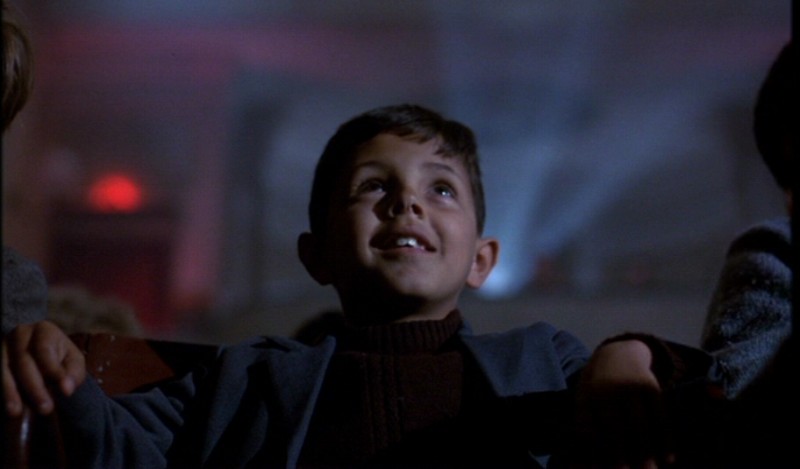
Wednesday, July 18, 2007
"Political" Considerations: Documentary as Narrative
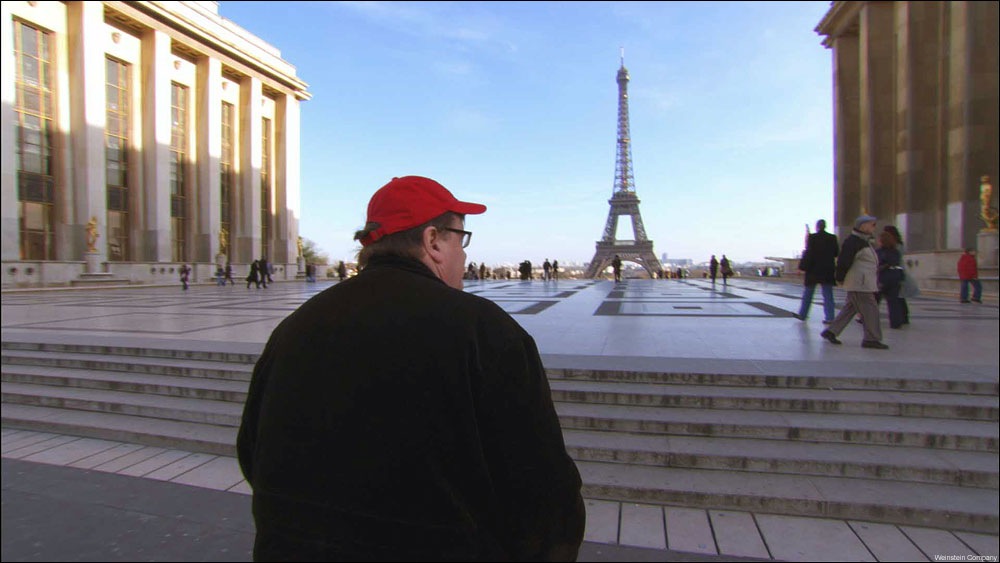 Like them or not, documentaries are in. They are the rising trend in contemporary audience sophistication and niche markets. But before I sing the praises of the documentary, maybe I should temper such a blanket statement. A documentary may never top the box office or come anywhere near the hundreds of millions raked in by the overmarketted products currently dominating the cineplexes. But anyone who follows the box office knows that net grosses are all relative. It's a bigger accomplishment for a movie like An Inconvenient Truth to make $49 million than it is for Transformers to make $250 million. It's a statement that Michael Moore's Sicko has cracked the top ten and has experienced a rise in box office receipts since its release. While the blockbuster movie industry directs all marketing efforts to opening weekend grosses, yet another signal of the shift toward cinematic fast food in the mainstream, documentaries (particularly political documentaries) have found their niche in certain markets and arguably outperform the mega-blockbusters. Personally, this pleases me immensely. It's great to see that audiences are seeking out thought-provoking movies (documentary and otherwise) and that this movement is actually starting to make a dent at the box office. Sure, it may not turn around the tidal wave of commodification that has overrun popular cinema, but it's a step in the right direction.
But this whole idea of a "political" movie troubles me. I hate to use the word "political" when describing certain popular documentaries, simply because one could argue that just about any action -- including making a movie in a specific way, marketing it, and distributing it -- is inherently political. Politics and power run deep within the very foundations of human communication that they are simply unavoidable. Certainly, some movies such as Michael Moore's Sicko (still unseen by me), Fahrenheit 9/11, and Bowling For Columbine are surface-level "political" documentaries in that they deal directly with matters of government control and influence. But I would argue that these movies are about much deeper political forces and movements than (dumb as it sounds) politics. Michael Moore seems to divide people and create debate like no other figure in media prominence today, other than perhaps She-Who-Must-Not-Be-Named (or, as Jim Emerson refers to her, The Creature from the Puddle of Mud) and the Televangelist-in-Chief (another one of Jim's titles). Moore is known as an ultra-left wing fact-fudger by some and a working class hero by others. His movies vary in quality; their best and worst elements are a direct extension of Moore's empassioned personality. But they represent a collection of accessible documentary filmmaking which resonates with audiences today. Blending humor with seriousness, thought with emotion, Moore's movies represent the pop face of the contemporary documentary.
It always humors me when I hear someone say things like, "Michael Moore's movies aren't documentaries because documentaries are based in fact and are supposed to be objective." Really? I had no idea. Documentaries differ from fictional movies in their presentation of narrative, certainly, but they are just as much of narratives as fiction movies. There, I said it. Let the masses be up in arms for someone suggesting that "fact" and "objectivity" are idealistic concepts which work fine in a vacuum but not in motion. No matter how factual, everything is narrative; containing perspectives which reflect the experiences and background of the individual, organization, or institution telling them. Some consider this a bad thing. I do not. I think the sooner we all realize this, the better. Narrative is the basis of our conception of self, culture, family, country, and memory etc. It reflects the principles of the language which enacts us to perform as social actors within organizations and the great web of discourse that is communication.
Documentaries may jettison the notion of creating fictional characters to structure a narrative, but they are still representative of some interest, even if they use facts and data to build around. In that sense, even the most fact-based of documentary filmmaking functions like empirical research, which -- in its structure, focus of study and manner of inquiry -- reflects underlying assumptions (both individual and cultural) about the supposedly objective world. That's not to discredit quantitative research or to disparage it. Rather, it's important to understand contextual and relational details that are always in play, for it is those underlying assumptions (even ones we're not conscious of) that constitute consciousness, providing a limited number of interpretations of the world.
To think that documentaries (or anything else) should be fact-based, lacking in perspective, feeling, and experience is a highly unproductive approach to information. It's good that documentaries (like all narratives) express perspectives, thoughts, feelings, opinions, and experiences. As viewers of them, we shouldn't feel positioned by them to either agree or disagree with their "presentation of facts", but instead think about why they provoke us; how they uphold or deviate from our own individual or cultural values, beliefs, and conceptions of how the world outside functions.
As I have said many times before, cinema is about feeling, emotional abstraction, and empathizing with the experience of others - whether that's the experience of fictional characters, artists, storytellers, and people of all different backgrounds and perspectives. This is not exclusive to fiction films, but all films. Good documentaries can be fascinating stories/films/accounts of the most seemingly mundane things, such as the life of a troubled, fascinating comic artist in Crumb, or a deep contemplation of life, death, and choice as in The Bridge; they may shed light on political, ecological, and social issues such as the The Corporation (which I just recently viewed) or An Inconvenient Truth. These movies enable the viewer to see the eccentricities and details of human behavior. They inquire into what it means to be human in a wide variety of challening and provocative perspectives through diverse subject matters. I still can't fathom that so many sophisticated scholars, viewers, and critics of cinema often treat documentaries as having a fundamentally different makeup than so-called fiction films. I believe that documentaries are a necessary component to the greater affective, cerebral, and artistic prism of narrative as channelled through the visuality of cinema. The beauty of this medium is that its affective capabilities are not limited to certain narrative "types" or genres. The narrative is only the beginning...
Along with the above mentioned titles, other favorite documentaries of mine include Nanook of the North, American Movie, The Thin Blue Line, and Man with the Movie Camera. I'm interested to hear the favorites of others. So I ask you: what are some your favorite documentaries?

Monday, July 16, 2007
Thoughts on Television and Cinema
 In conversation, I often hear the phrases, "It's just entertainment" or "I don't want to have to think, I just want to watch something and enjoy it," and countless others coming from people who claim they are unashamed to watch shows/movies they know aren't "quality drama". This is usually the case with most television and a fair amount of commercial films. Television and cinema are similar in design and function, but the split between them strongly exhibits my adopted notion that not only can nothing be understood or interpreted without context, but that context decides the content; to the point that context is more important than the text. Contextual elements include social, economic, and technological factors (all which are intwined), and they work together to allow consumers/viewers to interpret the difference between television and cinema.
Many have argued that technological and economic factors are drawing together in these media to the extent that the difference between them is growing thinner. Home theater systems and the hypercommercialism of the theater experience, I would argue, blend the boundaries the most. First, home theater systems boast audio and visual perfection so as to replicate one's experience in the theater. Television screens are getting larger, surround sound systems more crisp. Though traditionalists offer that theaters have biggers screens, in reality, one's position in relation to a screen however small or large is more important in terms of the "size" of the image. So what separates these media? It's tough to say. I touched on similar issues recently, which is why I'd rather now look at the texts themselves.
Generally speaking, the medium of television as a visual mode of narrative yields a high level viewer passivity. It seeks to gain a viewer's familiarity with its easily identifiable visual styles and conventions and then loops it, encouraging one to switch off and retreat into a state of numbness. "I don't want to have to think," is one of my favorite phrases because I find it a complete hypocrisy. The process of watching something on a screen, making sense of its narrative and visual cues (however simple they are) requires a lot of thought, actually, and investment. The cognitive and sociocultural elements of watching moving images on a screen and making sense of them are far more complex than most people allow themselves to think about.
Part of the lure of seeing something on a screen as a form of narrative almost entails a bit of shameless voyeurism, as if we know we're not supposed to be watching. This element is intrinsic to all of narrative, but visual narrative especially. And TV is the height of convenient passivity for viewers. That's not to say I'm above it. We all enjoy a little television or simple movies to take our minds off things. It's enjoyable in a very basic sense and for a number of reasons. But the primary source of enjoyment is the desire sameness rather than innovation, which is something that everybody deals with. It is part of our social makeup to fall victim to the lure of convenience and simplicity. Even the most sophisticated of critics cannot deny their indulgences in "guilty pleasures."
But this conflict is much more intricate. Consider the viewer's activity in television. Aside from process of comrehending a moving image, there is a very fundamental essence about TV that enacts its ability to embody passivity yet also breaches this conflict. If we are entertained by something to the extent that we maintain a weekly schedule of watching a show, there is not only thought in that show but investment. Despite readily acknowledging the simplicity of a simple or cliched television show or movie, many of us will invest in spite of this acknowledgment. Where does this come from? Why are we so compelled to watch the screen and engage in thought and feeling (which no one can deny the experience of watching a sitcom or drama is, over long periods of time) yet keep our distance from things we see on that screen that don't adhere to familiar structures and courses? I wish I knew. But it's fascinating to think about. Perhaps even the most sophisticated defenders and/or participants in these media are constantly at battle with some kind of inner desire for the movement-image, which, Deleuze says, is an image one can easily anticipate, and situate within a recognizable field of visual perception. Of course, Deleuze theorized that the time-image frees both the image and the viewer from the limits of the movement-image. But he notes that the movement-image is essentially inevitable, alluding to what seems to be a desire for visual familiarity both social and cognitive in origin.
Though I have only begun reading David Bordwell's Narration in the Fiction Film, its contents have already struck me as revelatory and intriguing. In an early chapter on narration and film form, Bordwell uses constructivist psychology to explore filmic perception and cognition, which proves useful in a discussion of visual perception in light of different visual media. He writes:
"Speaking roughly, the typical act of perception is the identification of a three-dimensional world on the basis of cues. Perception becomes a process of active hypothesis-testing. The organism is tuned to pick up data from the environment. Perception tends to be anticipatory, framing more or less likely expectations about what is out there."
He continues:
"Taken as a purely sensory experience, seeing is a bewildering flutter of impressions. The eye fixates many times per minute, using short and fast movements (called saccades); the eye rotates to compensate for head and body movement; the eyes trembles involuntarily; and most of the visual information we receive is peripheral anyhow. Yet we do not experience a flicker or smear of percepts. We see a stable world, smooth movements, constant patterns of light a nd dark. To the extent that seeing is a bottom-up process, the visual system is organized to make its inferences in an involuntary, virtually instantaneous manner. You 'immediately' see a visual array as consisting of objects distributed in three-dimensional space, and you cannot help seeing this. The automatic construction is also affected by schemat-driven processes that check hypotheses against incoming visual data.... Seeing is thus not a passive absorption of stimuli. It is a constructive activity, involving very fast computations, stored concepts, and various purpose, expectations, and hypotheses."
While Bordwell acknowledges that this concept requires more unpacking if it is to account for the intricasies of visual perception, this theoretical framework for seeing is nonetheless fascinating. The important point about this approach, in my mind, is how it blends the cognitive and the social to the point that they are nearly inseparable. We perceive and interpret according to our own perceptual schemata, hypotheses, and familiarity of visual and auditory conventions.
These concepts intriguingly tie together with the discussion of visual perception in different visual media. The reason I have been thinking about these ideas in more detail of late is that I have observed an a slightly more prominent mention of television's influence over cinema in many reviews of current films. For example, many have written that Live Free or Die Hard is less an organic extension of the previous films featuring Bruce Willis' John McLane but instead a direct inspiration of high intensity action programs such as 24, an assertion I would agree with. While Live Free demonstrates a slick use of action convetions and objects in motion, it rings up hollow as a pure cinematic experience. Perhaps this loose connection to television may have a hand in that. The similarities exist on narrative and stylistic levels, especially since often times the two converge. Other summer movies fall to similar patterns.
 For example, Evan Almighty contains an unusual amount of infantile "potty" humor for a story that wishes to be so prophetic. This, one could argue, is a direct extension of the sitcom sensibility of sequencing action-reaction shots (e.g. Shot A: squirrel bites Steve Carrell's crotch, shot B: close-up of Carrell's face, eyes widening as he prepares to yell in pain). This trend is seen not just in sitcom-inspired comedies, but also in the action epics like Pirates of the Caribbean. The film's talking-based scenes largely adhere to the same practice of cutting between two actors -- one's face screen left, the other screen right. This aesthetic borrows heavily from sit-coms as well as day time soap operas, both of which came to fruition in the 80's and 90's. For more on this, check out Henry Jenkins' excellent article.
In contemporary mainstream cinema, the "talking heads" method of editing and framing greatly determines the nature of the acting, performance, visual perception, and narrative interpretation. But the influence of contemporary television is much more vast on cinema. The Live Free or Die Hard example works well in this argument, since its visual style, both in its action sequences and expository scenes of establishing its villains heavily borrows from 24, among other shows. Observe the framing of the the villain as he watches a computer screen. Even the lighting gives us the slick, but intense 24-like feeling. The plot of the film could very easily had felt less like a television show than it does. Yes, the screenplay definitely demonstrates its influences, but the real feeling of similarity comes mostly from the editing techniques and compositions, which feel more like a contemporary television show than a movie. Another fascinating example of television affecting "big" cinema is The Lord of the Rings trilogy, which offers a lot of close-ups and talking heads editing contrasted with stereotypically epic compositions (wide open vistas, sustained helicopter shots. While the movies work better in their smaller moments of detail and precision, they definitely represent a strange tension of aesthetic design that echoes the convergence of the visual styles of television and cinema .
 While such editing/framing techniques have always been used, they are emphasized much more since the explosion of television as drama/comedy in American culture. This, in fact, is a strange irony. In matters of technology and visual convention, TV was influenced primarily by cinema. But now cinema seems to be more influenced by TV than by its own growth as a medium. Perhaps its growth today is television, which is why so many films abide by conventions employed by TV shows, which themselves are filtered copies of film conventions.
This apparent shift in framing sensibilities no doubt emerges, at least partly, from the tried and true success of sitcom-style, passive-inducing framing styles. In a discussion of mainstream visual perception, one could say that while television was always the influence of the innotivation of cinema, movies are now one step behind television. I am referring to the visual style of its hour-long dramas, not reality television or sitcoms. Shows like Lost, The Sopranos, and various others seem to be pushing into new visual territory (again, by popular standards). They are often more daring and visually unique than genre offerings as served up by Hollywood today.
Yet these shows are not the real trend-setters. Since Hollywood by-and-large seems content to rest safely on conventions of editing, staging, and framing, non-commercial films seem to be the ones now that are exploiting the technological advances of visual media such as digital technology. (Of note, its massive productions employing technology in daring ways often fail, as last year's masterpiece Miami Vice did from a commercial standpoint.) Many of smaller these films engage these technologies and inquire into their role in visual storytelling. I would argue that Television has looked to non-commercial cinema for its influences, and it has done so with great success. Perhaps audiences have embraced these "new" framing and editing techniques because they are loosely and liberally applied to familiar structures that television offer and movies do not. One of the many potential reasons for this is that audiences may have more room for intrigue when they know that something still needs to pan out, whereas the anticipations and expectations of a movie are different. But this is just one of many potential reasons for such varying shifts in visual style in various visual media.
This is really just the beginning of a bigger dialogue about nature of inter-medium influence, connectedness, and disconnectedness and the varying shifts in visual style in various visual media. Situated within David Bordwell's theory of hyperclassical visual style in modern movies as layed out in The Way Hollywood Tells It, an analysis of film and television (on both popular and non-commercial levels) may yield a greater understanding of inter-media influence of visual style and spectator consumption. An even more lucrative entry point into these inquiries is the use of emerging technologies such as HD and digital film.
Subscribe to:
Posts (Atom)