Friday, July 20, 2007

When movies become more

I recently saw Miller's Crossing (finally!), a movie I savored every moment of. I must admit I found it difficult to follow some details of the plot; but it didn't matter. The film is an exercise in pure atmosphere and feeling. Even when I wasn't able to follow the trappings of the narrative, I felt its rhythms. The color palette and layered compositions allowed entry into the subtleties of its central character, Tommy (Gabriel Byrne, in a fine performance) as well as the thematic core of the movie, which explores the rigorous structure and ethical frameworks of organizations that thrive on death and violence.

Certain movies, like Miller's Crossing, strike me like that on first viewing; it's as if I intuitively know I am feeling the movie's deepest, most strange beauties despite having not completely familiarized myself with its details. For me, this is the feeling of seeing a great film for the first time. Obviously, feelings and thoughts differ according to the movie, but there is something about such a unique experience with cinema (or any art) that enables the spectator/reader to feel the spectrum of affect from the images in ways one cannot describe but can positively experience. It's an unidentifiable feeling, really, but great cinema sustains that abstraction and builds on it for the duration of the film, all through the motion of images. Because cinema allows the spectator to see its story played it in a controlled, deliberate manner, the subject almost becomes irrelevant to the manner in which it is committed to the viewer's memory -- visually and auditorily and imbued on her or his memory and emotive state. Virtually any kind of movie can provoke such ambiguous response to sounds and images, even ones which are traditionally simple in design and execution.

I may not be able to "figure it out" per se ("it" being a strong affective response), but if I could, then the experience wouldn't be as ambiguous or evocative to begin with. So how do we, as scholars or cinephiles make sense of these experiences in the structured ways we are instructed to? What is it that enables one to make sense of that experience of experiencing affect from watching a movie? What makes that feeling and association of images remain in memory so that one may recall the experience of a movie and put it on a Top 100 list? I just experienced the beginnings of this process while watching and reflecting on Miller's Crossing this morning; somehow I knew it would stick with me based on how I was seemingly inside the images. Recent theatrical experiences (within the last year) during which I had that same intuition include seeing Ratatouille, Pan's Labyrinth, The Descent, and Miami Vice.

Of course, writing about such experiences with cinema both involves the writer in that intangible experience, while also separating her or him from it. While reflection on the experience and active retrospective helps preserve the memory, it also removes one from that immediate experience insofar that the writer structures thought as well as forces that piece of moving images to adhere to the logic of criticism and structure. That is the real paradox, for it captures both the intoxication and the agony of what we do as writers, critics, scholars, and (yes) readers and viewers.

Wednesday, July 18, 2007

"Political" Considerations: Documentary as Narrative

Like them or not, documentaries are in. They are the rising trend in contemporary audience sophistication and niche markets. But before I sing the praises of the documentary, maybe I should temper such a blanket statement. A documentary may never top the box office or come anywhere near the hundreds of millions raked in by the overmarketted products currently dominating the cineplexes. But anyone who follows the box office knows that net grosses are all relative. It's a bigger accomplishment for a movie like An Inconvenient Truth to make $49 million than it is for Transformers to make $250 million. It's a statement that Michael Moore's Sicko has cracked the top ten and has experienced a rise in box office receipts since its release. While the blockbuster movie industry directs all marketing efforts to opening weekend grosses, yet another signal of the shift toward cinematic fast food in the mainstream, documentaries (particularly political documentaries) have found their niche in certain markets and arguably outperform the mega-blockbusters. Personally, this pleases me immensely. It's great to see that audiences are seeking out thought-provoking movies (documentary and otherwise) and that this movement is actually starting to make a dent at the box office. Sure, it may not turn around the tidal wave of commodification that has overrun popular cinema, but it's a step in the right direction.

But this whole idea of a "political" movie troubles me. I hate to use the word "political" when describing certain popular documentaries, simply because one could argue that just about any action -- including making a movie in a specific way, marketing it, and distributing it -- is inherently political. Politics and power run deep within the very foundations of human communication that they are simply unavoidable. Certainly, some movies such as Michael Moore's Sicko (still unseen by me), Fahrenheit 9/11, and Bowling For Columbine are surface-level "political" documentaries in that they deal directly with matters of government control and influence. But I would argue that these movies are about much deeper political forces and movements than (dumb as it sounds) politics. Michael Moore seems to divide people and create debate like no other figure in media prominence today, other than perhaps She-Who-Must-Not-Be-Named (or, as Jim Emerson refers to her, The Creature from the Puddle of Mud) and the Televangelist-in-Chief (another one of Jim's titles). Moore is known as an ultra-left wing fact-fudger by some and a working class hero by others. His movies vary in quality; their best and worst elements are a direct extension of Moore's empassioned personality. But they represent a collection of accessible documentary filmmaking which resonates with audiences today. Blending humor with seriousness, thought with emotion, Moore's movies represent the pop face of the contemporary documentary.

It always humors me when I hear someone say things like, "Michael Moore's movies aren't documentaries because documentaries are based in fact and are supposed to be objective." Really? I had no idea. Documentaries differ from fictional movies in their presentation of narrative, certainly, but they are just as much of narratives as fiction movies. There, I said it. Let the masses be up in arms for someone suggesting that "fact" and "objectivity" are idealistic concepts which work fine in a vacuum but not in motion. No matter how factual, everything is narrative; containing perspectives which reflect the experiences and background of the individual, organization, or institution telling them. Some consider this a bad thing. I do not. I think the sooner we all realize this, the better. Narrative is the basis of our conception of self, culture, family, country, and memory etc. It reflects the principles of the language which enacts us to perform as social actors within organizations and the great web of discourse that is communication.

Documentaries may jettison the notion of creating fictional characters to structure a narrative, but they are still representative of some interest, even if they use facts and data to build around. In that sense, even the most fact-based of documentary filmmaking functions like empirical research, which -- in its structure, focus of study and manner of inquiry -- reflects underlying assumptions (both individual and cultural) about the supposedly objective world. That's not to discredit quantitative research or to disparage it. Rather, it's important to understand contextual and relational details that are always in play, for it is those underlying assumptions (even ones we're not conscious of) that constitute consciousness, providing a limited number of interpretations of the world.

To think that documentaries (or anything else) should be fact-based, lacking in perspective, feeling, and experience is a highly unproductive approach to information. It's good that documentaries (like all narratives) express perspectives, thoughts, feelings, opinions, and experiences. As viewers of them, we shouldn't feel positioned by them to either agree or disagree with their "presentation of facts", but instead think about why they provoke us; how they uphold or deviate from our own individual or cultural values, beliefs, and conceptions of how the world outside functions.

As I have said many times before, cinema is about feeling, emotional abstraction, and empathizing with the experience of others - whether that's the experience of fictional characters, artists, storytellers, and people of all different backgrounds and perspectives. This is not exclusive to fiction films, but all films. Good documentaries can be fascinating stories/films/accounts of the most seemingly mundane things, such as the life of a troubled, fascinating comic artist in Crumb, or a deep contemplation of life, death, and choice as in The Bridge; they may shed light on political, ecological, and social issues such as the The Corporation (which I just recently viewed) or An Inconvenient Truth. These movies enable the viewer to see the eccentricities and details of human behavior. They inquire into what it means to be human in a wide variety of challening and provocative perspectives through diverse subject matters. I still can't fathom that so many sophisticated scholars, viewers, and critics of cinema often treat documentaries as having a fundamentally different makeup than so-called fiction films. I believe that documentaries are a necessary component to the greater affective, cerebral, and artistic prism of narrative as channelled through the visuality of cinema. The beauty of this medium is that its affective capabilities are not limited to certain narrative "types" or genres. The narrative is only the beginning...

Along with the above mentioned titles, other favorite documentaries of mine include Nanook of the North, American Movie, The Thin Blue Line, and Man with the Movie Camera. I'm interested to hear the favorites of others. So I ask you: what are some your favorite documentaries?

Monday, July 16, 2007

Thoughts on Television and Cinema

In conversation, I often hear the phrases, "It's just entertainment" or "I don't want to have to think, I just want to watch something and enjoy it," and countless others coming from people who claim they are unashamed to watch shows/movies they know aren't "quality drama". This is usually the case with most television and a fair amount of commercial films. Television and cinema are similar in design and function, but the split between them strongly exhibits my adopted notion that not only can nothing be understood or interpreted without context, but that context decides the content; to the point that context is more important than the text. Contextual elements include social, economic, and technological factors (all which are intwined), and they work together to allow consumers/viewers to interpret the difference between television and cinema.

Many have argued that technological and economic factors are drawing together in these media to the extent that the difference between them is growing thinner. Home theater systems and the hypercommercialism of the theater experience, I would argue, blend the boundaries the most. First, home theater systems boast audio and visual perfection so as to replicate one's experience in the theater. Television screens are getting larger, surround sound systems more crisp. Though traditionalists offer that theaters have biggers screens, in reality, one's position in relation to a screen however small or large is more important in terms of the "size" of the image. So what separates these media? It's tough to say. I touched on similar issues recently, which is why I'd rather now look at the texts themselves.

Generally speaking, the medium of television as a visual mode of narrative yields a high level viewer passivity. It seeks to gain a viewer's familiarity with its easily identifiable visual styles and conventions and then loops it, encouraging one to switch off and retreat into a state of numbness. "I don't want to have to think," is one of my favorite phrases because I find it a complete hypocrisy. The process of watching something on a screen, making sense of its narrative and visual cues (however simple they are) requires a lot of thought, actually, and investment. The cognitive and sociocultural elements of watching moving images on a screen and making sense of them are far more complex than most people allow themselves to think about.

Part of the lure of seeing something on a screen as a form of narrative almost entails a bit of shameless voyeurism, as if we know we're not supposed to be watching. This element is intrinsic to all of narrative, but visual narrative especially. And TV is the height of convenient passivity for viewers. That's not to say I'm above it. We all enjoy a little television or simple movies to take our minds off things. It's enjoyable in a very basic sense and for a number of reasons. But the primary source of enjoyment is the desire sameness rather than innovation, which is something that everybody deals with. It is part of our social makeup to fall victim to the lure of convenience and simplicity. Even the most sophisticated of critics cannot deny their indulgences in "guilty pleasures."

But this conflict is much more intricate. Consider the viewer's activity in television. Aside from process of comrehending a moving image, there is a very fundamental essence about TV that enacts its ability to embody passivity yet also breaches this conflict. If we are entertained by something to the extent that we maintain a weekly schedule of watching a show, there is not only thought in that show but investment. Despite readily acknowledging the simplicity of a simple or cliched television show or movie, many of us will invest in spite of this acknowledgment. Where does this come from? Why are we so compelled to watch the screen and engage in thought and feeling (which no one can deny the experience of watching a sitcom or drama is, over long periods of time) yet keep our distance from things we see on that screen that don't adhere to familiar structures and courses? I wish I knew. But it's fascinating to think about. Perhaps even the most sophisticated defenders and/or participants in these media are constantly at battle with some kind of inner desire for the movement-image, which, Deleuze says, is an image one can easily anticipate, and situate within a recognizable field of visual perception. Of course, Deleuze theorized that the time-image frees both the image and the viewer from the limits of the movement-image. But he notes that the movement-image is essentially inevitable, alluding to what seems to be a desire for visual familiarity both social and cognitive in origin.

Though I have only begun reading David Bordwell's Narration in the Fiction Film, its contents have already struck me as revelatory and intriguing. In an early chapter on narration and film form, Bordwell uses constructivist psychology to explore filmic perception and cognition, which proves useful in a discussion of visual perception in light of different visual media. He writes:

"Speaking roughly, the typical act of perception is the identification of a three-dimensional world on the basis of cues. Perception becomes a process of active hypothesis-testing. The organism is tuned to pick up data from the environment. Perception tends to be anticipatory, framing more or less likely expectations about what is out there."

He continues:

"Taken as a purely sensory experience, seeing is a bewildering flutter of impressions. The eye fixates many times per minute, using short and fast movements (called saccades); the eye rotates to compensate for head and body movement; the eyes trembles involuntarily; and most of the visual information we receive is peripheral anyhow. Yet we do not experience a flicker or smear of percepts. We see a stable world, smooth movements, constant patterns of light a nd dark. To the extent that seeing is a bottom-up process, the visual system is organized to make its inferences in an involuntary, virtually instantaneous manner. You 'immediately' see a visual array as consisting of objects distributed in three-dimensional space, and you cannot help seeing this. The automatic construction is also affected by schemat-driven processes that check hypotheses against incoming visual data.... Seeing is thus not a passive absorption of stimuli. It is a constructive activity, involving very fast computations, stored concepts, and various purpose, expectations, and hypotheses."

While Bordwell acknowledges that this concept requires more unpacking if it is to account for the intricasies of visual perception, this theoretical framework for seeing is nonetheless fascinating. The important point about this approach, in my mind, is how it blends the cognitive and the social to the point that they are nearly inseparable. We perceive and interpret according to our own perceptual schemata, hypotheses, and familiarity of visual and auditory conventions.

These concepts intriguingly tie together with the discussion of visual perception in different visual media. The reason I have been thinking about these ideas in more detail of late is that I have observed an a slightly more prominent mention of television's influence over cinema in many reviews of current films. For example, many have written that Live Free or Die Hard is less an organic extension of the previous films featuring Bruce Willis' John McLane but instead a direct inspiration of high intensity action programs such as 24, an assertion I would agree with. While Live Free demonstrates a slick use of action convetions and objects in motion, it rings up hollow as a pure cinematic experience. Perhaps this loose connection to television may have a hand in that. The similarities exist on narrative and stylistic levels, especially since often times the two converge. Other summer movies fall to similar patterns. For example, Evan Almighty contains an unusual amount of infantile "potty" humor for a story that wishes to be so prophetic. This, one could argue, is a direct extension of the sitcom sensibility of sequencing action-reaction shots (e.g. Shot A: squirrel bites Steve Carrell's crotch, shot B: close-up of Carrell's face, eyes widening as he prepares to yell in pain). This trend is seen not just in sitcom-inspired comedies, but also in the action epics like Pirates of the Caribbean. The film's talking-based scenes largely adhere to the same practice of cutting between two actors -- one's face screen left, the other screen right. This aesthetic borrows heavily from sit-coms as well as day time soap operas, both of which came to fruition in the 80's and 90's. For more on this, check out Henry Jenkins' excellent article.

In contemporary mainstream cinema, the "talking heads" method of editing and framing greatly determines the nature of the acting, performance, visual perception, and narrative interpretation. But the influence of contemporary television is much more vast on cinema. The Live Free or Die Hard example works well in this argument, since its visual style, both in its action sequences and expository scenes of establishing its villains heavily borrows from 24, among other shows. Observe the framing of the the villain as he watches a computer screen. Even the lighting gives us the slick, but intense 24-like feeling. The plot of the film could very easily had felt less like a television show than it does. Yes, the screenplay definitely demonstrates its influences, but the real feeling of similarity comes mostly from the editing techniques and compositions, which feel more like a contemporary television show than a movie. Another fascinating example of television affecting "big" cinema is The Lord of the Rings trilogy, which offers a lot of close-ups and talking heads editing contrasted with stereotypically epic compositions (wide open vistas, sustained helicopter shots. While the movies work better in their smaller moments of detail and precision, they definitely represent a strange tension of aesthetic design that echoes the convergence of the visual styles of television and cinema .

While such editing/framing techniques have always been used, they are emphasized much more since the explosion of television as drama/comedy in American culture. This, in fact, is a strange irony. In matters of technology and visual convention, TV was influenced primarily by cinema. But now cinema seems to be more influenced by TV than by its own growth as a medium. Perhaps its growth today is television, which is why so many films abide by conventions employed by TV shows, which themselves are filtered copies of film conventions.

This apparent shift in framing sensibilities no doubt emerges, at least partly, from the tried and true success of sitcom-style, passive-inducing framing styles. In a discussion of mainstream visual perception, one could say that while television was always the influence of the innotivation of cinema, movies are now one step behind television. I am referring to the visual style of its hour-long dramas, not reality television or sitcoms. Shows like Lost, The Sopranos, and various others seem to be pushing into new visual territory (again, by popular standards). They are often more daring and visually unique than genre offerings as served up by Hollywood today.

Yet these shows are not the real trend-setters. Since Hollywood by-and-large seems content to rest safely on conventions of editing, staging, and framing, non-commercial films seem to be the ones now that are exploiting the technological advances of visual media such as digital technology. (Of note, its massive productions employing technology in daring ways often fail, as last year's masterpiece Miami Vice did from a commercial standpoint.) Many of smaller these films engage these technologies and inquire into their role in visual storytelling. I would argue that Television has looked to non-commercial cinema for its influences, and it has done so with great success. Perhaps audiences have embraced these "new" framing and editing techniques because they are loosely and liberally applied to familiar structures that television offer and movies do not. One of the many potential reasons for this is that audiences may have more room for intrigue when they know that something still needs to pan out, whereas the anticipations and expectations of a movie are different. But this is just one of many potential reasons for such varying shifts in visual style in various visual media.

This is really just the beginning of a bigger dialogue about nature of inter-medium influence, connectedness, and disconnectedness and the varying shifts in visual style in various visual media. Situated within David Bordwell's theory of hyperclassical visual style in modern movies as layed out in The Way Hollywood Tells It, an analysis of film and television (on both popular and non-commercial levels) may yield a greater understanding of inter-media influence of visual style and spectator consumption. An even more lucrative entry point into these inquiries is the use of emerging technologies such as HD and digital film.

Wednesday, July 11, 2007

The Cinematic Art's 132 favorite(st) movies

[Update (8/21/08): I have officially enforced Edward Copeland's "Five Year Rule" with my own list, meaning that I've cut out anything released after 2003. Next Year I will begin filtering in 2004 releases, and so on. I think it's a good rule because it's very difficult to assess a movie's place in one's own personal canon if it hasn't been around for very long.]

Equally frustrating and attractive, Top 100 Lists or Favorite All Time Movies Lists are a reality. Back when the Academy Awards were televised in the Winter, I offered many criticisms of lists, awards, and anything else that attempts to quantify artistic quality (here and here), as if measuring art is quantitative process and that quality is a tangible thing. I have since remained steadfast in my feelings. But in wake of the recent update to the American Film Institute's Top 100, and so many writers'/critics' commentaries in response to it (e.g., Jonathan Rosenbaum's Alternative Top 100), as well as the countless amount of personal Top 100 Lists that have appeared on movie blogs, I have since come to see some kind of value to lists. I still think they're dangerous and that they can do more harm than good in shaping the collective consciousness to approach movies (or anything for that matter) from the simple perspective of ranking lists and claiming one movie is the best in an arbitrary and condescending category (Best Animated Film, Best Foreign Language Film). But they are a reality, plain and simple. As a community, myself included, we are obsessed with them despite some of us claiming to be above them. Moreover, the recent critical conjecture over canons is interesting to me not only for the content, but also because of the manner in which our film theorists, scholars, and writes conceptualize of film history and film culture.

Lists by committee, like the AFI list, intrigue me in this regard. But in no way do I acknowledge them to be an authority on anything. Though I do see the strengths of listing and ranking insofar that it can introduce those interested in the study and history of cinema to the subject. But the danger of it is that its status as such a starting point can shape cultural knowledge of cinema to fits its rather constricting and reductive mold of arbitrary ranking and assessment of quality. People may of course branch out beyond them, which and lover of film would obviously encourage, but something about very official tone of these list really gets under my skin. But I nonetheless think it's important to see this as a starting point for diving into cinema. After that, they are better ignored or seen for what they are... starting points. Great cinema exists in all forms and in all places of the globe. To have a definitive list of a certain kind of film and call it official is to misunderstand the subtle beauties of a various kinds of movies.

Despite this buil-in problem with list, I actually enjoy reading personal favorite lists because it provides one a sense of a particular critic/writer's cinematic perspective, if you will. Rankings and numbers (why must we settle on tidy numbers like 100?) don't interest me as much a list, however long, of films which one selects that brings together their cinematic experience. These lists should be unique and personal, exhibiting one's love of the art form and acknowledgment of its history and conventions. These lists shouldn't look the same, but rather consist of films that mean something to one's informed tastes and experiences. Obviously, there will be some overlap. There are undoubtedly agreed upon structural, stylistic, and narrative conventions which we deem good and others not. But if cinema has taught us anything as we now move into the digital age is that narrative is only the surface to the depths into which cinema in its many intricacies and eccentricities can explore. We need to constantly be shifting out sensibilities and pushing ourselves to grow as thinkers, theorists, and critics of cinema.

Art needs critics just as much as critics need art. It can grow based upon the dialogue between artists and critics and the discourse among critics and lovers of cinema. Lists and canons can potentially lure us into the trap of working from a given standard that is met by films on that list. Its design promotes exclusivity and sameness. But I say that we use that design against itself and construct lists based on a truly inquisitive and open perspective of understanding cinematic space and movement. But what's important to acknowledge in all of criticism is the bridge between the knower and the known and the relationship of the critic to that which she theorizes or writes about. In that sense, we must always be reflexive of the craft of criticism, scholarship, and even listmaking, because the structures that undergird them and guide our participation in them strongly influence our interpretation of the artifacts we study. That is why its so important to acknowledge the highly personal aspects of these lists.

My own list below contains 132 films that have shaped my experience with cinema. They are not the only movies that contributed to my movie life and overall self; there are far too many movies to mention for that. Any good movie I have seen has influenced me in some way, if not for challening my views or being grand narrativer statements, but sometimes for my watching them at a specific time in my life, in which a movie has helped take my mind off of current experiences or feelings or perhaps enable me to reflect on them. This can happen even when watching movies that aren't even particularly good.

And that's the beauty of cinema: all of cinema. We participate in a narrative, engaging our senses of sight in sound to experience feeling and thought. It can be an escape, a reprieve, or a world in itself into which we can delve and lose ourselves. A movie is capable of so much. I am both an enjoyer and critic of movies, taking the medium very seriously in attempt to understand the constitutive nature of narrative in our individual and cultural stance in lived experience. We are constructions of our own narratives to the extent that narrative -- in its signifying capabilities (like the language that constructs narrative) -- allows us as social actors to build an understanding of "the world" as we see it and participate in it in the unique ways that each of us do. I am not of the belief that there is an objective world "out there" for us to interpret. We interpret experience according to the narrative that we and others have constructed of it. To me, cinema represents a culmination and collaboration of so many kinds of narratives and aesthetic traditions that to coneive of it as a consumer spectacle is beyond my grasp. I watch movies and experience them for their small pleasures, the moments in which so much seems to come together in a moment of sublimity that all of us so often experience in our own lives.

These movies are my unique list of movies that mean something to me, for different reasons. Some of them represent maybe not so much an emotional connection to the material but a pure exhiliration of discovery in the medium - a discovery that I was not around for when it happened but can still oddly connect with in some way. Others are more recent and would not appear on many "Top" lists but mean something to me personally, representing an emotional connection. Some of these movies may not be structurally sound or critical darlings but may contain movements of complete transcendence, moments that snuck up on me and floored me in their emotional subtlty, provoking feeling and thought that I may not be able to verbalize or understand but which somehow affect me. I go to the movies for these nuances, and I think all of us have such experiences with narrative and in our own lives that, despite not being able to understand them, can feel them. These movies speak to me and my own narrative. I'm sure there are some I forgot to include, others that I may reconsider down the road, and others that I have yet to see which shall feature prominently. Of note, also, is that this list is distinctly slanted toward American cinema. I need to catch up on European cinema, both new and old, as well as Asian Cinema, but right I am content with this list reflecting that, since it representing "where I am" in my cinematic (and personal) life.

Although this is 102 over Jim Emerson's request for my 30 Favoritest Movies, I just couldn't bear to cut it down shorter and have my own narrative fit a pre-determined mold to a tee, despite the challenge (which I acknowledge is the point). So, without further pontificating, here is the list of my 132 Favoritest Movies. From here it will only grow...


"8 1/2" (Federico Fellini, 1963)
"12 Angry Men" (Sidney Lumet, 1957)
"The 39 Steps" (Alfred Hitchcock, 1935)
"2001: A Space Odyssey" (Stanley Kubrick, 1968)
"Aguirre, The Wrath of God" (Werner Herzog, 1972)
"A.I. Artificial Intelligence" (Steven Spielberg, 2001)
"Adaptation" (Spike Jonze, 2002)
"Alien" (Ridley Scott, 1979)
"Aliens" (James Cameron, 1986)
"All the President's Men" (Alan J. Pakula, 1976)
"Annie Hall" (Woody Allen, 1977)
"Another Woman" (Woody Allen, 1988)
"The Apartment" (Billy Wilder, 1960)
"Beauty and the Beast" (Kirk Wise and Gary Trousdale, 1991)
"Belle de Jour" (Luis Bunuel, 1967)
"The Bicycle Thief" (Vittorio De Sica, 1948)
"The Big Sleep" (Howard Hawks, 1946)
"Blade Runner" (Ridley Scott, 1982)
"Blazing Saddles" (Mel Brooks, 1974)
"Brazil" (Terry Gilliam, 1985)
"Bringing Up Baby" (Howard Hawks, 1938)
"Casablanca" (Michael Curtiz, 1942)
"Chinatown" (Roman Polanski, 1974)
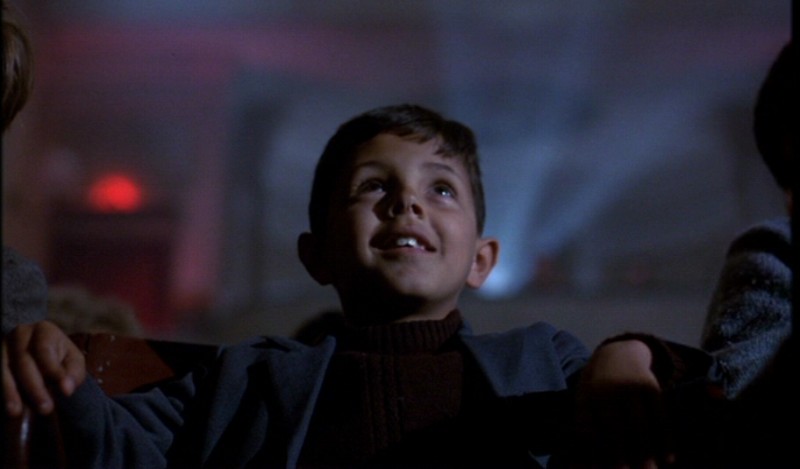
"Cinema Paradiso" (Guiseppe Tornatore, 1988)
"Citizen Kane" (Orson Welles, 1941)
"City Lights" (Charlie Chaplin, 1931)
"A Clockwork Orange" (Stanley Kubrick, 1971)
"Close Encounters of the Third Kind" (Steven Spielberg, 1977)
"The Conversation" (Francis Ford Coppola, 1973)
"Crash" (David Cronenberg, 1996)
"Crimes and Misdemeanors" (Woody Allen, 1989)
"Dark City" (Alex Proyas, 1998)
"Dawn of the Dead" (George A. Romero, 1978)
"Do the Right Thing" (Spike Lee, 1989)
"Double Indemnity" (Billy Wilder, 1944)
"Dracula" (Tod Browning, 1931)
"The Empire Strikes Back" (Irvin Kirschner, 1980)
"E.T. -- The Extra Terrestrial" (Steven Spielberg, 1982)
"Eyes Wide Shut" (Stanley Kubrick, 1999)
"Fargo" (Joel Coen, 1996)
"The General" (Clyde Bruckman and Buster Keaton, 1927)
"Ghost World" (Terry Zwigoff, 2001)
"Ghostbusters" (Ivan Reitman, 1984)
"The Godfather" (Francis Ford Coppola, 1972)
"The Godfather Part II" (Francis Ford Coppola, 1974)
"The Gold Rush" (Charlie Chaplin, 1925)
"Goodfellas" (Martin Scorsese, 1990)
"Groundhog Day" (Harold Ramis, 1994)
"Halloween" (John Carpenter, 1978)
"Hamlet" (Kenneth Branagh, 1996)
"Hannah and Her Sisters" (Woody Allen, 1986)
"High Noon" (Fred Zinemann, 1952)
"The Hustler" (Robert Rossen, 1961)
"In the Bedroom" (Todd Field, 2001)
"It Happened One Night" (Frank Capra, 1936)
"It's a Wonderful Life" (Frank Capra, 1946)
"Jackie Brown" (Quentin Tarantino, 1997)
"Jaws" (Steven Spielberg, 1975)
"JFK" (Oliver Stone, 1991)
"King Kong" (Marion C. Cooper, 1933)
"La Strada" (Federico Fellini, 1954)
"L.A. Confidential" (Curtis Hanson, 1997)
"The Last Temptation of Christ" (Martin Scorsese, 1987)
"Lawrence of Arabia" (David Lean, 1962)
"The Lord of the Rings: The Fellowship of the Ring (Peter Jackson, 2001)
"Lost in Translation" (Sofia Coppola, 2003)
"The Maltese Falcon" (John Huston, 1941)
"Magnolia" (Paul Thomas Anderson, 1999)
"Manhattan" (Woody Allen, 1979)
"Master and Commander: The Far Side of the World" (Peter Weir, 2003)
"Mean Streets" (Martin Scorsese, 1973)
"Metropolis" (Fritz Lang, 1927)
"McCabe and Mrs. Miller" (Robert Altman, 1971)
"Miller's Crossing" (Joel Coen, 1990)
"Minority Report" (Steven Spielberg, 2002)
"Modern Times" (Charlie Chaplin, 1936)
"Monty Python and the Holy Grail" (Terry Gilliam and Terry Jones, 1975)
"Mulholland Drive" (David Lynch, 2001)
"Nanook of the North" (Robert J. Flaherty, 1922)
"Nashville" (Robert Altman, 1975)
"Network" (Sidney Lumet, 1976)
"Night of the Living Dead" (George A. Romero, 1968)
"A Night at the Opera" (Sam Wood, The Marx Brothers, 1935)
"Nosferatu" (F.W. Murnau, 1922)
"Nosferatu the Vampyre" (Werner Herzog, 1979)
"Notorious" (Alfred Hitchcock, 1946)
"On the Waterfront (Elia Kazan, 1954)
"Our Hospitality" (Buster Keaton, 1923)
"Patton" (Franklin J. Schaffner, 1970)
"Pinocchio" (Hamilton Luske and Ben Sharpsteen, 1940)
"Playtime" (Jaques Tati, 1967)
"Princess Mononoke" (Hayao Miyazaki, 1998)
"Psycho" (Alfred Hitchcock, 1960)
"Pulp Fiction" (Quentin Tarantino, 1994)
"Raging Bull" (Martin Scorsese, 1980)
"Raiders of the Lost Ark" (Steven Spielberg, 1981)
"Raise the Red Lantern" (Yimou Zhang, 1991)
"Rear Window" (Alfred Hitchcock, 1954)
"The Rules of the Game" (Jean Renoir, 1939)
"Schindler's List" (Steven Spielberg, 1993)
"The Searchers" (John Ford, 1956)
"The Seven Samurai" (Akira Kurosawa, 1954)
"The Seventh Seal" (Ingmar Bergman, 1957)
"Sherlock, Jr." (Buster Keaton, 1924)
"Singin' in the Rain" (Stanley Donen and Gene Kelly, 1952)
"Shadow of a Doubt" (Alfred Hitchcock, 1943)
"Some Like It Hot" (Billy Wilder, 1959)
"Spirited Away" (Hayao Miyazaki, 2002)
"Stagecoach" (John Ford, 1939)
"Star Wars" (George Lucas, 1977)
"Steamboat Bill, Jr." (Charles Reisner, 1928)
"Strangers on a Train" (Alfred Hitchcock, 1951)
"Sunset Boulevard" (Billy Wilder, 1950)
"Suspiria" (Dario Argento, 1977)
"The Sweet Hereafter" (Atom Egoyan, 1997)
"Taxi Driver" (Martin Scorsese, 1979)
"The Terminator" (James Cameron, 1984)
"Terminator 2: Judgment Day" (James Cameron, 1991)
"The Texas Chainsaw Massacre" (Tobe Hooper, 1974)
"The Thin Blue Line" (Errol Morris, 1988)
"The Thing" (John Carpenter, 1982)
"The Third Man" (Carol Reed, 1949)
"Time Bandits" (Terry Gilliam, 1981)
"The Untouchables" (Brian DePalma, 1987)
"The Verdict" (Sidney Lumet, 1982)
"Vertigo" (Alfred Hitchcock, 1958)
"Videodrome" (David Cronenberg, 1983)
"Wages of Fear" (Henri-Georges Clouzot, 1953)
"Waking Life" (Richard Linklater, 2001)
"The Wizard of Oz" (Victor Fleming, 1939)
"Y Tu Mama Tambien" (Alfonso Cuaron, 2001)
"Young Frankenstein" (Mel Brooks, 1974)

Friday, July 6, 2007

A Feast of Cinema


Over the last twelve years, Pixar Animation Studios has maintained a consistent level of quality in their movies. Though I haven't fallen in love with all of them (e.g. A Bug's Life, Cars), their "disappointments" are usually good enough films in their own rights, and are only labelled considered minor efforts due to the high quality audiences and critics have come to expect from them and. Pixar has become renowned for combining visually unique animation styles with accessible, yet genuine stories that are all but lost in the majority of Hollywood moviemaking. Pixar's repertoire therefore represents a celebration of innovation and tradition, a fusion that manifests in different ways in all of their movies from the great to the good.

It should come as no surprise, then, that Brad Bird's Ratatouille is consistent with Pixar's standard of quality filmmaking. However, its status as a Pixar production may actually work against itself. An average viewer has certain expectations of a Pixar/Disney film in that its oriented towards children, is animated (often associated with children in the American mainstream), and features talking animals (again, associated with children's films). Make no mistake, though; this is a brilliant movie. Not a brilliant Pixar movie. Not a brilliant animated movie. A brilliant movie. So brilliant, I contend, that I would proclaim Brad Bird as one of the really unique voices in American cinema.

At one of my favorite blogs, My Five Year Plan, Brendon Bouzard has written a brief account of the movie that succinctly surmises why this movie is so good. In this short piece, Bouzard takes note of the film's visual style, specifically its "filmness". He writes:

"Here’s another thing to geek out about, animation nerds: if you were ever bugged (as I sometimes was, especially in A Bug’s Life) by the extreme deep-focus cinematography of computer animation, your worries are over. Ratatouille’s greatest formal innovation might be the incredible way it articulates focus as a storytelling element into popular computer animation. Its execution here is flawless, perfectly mimicking the depths-of-focus one might expect from various lensings used in the film, and adding yet another layer of stunning false indexicality to draw a viewer into the narrative."

Bouzard's comments strike the perfect chord in light of the stalled dialogue concerning digital cinema. Ratatouille, despite being purely digital, nonetheless exhibits a real love of the art of filmmaking: the cinematic staging of actors and mise en scene, the simple beauty of composition, the depth-of-focus in how the camera "captures", and the shear viscera of movement. This movie is not over-edited, but rather enjoys its "filmness" despite not existing as "film". Interestingly, Bouzard was responsible for some of the finest writing I've come across about another film which blends the photographic with the digital: Miami Vice. In different ways, both Vice and Ratatouille represent crucial works in the advancement of the medium of digital cinema. They each acknowledge and romanticize their photographic origins and properties, but which actively pursue new syntactical approaches to how we see cinematic images and construct the world of a film in our memory.

There are moments in Ratatouille so visually arresting and yet challenging at the same time. Its images do not exist for the spectator to become a passive recipient of information. These images actively involve the viewer in the construction of the "world" of the movie, which (in my mind) is closely connected to a movie's affective abilities. As we process the visual, auditory, and narrative information, we construct a knowledge of the cinematic space occupied by the characters and action. Too often, this aspect of film viewing goes unrecognized in criticism, but I maintain that the construction of cinematic space is crucial; specifically, how a viewer makes sense of a moving image and constructs a relational memory of its elements. This is no doubt an intricate process that I couldn't even begin to lay out in precise detail, suffice to say that the film exhibits a joy for movement and cinematic space that takes advantage of its digital and analogic properties. The end result is a film with so many memorable moments, images, and feelings that is both incredibly subtle and accessible to all viewers.

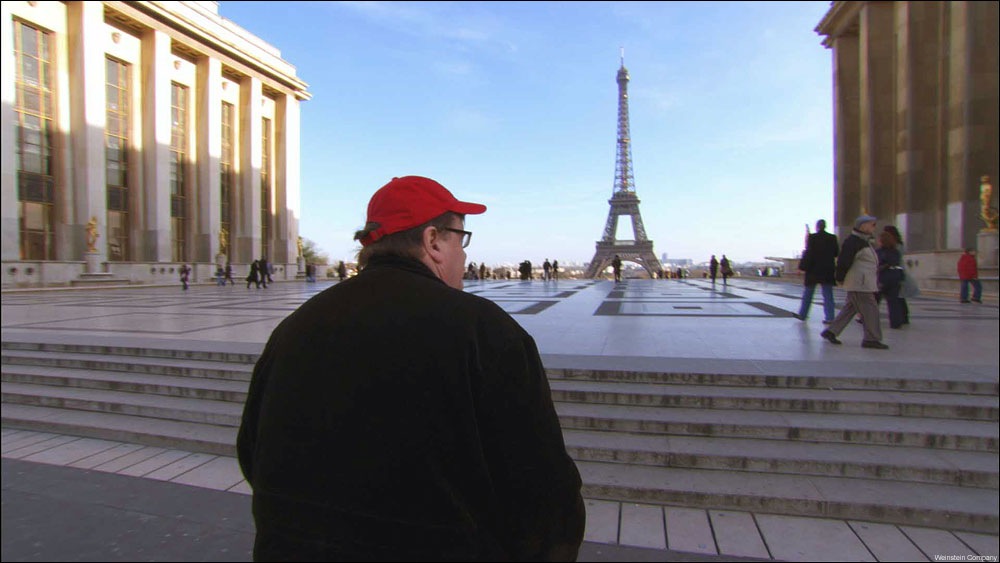
Its richness is found in moments both large and small, from the rich detail of the film's rainy opening shot, to the sweeping majesty of Paris when it is first revealed. Amazing detail went into the construction of every aspect of this movie; its tones of atmosphere and feeling come through in every scene and every shot. Some of these can be easily noticed and described. Others need to be enjoyed to be understood.

Apart from the details of the film's form, I simply marvel at how Bird, his animators, and actors gives life to the characters and narrative. The central relationship of the movie, between Remy, a rat who loves to cook, and Linguini, a clumsy amateur chef is brought to such poignant life. Yes, the structure of the film dictates that this relationship undergo conventional patterns of conflict, but the beauty of their relationship is in the small exchanges between them. One such example is immediately following their intial awkward meeting, when Linguini has the assignment of getting rid of Remy. Watching their budding relationship, the expressiveness of the eyes, the awkward speech and movements of a flustered boy without direction, and the vulnerable body motions of Remy, I was reminded of the births of so many memorable relationships in cinema, in particular Eliott and E.T. or between Chaplin and the bling girl in City Lights. Something so naive is captured in nuances of the characters' eyes and faces against the lonely backdrop of riverside Paris.

Ratatouille is full of moments like this. In the thematic background is an earnest inquiry into the nature of identity. Remy's basic conflict of his desire to interact with humans and engage in the very human art of cooking is in direct contrast with what his family, in particular his father, believes. The film does not so simply side with Remy and paint his family as buffoons who need to grow. Remy sometimes sees them as such, sometimes validly, sometimes invalidly. The whole movie deals with the notion that perception is often determined based on social context and one's own positioning in relation to that which is perceived. Remy's father has good reason to keep away from humans, yet Remy (in a moment of defeat and conquer) claims that "nature is change," before walking away from his father. When asked where he was going, Remy says, "With any luck, forward."

The above description may paint a picture of a movie that speechifies or condescends with messages about embracing those different from you. (I would expect that too if I hadn't seen the movie!) Incredibly, the films instead serves up these conflicts and ideas in subtle ways, allowing the viewer to feel them and ponder them. There are dimensions to all of the characters, some that go completely unnoticed by other characters, even viewers. Even the seemingly elitist critic, Anton Ego, is revealed to be much more complex than others (even himself) allow themselves to see. This thematic note is the center of whole film, and it strikes a resounding chord.

I wish I could recount all of Ratatouille's treasures. But I think I'll turn it to A.O. Scott, in his excellent review serves up the best possible conclusion to a reflection on such a masterpiece:

"Remy and Mr. Bird take a stand in defense of an artisanal approach that values both tradition and individual talent: classic recipes renewed by bold, creative execution. The movie’s grand climax, and the source of its title, is the preparation of a rustic dish made of common vegetables — a dish made with ardor and inspiration and placed, as it happens, before a critic. And what, faced with such a ratatouille, is a critic supposed to say? Sometimes the best response is the simplest. Sometimes “thank you” is enough."

Tuesday, July 3, 2007

"Why Does Michael Bay Get to Keep On Making Movies?"

"I miss you more than Michael Bay missed the mark when he made 'Pearl Harbor'. I miss you more than that movie missed the point, and that's an awful lot, girl."

So go the lyrics of the quintessential love song featured in Team America: World Police. Oh, how knowing that song is. It expertly sums up Michael Bay in a mere matter of words, yet its observations run much deeper.

Although Michael Bay has become a punching bag of critics and "serious" moviegoers, he has an undeniable presence in contemporary mainstream moviemaking. In just over a decade making films, Bay's trademark slow-motion intensity and perfectly formed explosions have become a staple in American cinema. So influential were Bay's early films (e.g. Bad Boys, The Rock, Armageddon), in all their guns-blazin', jingoistic glory, that Bay's unchanging directorial touch in recent films comes off more like a parody (see The Island). It seems that ever since Bay applied his skills to a historical tragedy in the disastrous Pearl Harbor, he has fallen from glory with the American moviegoing public, including the likes of his most ardent fans. Nonetheless, his presence remains strangely powerful in spite of his recent box office disappointments. Sure, his movies are plugged with multi-million dollar ad campaigns, but so are many other films whose directors seem to fade into oblivion. Even those that dislike Michael Bay often love to hate him. And despite that Jerry Bruckheimer has moved on, another somewhat prominent producer by the name of Steven Spielberg has taken Bay under his wing and may likely be the person responsible for upstarting his career once more.

Bay's latest film, Transformers, releases to cineplexes today, and I must admit that I am curious to see it. When I saw the trailer for Transformers, I wasn't surprised to see Bay's name attached, since it appears to have all of his trademark styles, i.e. extreme lighting around actors' faces, shaky close-ups, slow motion upward looking shots of intimidating characters). I tend to dislike sameness in visual style, but there is something really fascinating about la cinema de Michael Bay that I can't quite put my finger on. It's easy to label him as childish or immature, and peg his movies as consisting of little more than incoherent action, but I think there's more to it than that. Something separates Bay from the legion of imitators his films have spawned and even the filmmakers who have influenced him, namely Tony Scott. Maybe it has something to do with his unique image in American filmmaking being so strong even though it has undergone so many changes in such a short amount of time. Or perhaps the massive orgies of violence he orchestrates echo something deep-ridden within our collective unconscious. I think it's probably equal shares of both. But no matter how much critics and movie lovers loathe to see the phrase "a Michael Bay film," there is something to his visual style that remains interesting, if not praise-worthy in the traditional sense.

In short, Bay embodies everything big, simplistic, naive, and bloated about Hollywood blockbuster moviemaking. When he first emerged on the movie scene under the tutelage of one Jerry Bruckheimer, he exhibited a flair for melodrama, high intensity action, and pure movement that was, dare I say, enjoyable in films such as Bad Boys and The Rock. Both movies were sensory overload, but their energy level and quick pacing made them fun. Yet they always walked that line. It's as if Bay was a ticking time bomb, having made two decent action films and then just waiting for just the right story to unleash what he had barely avoided thus far. That opportunity came with Armageddon, one of the most assaulting, painful movies these eyes have seen. Bay demonstrated with this movie that his particular abilities of cinematic movement and sensory overload were delicate and could easily blow up (large pun intended) in his face if not provided the proper boundaries. Unfortunately, Armageddon may as well have been called "Bay Unleashed." The majority of the movie consists of stuff blowing up framed by shaky compositions or perfectly composed shots (depending on the level of visual effects) of city-wide destruction. Either way, it was stuff blowing up, and lots of it. Low and behold, the movie made millions and Bay was crowned the king of the modern action blockbuster.

Then came along Pearl Harbor. Thinking that he could probably take on anything that passed his way, Bay ditched the "asteroids destroying Earth" plot in favor of depicting one of the greatest slaughters in human history. This didn't seem in-line with the spirit of his last three films, all of which featured ludicrous plots, each of which Bay took more seriously as he made them. With Pearl Harbor, he'd be dealing with very delicate material and potentially character-driven drama. As anyone who has seen the movie likely knows, Bay showed for all the world that his gift was not with creating drama. His quick-paced editing may work for frenetic action sequences, but it doesn't hold up well in dialogue-driven scenes which deature sad looks on actors' faces. Fortunately, for him, there was still much to blow up, which he unleashes in the action centerpiece of the movie. Never had I anticipated such horrible death and destruction as I did with Pearl, since clearly the film builds anticipation of the Japanese attack and it wants us to enjoy it. When the movie finally got there, Bay once again went all out for about 30 minutes, creating as much carnage as the PG-13 rating allows.

The best review of the film I read was written by none other than Roger Ebert, whose remarks about Bay's ineptitude at drama and filmmaking in general remain some of the most memorable journalistic film criticism I have read. Ebert said of the film:

As for the raid itself, a little goes a long way. What is the point, really, of more than half an hour of planes bombing ships, of explosions and fireballs, of roars on the soundtrack and bodies flying through the air and people running away from fighters that are strafing them? How can it be entertaining or moving when it's simply about the most appalling slaughter? Why do the filmmakers think we want to see this, unrelieved by intelligence, viewpoint or insight? It was a terrible, terrible day. Three thousand died in all. This is not a movie about them."

Ebert captures the essence of a Michael Bay film in his description of the action, and that is the festishizing of violence, cinematic bodies, and nationalism. He doesn't fetishize these three elements individually so much as in unison with each other. Bay's slick images of violence, destruction, sweaty bodies firing guns, and red, white, and blue is what makes some of his films so striking, memorable, and continually prominent, if not always in a positive way. I wouldn't dare comment on such a massive ideological issue such as the effects and implications of American nationalism, suffice to say that Bay expertly politicizes his movies to pander to the unconscious desires of the general moviegoing public. Pearl Harbor likely failed for more reasons than being poorly made in every sense of cinematic and narrative style. The film represents an odd combination of Bay's worshipping of fantastic violence and a syrupy tone of faux-reverence for something that is very real in America's history. Hence, that movie feels more like mass-produced cinematic equivalent of fast food that it is.

A few short years after Pearl Harbor, Bay returned to his roots with Bad Boys II, Or did he? Yes, he has made a film with all the slow motion shots in the world of Will Smith and Martin Lawrence wielding handguns, yes we have hellicopter chases over water, yes we have incoherent, overly long action sequences. But where this was somewhat enjoyable in a guilty kind of way in the first film, it is excruciating in this sequel, which seems more a sequel to Armageddon than Bad Boys. No doubt, Bay fetishizes violence, death, and flying bodies through the air once again in Bad Boys II, but even that is only pleasurable in moderate amounts, right? ... And just like that, Bay's skill for making sweat-saturated bodies, gun violence, and destruction so enjoyable backfired when he supposedly "went too far." Suddenly, so many moviegoers and critics looked so unfavorably on Michael Bay (as his box office numbers in recent years show), as if we hadn't been enjoying the action films of his and others for the past 20 years, as if we have never slowed down while behind the wheel to observe the carnage of an auto-accident. That is one of the many reasons that I am more than curious ro see Transformers, as well as see how it fares with the American moviegoing public with whom Bay has been so estranged for the last several years.

His films may be juvenile and increasingly overstuffed, but Michael Bay's abilities to depict mass-violence so desirably should not be ignored. Occasionally, they can result in films that are pleasurable to view, if shamefully so. Nevertheless, Bay's images somehow tap into a greater unconscious feeling that both attracts and repulses audiences to/from not just his films, but violence as a greater idea. His melding of nationalism, violence, and bodies in slickly packaged images that ooze of the products they promote is endlessly fascinating. As spectators, we are both ashamed and overjoyed with the success of Michael Bay.

If Transformers tanks, then his career may tailspin and he will forever be remembered as the action director with one of the most successful decades in Hollywood and nothing more. But if it turns to box-office gold over this Fourth of July weekend (which it likely will), then Bay can rest easy knowing that he can safely blow stuff up for the next 10 or 15 years. And we'll either love it or love to hate it; either way, we'll love it.

Wednesday, June 27, 2007

Media "Literacy"

I first came across Henry Jenkins' blog via Observations on film art and Film Art. The entry referenced by Kristin Thompson is a defense of Pirates of the Caribbean: At World's End and an introduction to a greater dialogue regarding criticism and mainstream moviemaking, two subjects I have written about quite a bit over the last month or two (here and here). I hope to comment on these issues in the future -- specifically regarding how different visual narrative media influence each other, i.e. television's influence on cinema -- but right now I'd like to highlight Jenkins' recent post about the implications of shifting modes of acquiring information via digital domains, i.e. Wikipedia and other online forms of writing. Though it's not mentioned, blogging definitely enters into the conversation. Here is an excerpt:

"The practices and tools that sustain Wikipedia are designed to insure the highest degree of transparency -- the most controversial entries come with the maximum numbers of warnings. Yet, realistically, many young people are going to the site in search of quick data and may lack the critical vocabulary necessary to use its contents meaningfully. So, at the most basic level, a media literacy practice around Wikipedia needs to focus attention on the basic affordances of the site, so that students are encouraged to move beyond the top level and see what's going on underneath the hood.

Researchers have shown that the current generation of young learners often exploits digital tools to copy and paste information, sometimes getting confused about where any fact came from, or blurring the lines between their own insights and those from secondary sources. Preliminary work from the researchers at a MacArthur funded project at the University of Southern California suggests that differences in access to digital technologies further impact young people's research practices. Those children who have the most extensive access to networked computers are most likely to look critically upon the kinds of information that they draw from Wikipedia: they have the time to experience knowledge production as a collaborative process. For those young people whose only access is through schools and public libraries, however, they need to get in quick, get the information they need, and make way for the next user. These time constraints encourage them to see the web as a depository of information and often discourages them from taking time to closely examine where that information comes from or under what circumstances it was produced. This is only one of the many consequences of what we are calling the participation gap.

The participation gap is shaped by uneven access to technologies but also by unequal access to formative experiences and thus unequal opportunities to acquire the social skills and cultural competencies we are calling the new media literacies. Participation in these online communities constitutes a new hidden curriculum which shapes how young people perform in school and impacts the kinds of opportunities they will enjoy in the future."


While only an introduction to a greater dialogue, Jenkins' piece represents the beginning of an essential dialogue about education, information, and meaning structures in the digital age. Therefore, Jenkins approaches these issues more as an observer and inquirer, and therefore has more questions than answers. But that is his whole point. More difficult and demanding questions must be asked if we are to be responsible advocates or opponents of cultural staples such as Wikipedia and YouTube.

With all that's being taught on electronic and digital technology, how to utilize it and understand its role in the workforce and classroom, it continues to amaze me how little we really know about these various technologies and media. Terms such as "visual literacy" and "media literacy" are routinely used in schools and organizations, yet, outside of serious media and culture graduate and doctoral programs, questions concerning the implications of various media on culture and organizations are rarely asked. If they are, it's often for the explicit purpose of supporting an opinion of favor or doubt. What isn't being looked at in any serious manner is the nature of the relationships and negotiations resulting from our participation an relation to the so-called breakthroughs in technology.

Look at the release of the supposedly revolutionary iPhone. Take notice of what's being discussed, focused on, and the nature of the general discourse surrounding this new device. (Note: I haven't performed a formal analysis of the critical and popular discourse, so I am therefore basing this on my own observations.) Consumer culture dictates that if something can be done, then it should be done. This is a dangerous mentality fueled more by capitalistic ideology rather than the appropriate critical thought. But this is a reflection of an apparent emphasis on commodity in cultural relation and identity negotiation, which has restructured public consciousness inasmuch that it imposes controlled meanings by limiting the possibilities of response and participation, directing our thought-processes and abilities to think critically at all.

What does it mean to be media literate, after all? Moreover, what is media? What is technology? Are they interchangeable? How do they relate to one another? Simple questions such as these often cannot be answered simply because they are never asked. We use these terms daily, in conversation and in practice. Our economic institutions and scientific discourse are structured around them and progress according to them, yet many of us cannot sufficiently understand or even conceptualize the very fundamental terms that make them up. "Culture" and "organizations" are discussed as if they are real, tangible things, as notion of efficience and productivity are continually emphasized. All the while, these functionalist ideas to which we cling largely ignore the fundamentally constitutive nature of the communication, e.g. language, media, technology, through which we structure and produce the world we perceive, interpret, and act on. Therefore, these dialogues regarding media literacy, visual literacy, and (my personal favorite) cultural literacy should be reflexive and critical of the very tools and processes with which we understand these concepts. Communication is the air we breathe. It is not something that be "made more effective," as if its another cog in the machine. It is the machine. A focus on "the message" severely limits one's understanding of and participation in such discourses, which is why we should think critically about the medium itself, not just of these emerging trinkets of convenience like the iPhone, but all socially structured and shared meanings.

On a reflexive note, I say all of this as somebody who engages in many of the digital practices that (as I complain) aren't be thought of and discussed in a productive manner. I am more than aware of this, which is why I take the time to write posts like this... complete with hyperlinks and pictures pulled from the Web. This discussion (at least on this blog) is not going to end, and it affects the very practices of reading and writing in this format, which Jenkins observes in his post. Stay tuned to his blog for at least one more entry on this subject, or perhaps more. And I recommend checking out some of his other entries as well, since it seems he's written extensively about digital information and culture. It's worth your while.

Sunday, June 24, 2007

Musically Mapping Affect: Revisioning the Film Score Part II


In my previous piece on film scores, I argued that sound, i.e. effects, dialogue, music, etc. is an integral part of filmmaking and film viewing. Unfortunately, the significance of sound is often relegated to the background of film studies in favor of the more visible components of an image. What needs to take place is a forefronting of cinematic sound, with an inquiry into its specific relationship to those visible aspects of the moving image. Of course, this isn't easy. The moving parts of images are hard enough to break down without account for sound; nevertheless, the unique connection of sound and image -- despite representing a deeply intricate relationship culminating in the interpretation of movement and narrative -- comes relatively easy for most viewers when it comes to interpretation. Yet even for your typical moviegoer who is uninterested in analysis, the emphasis is still on the visual nature of cinematic images, and rightfully so. Sound, I would argue, is part of the image.

Why? Because (at least in the case of a score) it is not meant to be diagetically connected to the world of the film, but instead exists for the viewer to better comprehend the emotion of a particular moment or character. Much like camera angles, colors, and other visual aspects processed on an unconscious level of cognition and interpretation, the score often helps the viewer to identify with a character as well as the "world" of the film. In that sense, the music aids in creating an atmosphere or mood, and, together with the images, moves at a certain speed, operates at a certain volume and complexity to form a feeling of the space created by the visible image. The music allows the spectator to inhabit the four corners of the screen, which is not to say that the image itself can't do that, because it can. Rather, a score can evoke something in image that is either already there or perhaps not there. The viewer registers the movements on screen and the sounds in the music to anticipate certain motions in the narratives, while also engage in the world that the characters inhabit.

Beyond its representative qualities, music also enables the spectator to more easily process the nature of the moving images. It can easily provoke a response from the spectator virtually whenever it wants. For some, this means that the music would "follows the action" of the image, a la mickey mousing. At Lost in Negative Space, Peet Gelderblom examines two dominant forms of scoring, underscoring and the aforementioned mickey-mousing. But is there really a difference? He explains:

"When a composer drums up a frenetic, percussive score to support a thrilling car chase, or lays an elegiac theme over a melancholic tableau, his or her technique isn’t that far removed from Mickey Mousing. The music still follows and punctuates the visuals–only the beats are longer.... Sometimes film music is supposed to take a back seat or provide its own commentary on what happens in the picture. Sometimes film music needs to work in tandem with the visuals to help the viewer relate with the characters or a given situation. Both approaches are legitimate."

Peet pointedly observes that the two approaches are not all that different. They are perhaps two sides of the same coin insofar that they appear to be opposites working against one another, but are instead two approaches bowing to the same overriding logic of affect and narrative consumption. In the case of mickey-mousing, in which a composer synchs the beats in the music precisely to the action on screen, this may come in the form of a cymbals crash or punctuation in the the brass as the hero punches the villain; or the musical rhythym can be set to the cutting between shots; or perhaps to mimic the physical movement on screen, e.g. a character tiptoeing as scored by plucking strings. These are all exaggerated examples of things that are (more often than not) much more subtle in the overall stream of interpretation associated with the movement of images as they contribute to an overall narrative. The line between mickey-mousing and underscoring can become blurred in some instances, as Peet points out in his comments about Vertigo, one of the great contributions to film music and cinema as a medium). In sequences involving several dramatic shifts in tempo, rhythym, and style, the music may not necessarily capture the key moments of impact in a given movement or cut, but instead form a momentous feeling that may result from a particular action or a building moment.

For example, the truck chase from Raiders of the Lost Ark is a great example of music that builds continuum of thematic ideas. (YouTube link here. Take note that this is not an ideal viewing experience. This clip exemplifies everything that's good and bad about YouTube... it's available to watch on the web, but anyone who knows the scene should know the music doesn't sound right.) Some of the musical ideas in this sequence are already established previously in the film (still, others are not) that mirror the action while also building states of intensity, humor, and speed between moments of impact, during which composer John Williams builds a feeling of visual structure. While most of the shots during the desert chase involve shifts in musical momentum, each time Williams almost seamlessly changes direction and tempo. His changes are stark, but they somehow feel right.

The beginning of the chase has Indiana Jones atop his horse in a long shot, the dust rising behind him as the horse gallops to a triumphant long brass rendition of the Raiders March.

The next shot is from the other side of Indiana, glaring past him into the chasm through which the armed vehicular escort of the Ark is moving. As Indiana -- forefront, bottom of the shot -- turns his head to look down on the cars and trucks, the brass rises in a moment which says "there you are!", as if Jones knows both exactly what he's doing but is also completely "making up as he goes." That sense may have already been in shot without the music, but the score makes the brief change of direction part of the motion already being built in the movements and music together.

After this, there is just enough time for one more Raiders March rendition before Indiana and the music stop at the edge of cliff. But this moment of silence accompanying Indy's dust-surrounded face is short-lived.

With a cut to the horse running down the mountain, the score picks up once more in charging militaristic fashion; the snare drums perfectly match to the horse's hoofs digging into the sand as they hurtle down the side of the mountain and the brass powerfully belts out a new motif that continues through the duration of the chase but in different permutations. Williams continues along this hard-edged path as the Nazis realize what's happening and open fire on Inday while his horse runs alongside the truck. Although guns are fired at Jones, the music maintains its same rhthym as if to suggest that this is only the beginning and that we have a long way to go despite the close encounter with bullets. Indy makes his way off the horse in heroic fashion and then Williams' score shifts course, becoming more punchy and brass-oriented.

There is a hint more of a rugged spirit with the music slowing down and changing direction as Indy engages in hand-to-hand combat with those in the driver and his accompanying passenger. While Indy drives along with the nazi, the music is playful but at the same time adventurous so as to keep up with the pace of the scene, since there is still much at stake. They fight and drive as the truck moves frantically through towns, swerving from one side of the rode to the other, during which time the score remains playful but fuses that humorous spirit with adventuruous brass chords.

Later in the chase, after several minutes of lone brass renditions of the Raiders March as Indy easily disposes of nazi vermin, a real threat is introduced both visually and musically. After several failed attempts by the nazis in the back of the truck to penetrate the driver's seat (where Indy is driving), one nazi slips through unnoticed -- accompanied by rising high brass statements deviating from the pre-established rhthym -- and shoots Indy in the arm. Interestingly, when Indy is actually shot, the score moves along very high woodwinds (not your typical choice for a hero getting shot), before moving into a rumbling, slow rhythmic motif on low brass notes and deep sustained notes of counterpoint.

The music builds this idea until one more nazi journeys across the roof of the truck (notice the great overhead shot of the truck, perfectly timed to the biggest build-up of the motif), ultimately making his way into the drivers seat, where he persists at wounding Indy further. The rest of the sequence involves Indy's personal duel with the last nazi on the truck, during which he is hurled over the front of the truck and then climbs underneath the truck to come back at him from behind. (It's much better on screen than in words, I swear.)

At this point, the music moves from disbelief (momentary swirling winds and strings as he moves under the truck) to a complete romancing of our hero's rather unorthodox acts of heroism as it returns to a more upbeat rendition of the same motif stated after he is shot. As the viewer begins to realize that Indy's coming back, Williams works the secondary, more heroic counterpoint section of the Raiders march into the pre-existing motif which had been building since he got shot. When Indy finally gets back into the driver's seat to battle the nazi once more, we know this time it's different. The exact same motif is used, only in a more enthusiastic, less distressed pattern, as Indy throws the nazi over the hood of the vehicle. At this point, the battles is won and Indy aggressively changes gears to go after the lead car (where the arch-villains reside). To assist in the release, Williams unleashes a powerful version of the seconday theme of the Raiders march now that the viewer can finally experience the climax towards which the entire sequence was building (visually and musically) since the beginning.

After this visual and musical release, Spielberg cuts to a shot of Indy still driving the vehicle, with a smile on his face that turns to a frown aftger he realizes the pain he's in from the gun shot wound. Williams then tones down the score, easing the viewer back into her/his seat in a slow coming down involving mostly woowinds and brass, bringing to mind a sense of relief but the pain Jones now feels. We know from the visuals and music that the battle is still now over.

The debate over mickey-mousing and underscoring is only the surface of an endless array of ideas and exploration associated with the music-image relationship. Nevertheless, it raises many concerns about film music, the greatest of which is the greater need for analysis of not just film scores themselves, but how they exist in unison to cinematic images. My efforts to hit on every aspect of the music-image relationship of the the desert truck chase are futile, but hopefully I've provided a sense of the music's position as part of the image, despite not actually taking up space. This sequence is an example in which the underscore may be masquarading as mickey-mousing, or vice versa, since the music rhythmically mirrors the action but in a sustained context of building moods and atmosphere for the scene. It essentially is both. It hits physical and emotional highs and lows, sustains and atmosphere throughout, and maintains a narrative consistency and intensity that continually builds upon itself. It's a magnificent sequence (with masterful editing, I might add).

Obviously, an action sequence such as this lends itself to an overt visual and musical approach so as to make an analysis like this easier. Many of Spielberg's films are musical in nature in that he designs his compositions around how they will look and sound. In truth, most sequences or cinematic moments (if you will) can examined in this fashion. Usually, there is some kind of tempo or rhymthmic feeling to a scene (with or without music) that, in its being a certain way, may enact the spectator to understanding it in a specific manner, or perhaps an ambiguous one. There are cues both visual and auditory that a viewer must interpret in order to make sense of temporal and spatial relationships that the visibile and musical properties of an image work to create. When they come together -- and often times they do -- it can result it incredibly rich filmmaking. Trying to put these image-music linkages into words is extremely difficult, especially since they can form such abstract moments of feeling that no shot-by-shot or note-by-note analysis can account for. In the case of a chase sequence, that abstraction is usually in the form of high-speed intensity rather than subtle emotion. Nonetheless, a perfectly compsed and scored chase sequence such as this (as well as others like the Indian sequence in John Ford's Stagecoach or the asteroid sequence Irvin Kerschner's The Empire Strikes Back). But just about any other kind of shot or sequence can create a mood and feeling within that moment in which so many feelings from identification with characters, the atmospheres of the film's world, the viewer's own experiences and memories, and other emotions associated with the viewer's own memories of previous moments in the film all come together in a moment of sublimity that can be subtle, overt, or both.

So what exactly does the score do, then> It's hard to quantify something that is by nature intangible. But attempts to do so in broad terms may be helpful. In his chapter in the book, Passionate Views: Film, Cognition, and Emotion, Jeff Smith emphasizes three links between music and emotion as manifest in film music: the signification of characters' emotions (i.e., identification), the communication of an overall mood, and the arousal of emotional responses in audiences. All of film scores essentially break down to these three points. Smith observes:

"The three [music-image linkages] I have emphasized comprise a structure of film-musical affect that corresponds with different levels of emotional engagement... Such processesmay seem relatively routine, but they are nonetheless intergral to a number of larger aspects of narrative comprehension, such as the discernment of character motivation, the anticipation of future narrative developments, and the encoding of important narrative information in the spectators' memories."

Interestingly, these three linkages don't always divide so easily from each other. In fact, they are rarely ever so easy to split from one another. Moreover, one could argue these are the central concerns of visible elements of moving narratve images as well. Are they so different, and is it possible that a film can be exhibiting all three of these image-music properties in any given moment? If so, then one could speculate that the score is designed to both perform the same function of the moving image while also becoming part of that very image in the process. These are dizzying concepts to think about, and I couldn't begin to answer the questions that image-music relations open. But there still remains much to be explored when it comes to that relationship between the two. Its affect may be easily felt, but to understand that feeling and the nature of that affect may enhance how it is processed and experienced.

The unifying principle of visual and musical cognition and interpretation is affect. Therefore, the defining quality of cinema is its emotional expressiveness. Narrative is the topical path upon which the spectator treads, but the visual and auditory means by which that narrative takes form spawn intricate relations which make cinema a medium of emotional abstraction and exploration. A spectator doesn't just see an image or just hear an image. The spectator feels an image. Therefore, movies cannot and should not be reduced to a simple form of response and interpretation. Its basis in narrative and fiction is deceiving, but its real creative potential and aesthetic capabilities are right there in the moving images, which (in the case of a good film, obviously) flow together fluidly to create movement-based reality of memory and emotion that is binded by abstraction. The image is the music, and the music is the image. With cinema, the two are brought together in unique, challenging, and provocative ways.

Stanley Kubrick says it best in his famous, perfect quote about cinema: "A film is -- or should be -- more like music than fiction. It should be a progression of moods and feelings. The theme, what's behind the emotion, the meaning, all that comes later."


Thursday, June 21, 2007

Revisioning the film score

I would guess that the word "image" shows up on this blog several hundred times, with probably several appearances in each of my posts. As my readers may be aware, I am a member of the critical camp who advocates complete focus on the images of movies and their interrelated elements and movements. These moving parts are constructed in such a way to create a relationship between image and spectator to therefore enact the spectator to interpret a narrative. Caught somewhere between Bordwell and Deleuze, I think that the interpretation moving images -- contextually based in narrative and visual convention -- is a deeply intricate act grounded in cognitive, physical, and social processes of thought, perception and response.

At the risk of sounding like a broken record (although I fear I may already do this), I will attempt to steer away from my usual "form is content" ramblings in the majority of what is to follow. Nevertheless, I find it appropriate in this instance to highlight my steadfast emphasis on matters of the image in understanding cinema. Why do I mention all of this? Because for almost six months of writing for this blog, I have sparingly mentioned a crucial component of cinema in my construction of image-related arguments.

Many formalist and neoformalist film scholars perform shot-by-shot analyses of films, breaking them down to their elements by freezing a moving image to a still image to enable greater analysis of how a given image functions as a moving image. As useful as this method may be towards analyzing every element of a film's composition, it ultimately doesn't account for all of the film's elements. One can get a sense of the lighting, mise-en-scene, angles, editing (when looking at several shots back-to-back). But such an analysis does not account for sound. Some proponents for the importance of sound/music in cinema would claim that this fact contributes to a bias against sound/music in film criticism. Whether that's true is hard to say. But it definitely warrants consideration.

Another popular claim on the part of film music buffs is that the film experience is half audio and half visual. Though I am completely in support of the spirit of giving sound and music it's fair due in assessing cinema, I'm not sure I would so easily buy the idea that cinema represents a 50/50 split of audio and visual. I may be acting nitpicky here, but the problem I have with this attitude is that it supposes that the two elements that make up a whole, while obviously working together, function independently of one another in doing so -- undoubtedly affecting each other in how they stand exist next to one another. This is far too simple to account for a relationships that, in my mind, is incredibly complex. While some amount of simplifying is probably necessary to understand basic concepts in any field, I think we tend to latch on to them at the onset of learning and therefore all future learning is based on these simple notions and overarching critical perspectives tend to grow into more intricate versions of the same basic model.

If I were to make a broad claim about sound in cinema, I would say that sound is a crucial part of movies, but that its importance varies depending on the particular movie and how the details of its images function together. Spoken dialogue obviously counts as sound, as would diegetic and non-diegetic music, as well as sound effects. In general, the image is the most fundamental aspect of cinema, and I would argue that all other elements serve the moving image and assist in giving it movement and life. That being said, sound, more specifically, music has always played a great role in the classical tradition and has since maintained its own importance in visual storytelling. Was it necessary? Probably not. But filmmakers nevertheless felt some kind of urge to "score" their images.

This may be due to the fact that much of the early cinema that featured extensive music was movement-based. Filmmakers were experimenting with movement so as to separate the art of cinema from theatre. Maybe it wasn't such a self-conscious step away from the actor-based, stage constricted nature of theater but a curioisity and experimentation of what moving images could accomplish. Before Eisenstein, music was prominent in cinema, but not nearly so as it was after his theories of montage revolutionzed how cinema was thought of and made. Editing a sequence together based on images connected in a comprehensible manner so that the viewer could make sense of the different perspectives on the movement from multiple angles and views altered how viewers conceptualized of moving images. Debates continue over the cognitive and affective nature of editing techniques and how they relate to the viewer's sensemaking abilities in constructing a knowledge of a sequence based on various moving images spliced together. But there is little doubt that the presence of music in cinema increased dramatically with the montage.

The question then becomes, does the music compliment the image and provide it with rythym, or does it conribute to an already existing "feel," from how the images are cut together and how their movements exist? This is an extremely hard question to answer, if only because we are all so familiar with movie images containing music that it would be nearly impossible to think of them without musical accompaniment. Again, I should ammend this statement by noting that not all cinematic images call for accompaniment of music. Some great films don't contain any music at all - score or song - and some have very little sound at all. So it is certainly possible to have a movie without music, but it's essentially a musical decision to not have sound or music in a film. Nevertheless, the question remains as to the specific role of music in a film. Naturally, depending on the type of film, the importance of music will vary. But perhaps this is too broad.

Something about imbuing movement with sound or music allows the image to exist differently. Music does provide a rhythm, a tempo, to the image simply by existing and "matching up" the image. It instead creates rhythms, tempos, moods and atmospheres that exist in the image as result of the fusion of sight and sound. Music, therefore, isn't so much a complimentary device to an image that provides more of something already contained in an image; it is rather an organic part of the image itself (assuming there is music at all).

Regarding analysis, I find the most effective method of assessing the relationship of sound/music and image isn't to look at film types or genres, but instead to hone in on individual sequences or "moments," and then attempt to understand how those sequences build upon one another to form a greater sense of narrative. Cinema is about pure feeling. Every aspect of any type of analysis -- be it formalist, psychanalytic, or otherwise -- is geared towards understanding how those images on a screen affect the viewer or culture in the way they do. These approaches naturally take very different directiions in understanding an experience that is in simple terms intangible. Coming from a cognitivist/affect/Deleuzian perspective, which in my mind is the most essential entry point to cinema studies, it's important that all aspects of that image are examined, even ones that aren't necessarily part of the visible image.

An image with any kind of music cannot and would not exist in the unique manner that it does were it not for the music. Once a composer and director select a certain musical approach and record music for that specific image, neither the image nor the music can really exist independently of their marriage together. Sure, a shot-by-shot analysis of a movie is helpful towards understanding compositional details, just like listening to a film score apart from the movie is enjoyable and can conjure memories of the movie or other feelings. But neither of these are complete experiences with movies or the music. That is because images and music inhabit one another, live off of one another, and create the nostalgia and nuances of cinematic images.

Wednesday, June 20, 2007

Kicking Off the Film Music Blog-a-thon

Between now (official start: tomorrow) and June 25, Damian Arlyn is hosting a Film Music Blog-a-Thon at Windmills of My Mind. If you haven't heard about it already, I strongly encourage to head over to his blog to check it out and consider adding your own contribution in what will surely be a memorable weekend in film writing.

This is the first of (hopefully) several posts on my blog between now and June 25 on the topic of film music. During this time, I will be focusing my thoughts on this single important topic in cinema studies before returning to the more broad areas of film studies and discussion. This blog-a-thon has provided me good opportunity to begin a greater exploration of the term "audiovisual" as it relates to cinema. I consider this upcoming weekend an entry point into a mode of thought and criticism that will likely continue long beyond the blog-a-thon. So thank you, Damian, for putting this blog-a-thon together! I can only hope we will see a wealth provocative and exciting writing on a subject that desperately needs more attention!